
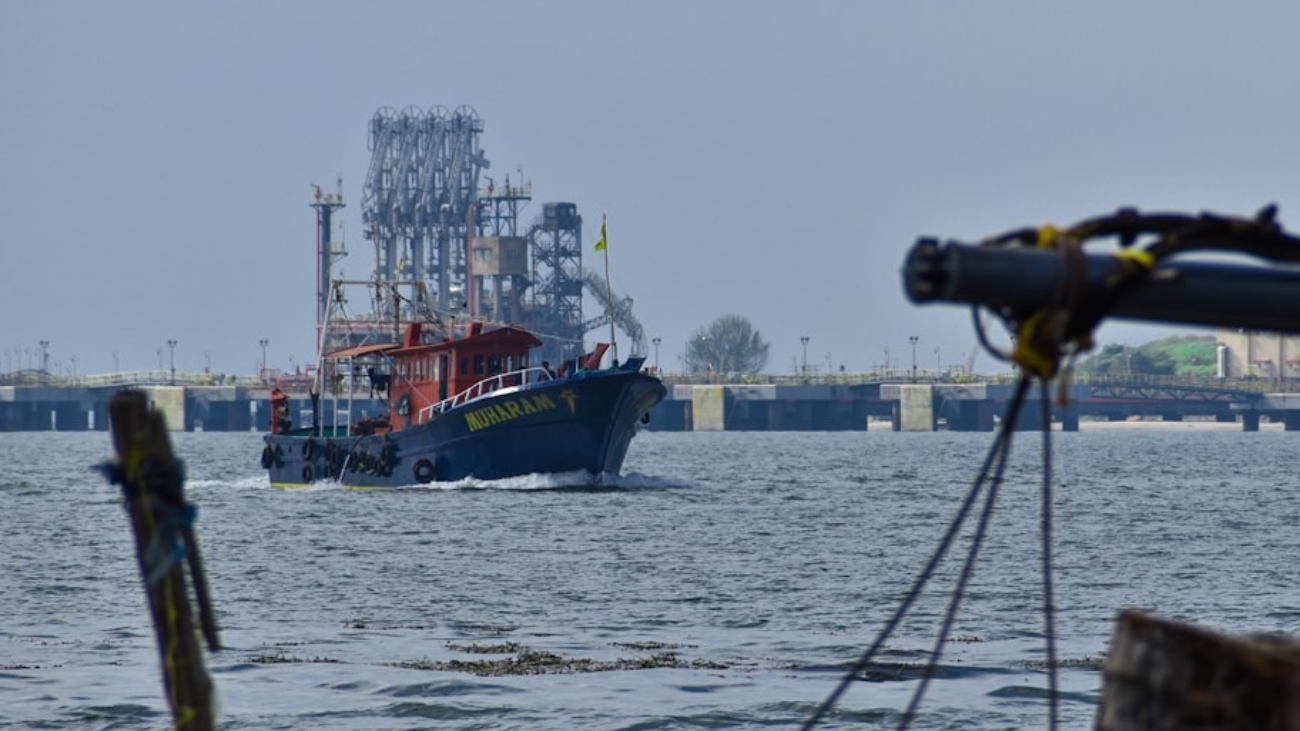
Kerala’s coastline stretches nearly 600 kilometers—a long, strategic artery that once connected the state to the world. For centuries, this coast served as an international trading highway. From the Phoenicians and Romans to the Arabs, Chinese, and Portuguese, the world sailed to Kerala’s ports in search of pepper, cardamom, pearls, timber, and textiles. Muziris, Kolathunadu, Kollam, Kayamkulam, Kozhikode—these were not just ports; they were global commercial cities long before Singapore or Dubai existed. Maritime trade shaped Kerala’s cosmopolitan identity, enriched its communities, and positioned it as a gateway between East and West.
Yet after independence, Kerala failed to convert this historic maritime advantage into a modern economic powerhouse. While countries like Singapore, South Korea, and the UAE built world-class ports and logistics ecosystems from scratch, Kerala—with natural harbours, skilled seafarers, and a trading legacy—allowed its maritime potential to stagnate. The result is a profound structural loss: a state with the best coastline in India contributes only marginally to India’s maritime economy.
Kerala Vision 2047 must boldly confront this failure and construct a new maritime destiny—one that treats the coastline not as a boundary but as Kerala’s greatest economic frontier.
The Missed Opportunities
Kerala’s post-independence maritime stagnation can be traced to several lost opportunities:
1. Lack of integrated port development.
While other regions developed large container ports, Kerala’s ports remained fragmented, under-funded, and under-utilised. Kochi grew, but not at the scale needed to dominate Indian Ocean trade.
2. Failure to build logistics ecosystems around ports.
Ports do not thrive on ships alone—they require warehousing, special economic zones, industrial corridors, and re-export hubs. Kerala never built large-scale port-linked industries that could anchor maritime growth.
3. Absence of coastal industrialisation.
Countries with long coasts—like Vietnam, Malaysia, and Oman—built export factories along ports. Kerala’s industrial policies rarely integrated with coastal strategy.
4. Neglect of shipbuilding, repair, and maritime manufacturing.
Kerala historically had skilled carpenters, boat builders, and naval architects, yet modern shipbuilding passed us by.
5. Limited coastal shipping and inland water transport.
Kerala could have used its coast and backwaters as a low-cost logistics network, but road dependency dominated planning.
6. Underutilisation of fisheries and blue economy potential.
Despite having one of India’s most productive coasts, Kerala’s fisheries remain low-tech, low-margin, and vulnerable.
Kerala’s maritime advantage rusted—not because it lacked capability, but because it lacked strategy, vision, and unified governance.
Kerala Vision 2047: A Maritime Renaissance
Vision 2047 must transform Kerala into a maritime-first state, aligning ports, industry, logistics, tourism, fisheries, and offshore development into a coherent economic future.
1. Build a world-class, integrated port ecosystem
By 2047, Kerala must develop a 3-port strategy:
Kochi as a global container hub competing with Colombo.
Vizhinjam as a transshipment gateway connecting India to Gulf–Africa–Europe routes.
Beypore as a high-volume regional cargo and passenger port.
These ports must be integrated through digital customs systems, shared logistics planning, common rail corridors, and a unified port authority.
2. Create massive port-led industrial zones
Kerala must establish Port Economic Cities—industrial and commercial zones adjacent to Kochi, Vizhinjam, and Beypore. These hubs should host:
Electronics assembly units
Food processing and seafood exports
Green hydrogen plants
Shipbuilding workshops
Warehousing and re-export centres
Aviation logistics hubs
Cold-chain complexes
These zones can generate lakhs of jobs, reduce migration dependency, and anchor Kerala’s economic growth.
3. Develop a modern coastal shipping network
Roads are congested and expensive. Ships are cheaper, cleaner, and scalable. Kerala must build a coastal logistics corridor connecting Kasaragod to Thiruvananthapuram, with feeder vessels carrying containers, bulk cargo, and perishables between smaller ports.
This will:
Reduce road congestion
Lower logistics costs
Strengthen port utilisation
Boost local economies along the coast
Kerala should aim to move 25% of its cargo by coastal shipping by 2047.
4. Revive shipbuilding and repair
From the famous uru of Beypore to naval boats, Kerala once had legendary craftsmanship. Vision 2047 must modernise this legacy through:
Ship repair yards
Small vessel construction centres
Fishing boat modernisation clusters
Maritime design institutes
Naval architecture programmes in universities
A thriving shipbuilding ecosystem generates high-income jobs and export potential.
5. Build Kerala’s Blue Economy
Kerala’s fisheries must evolve from labour-intensive to technology-intensive. By 2047:
Fishing fleets must use GPS tracking, cold-chain integration, and sustainable nets.
Fishermen must be trained in deep-sea fishing.
Fish processing, drying, canning, and export units must expand.
Seaweed farming, shellfish cultivation, and ornamental fish breeding must grow.
Offshore wind, tidal energy, and floating solar must be developed.
The blue economy can become Kerala’s next major growth engine—clean, profitable, and job-rich.
6. Use coastal tourism as a global attraction
Kerala’s coastline is more beautiful than many Mediterranean and Pacific destinations, yet underdeveloped. Vision 2047 must create:
Marina-based tourism
Cruise terminals
Heritage ports showcasing Muziris and ancient trade routes
Coastal cycling and walking circuits
Beachfront cultural districts
Immersive maritime tourism can dramatically increase tourist spends and global brand visibility.
7. Build maritime education and global workforce leadership
Kerala’s youth have a natural affinity for seafaring. Vision 2047 must expand:
Merchant navy academies
Marine engineering colleges
Skill centres for offshore energy, logistics, and diving
Research institutes for ocean sciences
Kerala can become a global exporter of maritime professionals, just as it once became a global supplier of nurses.
8. Strengthen governance and maritime diplomacy
Kerala needs a State Maritime Authority coordinating ports, fisheries, coastal transport, tourism, and industry. It must collaborate with Indian Ocean partners—UAE, Oman, Sri Lanka, Singapore, Kenya—for trade, training, and technology.
The Moral of History
Kerala once connected world civilisations through maritime routes. After independence, we turned our back on the sea—focusing inward, ignoring our ports, and allowing our coastal power to decay. Vision 2047 must reverse that mistake.
A maritime Kerala is not a luxury—it is Kerala’s destiny.
By 2047, Kerala must aim to become:
India’s most advanced coastal logistics hub
A global player in transshipment
A centre for blue economy innovation
A hub for shipbuilding and marine engineering
A global supplier of maritime talent
A major coastal tourism destination
A state whose identity is reconnected to the sea
If Kerala embraces this maritime future with ambition and discipline, the state can reclaim the role it once played: not a small strip of land on the Indian peninsula, but a gateway to the world, a powerhouse of ocean-driven prosperity, and a civilisation that rises again through the sea that has always defined it.
