
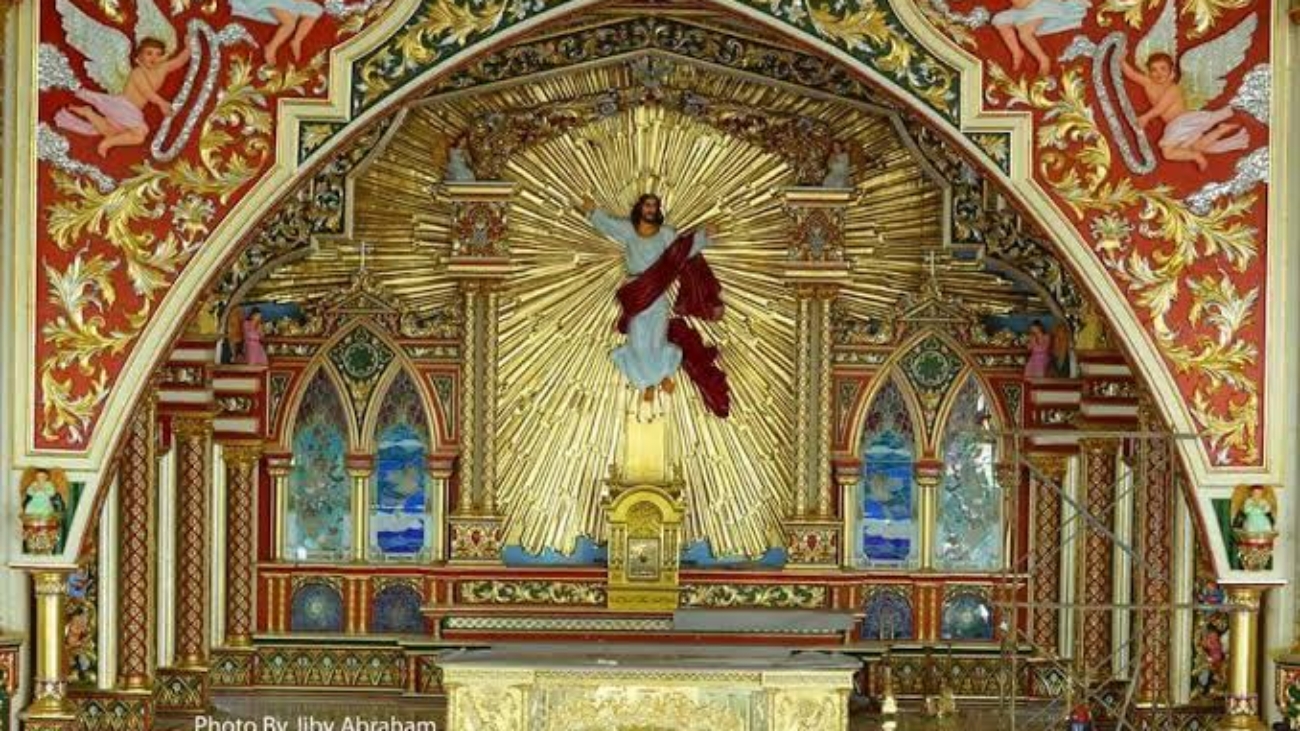
The Latin Catholic community of Kerala carries a unique historical and cultural identity shaped by centuries of maritime interaction, coastal livelihoods, religious traditions, and social resilience. Spread largely across Kerala’s coastal belt—from Thiruvananthapuram to Kollam, Alappuzha to Kochi, and further north toward Kozhikode—the community has contributed immensely to the state’s development through fishing, seafaring, education, health care, and social reform. Their churches, schools, ports, and cultural practices have shaped Kerala’s coastal character. Yet, despite these contributions, the community continues to face structural vulnerabilities: dependence on uncertain marine livelihoods, exposure to climate change, limited representation in high-growth sectors, and underutilisation of its global diaspora networks.
Kerala Vision 2047 must therefore imagine a future in which the Latin Catholic community becomes a prosperous, empowered, and globally oriented section of Kerala—integrating tradition with modernity and building economic strength without losing cultural depth.
The first step is strengthening coastal livelihoods. A large percentage of the Latin Catholic population depends on fishing and related activities. Climate change, declining fish stocks, cyclones, rough seas, and rising operational costs have made marine livelihoods precarious. By 2047, these communities must transition from vulnerable fishing labour into sophisticated coastal entrepreneurs. This means providing modern boats, GPS systems, safety equipment, cold storage, and digital fish auctions that eliminate middlemen. The government and church institutions can collaborate to establish marine technology training centres that teach navigation, deep-sea fishing, aquaculture management, and sustainable harvesting techniques. Fishermen should be promoted from primary catchers to owners of value-added processing businesses—producing dried fish, frozen fillets, fish powders, fish oils, and seafood snacks for domestic and international markets.
Coastal aquaculture offers a second pathway of prosperity. Kerala’s Latin Catholic regions can pioneer cage farming, mussel farming, seaweed cultivation, and brackish-water shrimp production. These industries have global demand and require skills that coastal youth can easily master. Backyard aquaculture units in coastal households can create thousands of micro-enterprises and stabilise income during off-seasons. By 2047, the community can shift from seasonal marine dependency to diversified aquatic agriculture that ensures year-round earnings.
Education remains one of the community’s strongest assets. Latin Catholic institutions have historically run excellent schools, colleges, and hospitals. Vision 2047 must elevate these institutions into cutting-edge centres of excellence. This includes upgrading community schools with digital classrooms, AI-enabled learning tools, and specialised training in STEM subjects. Coastal students must gain access to coaching for engineering, medicine, civil services, and global university admissions. Scholarships funded by the diaspora can help first-generation learners enter elite institutions. A Latin Catholic Knowledge Network—connecting schools, churches, educational trusts, and alumni—can coordinate resources, mentorship, and career guidance.
Representation in high-growth sectors must also increase. While the community is well-represented in nursing, caregiving, and seafaring, it remains underrepresented in IT, global finance, research, emerging technologies, civil services, and entrepreneurship. By 2047, coastal youth must be trained for 21st-century careers: cybersecurity, data analytics, marine engineering, aviation, logistics management, robotics maintenance, renewable energy, and international trade. The proximity of many Latin Catholic settlements to ports can be leveraged to create maritime logistics academies that feed into India’s growing shipping and port management industries.
The Latin Catholic Church has an extremely influential social structure that reaches deep into communities. Vision 2047 can use this network as an engine for economic planning. Church-run cooperative societies can provide microcredit for coastal families. Parish-level entrepreneurship cells can help youth start small businesses. Women’s groups can be trained to run self-help enterprises in crafts, food products, tourism, and digital services. Church land can be used for community farms, training centres, and renewable energy installations that reduce a parish’s long-term costs.
Another major opportunity lies in global migration. The Latin Catholic diaspora—spread across Europe, the Gulf, Australia, and North America—is one of Kerala’s most well-connected migrant networks. However, migration is still mostly limited to nursing, care work, and mid-skilled labour. By 2047, the community must actively enter global professional sectors: engineering, research, healthcare management, hospitality leadership, international business, and maritime technology. Diaspora councils can guide youth on visas, admissions, certification, and career pathways abroad. Diaspora investment streams can be formalised through parish-level economic councils that channel remittances into sustainable community development.
Climate resilience is another core pillar. Rising sea levels, coastal erosion, saltwater intrusion, and extreme weather threaten Latin Catholic settlements more than any other group in Kerala. Vision 2047 must therefore include massive upgrades to coastal defence structures, relocation planning for high-risk zones, mangrove restoration, and resilient housing designs. Early-warning systems powered by AI, community disaster response teams, and shoreline monitoring networks must be developed. Empowering coastal communities to lead climate adaptation efforts will reduce vulnerability and strengthen long-term stability.
Cultural identity remains a powerful asset. Festivals such as the Feast of St. Sebastian, Our Lady of Good Health, and the traditions surrounding coastal parishes create deep social cohesion. These cultural expressions can also fuel an economic renaissance. Kerala can build curated coastal heritage tourism circuits showcasing Latin Catholic foods, architecture, churches, music, fishing traditions, and festivals. Small homestays, marine museums, coastal cuisine restaurants, and ritual-themed cultural programmes can become major attractions for domestic and international travellers. This generates income while preserving community heritage.
Healthcare is another strength. Latin Catholic institutions have produced some of Kerala’s best nurses and medical professionals. Vision 2047 can expand this legacy by creating medical research centres, telemedicine platforms for coastal communities, and global partnerships for healthcare training. Coastal residents must gain access to preventive care, mental health support, substance-abuse programmes, and nutrition initiatives that address long-term well-being.
A strong future requires strong leadership. The community needs more thinkers, administrators, scholars, innovators, civil servants, and entrepreneurs. By 2047, leadership academies embedded in church networks can train young people in public speaking, policy analysis, diplomacy, entrepreneurship, and community governance. The next generation of Latin Catholic leaders must be equipped not only for parish roles but for national and global responsibilities.
Finally, the community must embrace collective confidence. For decades, Latin Catholics have been viewed primarily through the lens of fishing and coastal life. But the community has everything required to rise into a new era—education, faith-based unity, global networks, adaptability, and a spirit of resilience. Vision 2047 must cultivate a mindset of ambition, excellence, and global belonging.
A prosperous Latin Catholic community strengthens Kerala’s social harmony, economic diversity, cultural richness, and global presence. By combining education, entrepreneurship, climate resilience, diaspora engagement, and cultural revival, the community can enter 2047 as a strong, confident, and globally connected force shaping Kerala’s future.
