
Kottayam’s Christian community is one of the most historically influential, culturally sophisticated, and educationally advanced groups in Kerala. The region is shaped by centuries of literacy movements, missionary education, monastic intellectualism, printing and publishing traditions, agrarian entrepreneurship, and migration-driven global networks. It is no coincidence that Kottayam became Kerala’s first 100% literate district; the Christian community played a decisive role through schools, colleges, seminaries, hospitals, and cooperative movements. Yet, even with these strengths, the community faces new pressures: declining birth rates, reduced agricultural viability, migration fatigue, generational shifts in values, shrinking rubber incomes, and challenges in adapting to new economic landscapes. Kerala Vision 2047 must therefore craft a transformative roadmap that enables Kottayam’s Christian community to harness its historical advantages and reposition itself for global leadership.
The first pillar of this roadmap is education. For over a century, Kottayam Christian institutions produced leaders for Kerala and the world—priests, teachers, social workers, nurses, journalists, engineers, and doctors. But education is now undergoing profound transformation. By 2047, the community must lead Kerala in next-generation learning. Schools must adopt AI-based teaching tools, digital labs, STEM pathways, global language programmes, and research-oriented pedagogy. Seminaries and Christian colleges must evolve into centres of excellence in fields like biotechnology, environmental sciences, medical research, sustainable agriculture, cyber security, and public policy. Exchange programmes with universities in Europe, the US, and Australia can prepare students for global careers. A dedicated Kottayam Christian Scholarship Fund, powered by diaspora contributions, can support bright students from middle-income and rural families to enter elite institutions worldwide.
The second pillar is economic diversification. Kottayam’s economy has historically depended on rubber cultivation, printing and publishing, small-scale industries, and professional migration. But rubber prices fluctuate, and traditional industries face global competition. Vision 2047 must encourage the Christian community to diversify into high-growth sectors: renewable energy, precision farming, logistics, digital entrepreneurship, food processing, wellness products, medical technology, and tourism. Rubber farmers must be supported to adopt intercropping, value addition (gloves, rubberized coir, sports flooring), and climate-adapted plantation strategies. Entrepreneurial youth should receive mentorship from senior professionals and diaspora investors. Cooperative societies—an area where Christian institutions once excelled—must be revived to support micro-enterprises and supply-chain integration.
The third pillar is strengthening healthcare leadership. Kottayam’s Christian hospitals and nursing institutions have built an international reputation. By 2047, the region can become a global medical hub by investing in super-specialty hospitals, research in geriatric care, cancer treatment innovation, rehabilitation science, and telemedicine platforms. Given Kerala’s ageing population, Kottayam can pioneer eldercare villages, homecare networks, palliative care centres, and medical tourism packages. Diaspora medical professionals can collaborate through visiting professorships, research grants, and teleconsultation systems, making Kottayam a leading node in global healthcare exchange.
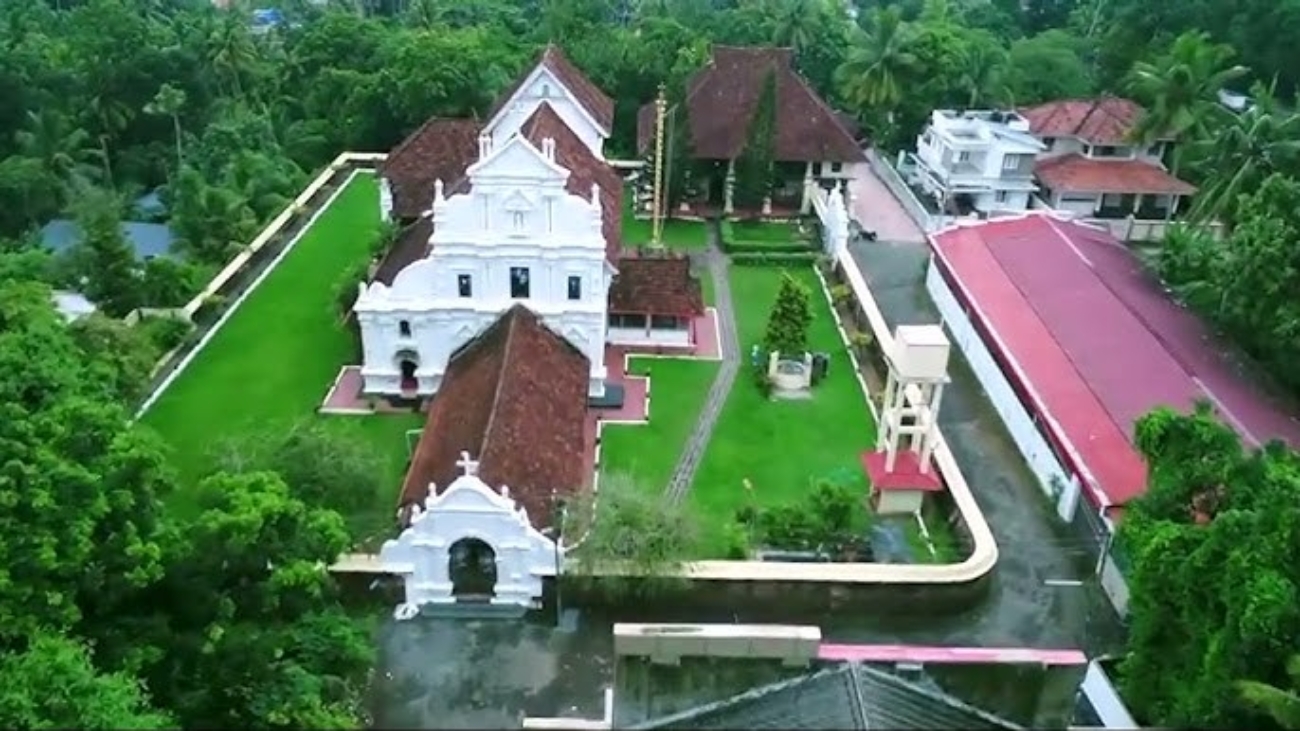
The fourth pillar is cultural preservation and reinvention. The Christian heritage of Kottayam—ancient churches, seminaries, liturgical music, Syrian Christian cuisine, farming rituals, and manuscript culture—is a powerful cultural asset. But younger generations may lose connection with these traditions without structured intervention. By 2047, the community must create digital archives of manuscripts, revive Syriac learning, curate museums on Christian history, and establish cultural centres that conduct research on liturgy, art, and architecture. Heritage tourism can be organised around historic churches, Christian cuisine trails, religious festivals, and monastic landscapes. This not only strengthens identity but also generates economic opportunities for artisans, guides, photographers, musicians, and small entrepreneurs.
The fifth pillar is migration strategy. For decades, Kottayam Christians migrated to the Gulf, Europe, and the West for work in nursing, healthcare, education, engineering, and hospitality. Migration transformed families and fuelled Kerala’s economic growth. But the nature of global migration is changing. By 2047, the Christian community must shift from labour migration to global talent mobility. Young professionals should be prepared for careers in international law, diplomacy, tech research, creative industries, financial services, academia, and advanced engineering. The diaspora can help by creating internship networks, job pipelines, and startup funding channels. Kottayam must also prepare for return migration by creating investment-friendly ecosystems for repatriates who bring skills, capital, and global exposure.
The sixth pillar is social sustainability. The community faces demographic challenges—falling birth rates, ageing populations, and increased mental-health concerns. Vision 2047 must address these proactively. Parishes can create robust community welfare systems that offer family counselling, youth support, addiction prevention, career mentoring, and eldercare services. Young families should be supported with childcare cooperatives, financial planning workshops, and community housing programmes. Christian women—highly educated and globally mobile—must be encouraged to take leadership roles across business, research, public service, and social innovation.
Environmental stewardship is the seventh pillar. Many Christian families in Kottayam depend on plantations, fisheries, and farming. Climate change threatens water availability, soil stability, and crop resilience. By 2047, the community must lead Kerala’s environmental agenda by promoting organic farming, watershed conservation, biodiversity protection, and carbon-neutral agricultural practices. Church networks can implement community-based water harvesting, plastic reduction drives, and ecological awareness campaigns. Christian educational institutions can incorporate climate science and sustainability into their core curriculum.
Leadership development forms the eighth pillar. Kottayam’s Christian community has always produced strong leaders in politics, education, theology, and social work. But the future demands new types of leadership—policy analysts, climate negotiators, technology strategists, public health administrators, urban planners, and global diplomats. Leadership academies linked to parishes and educational institutions can train youth in communication, ethics, innovation, and governance. A new generation of thinkers must emerge to guide Kerala in complex global debates.
The final pillar is unity and strategic planning. Kottayam’s Christian community is diverse—Catholics, Orthodox, Jacobites, Marthomites, CSI, Pentecostals—each with rich traditions and institutions. Vision 2047 requires collaboration across denominations. Joint councils for education, healthcare, business incubation, diaspora engagement, cultural heritage, and policy advocacy can amplify community influence. While retaining doctrinal uniqueness, the community can act collectively on development issues.
By 2047, Kottayam’s Christian community can become one of India’s most dynamic knowledge societies—globally connected, economically innovative, culturally confident, and spiritually grounded. The community’s history has always been one of adaptation, learning, and leadership. If these strengths are channelled deliberately into long-term strategy, Kottayam can become a model district for sustainable development, intellectual excellence, and social harmony.
A prosperous Kottayam Christian community enriches not just the district but all of Kerala. It represents the possibility of modernity coexisting with tradition, ambition balanced with ethics, and global reach rooted in local identity. This is the legacy Kerala Vision 2047 must build—and the future the community deserves.
