
The Nair community of South Kerala occupies a central place in the region’s social, cultural, and political history. Rooted in land stewardship, administrative leadership, martial heritage, temple traditions, military organisation, and literary refinement, South Kerala Nairs shaped the Travancore state, preserved its cultural identity, and contributed significantly to Kerala’s educational and political institutions. Yet, as Kerala enters the mid-21st century, the community stands at a crossroads. Traditional roles have weakened, land-based wealth has eroded, family structures have transformed, migration patterns have shifted, and younger generations face a world where identity and influence are defined by education, networks, and adaptability rather than by historical status. Kerala Vision 2047 must therefore articulate a pathway that restores confidence, strengthens economic foundations, and repositions South Kerala Nairs as a forward-looking and globally integrated community.
The first pillar of this vision is educational excellence. Historically, Nairs of Travancore embraced English education early, which helped them occupy administrative and professional roles. But the future requires a new kind of educational ambition. By 2047, South Kerala Nairs must build strong pipelines into world-class universities, emergent technologies, and specialised fields. Coaching hubs for civil services, law, medicine, engineering, and management must be supported by community organisations and alumni networks. Young Nair students must be encouraged to pursue global careers in fields such as artificial intelligence, climate science, nanotechnology, finance, public policy, and international relations. Education must shift from producing degree holders to producing innovators, researchers, and leaders.
The second pillar is economic renewal. The erosion of land wealth, decline of traditional agricultural estates, and weakening of earlier administrative privileges have created a situation where many South Kerala Nair families exist in a quiet middle-class fragility. Vision 2047 must focus on building economic strength through modern entrepreneurship. Young professionals must be supported with access to business mentorship, digital training, startup funding, and diaspora investment channels. Sectors like renewable energy, ecotourism, boutique hospitality, wellness industries, design, logistics, legal consulting, and digital enterprises offer significant opportunities. Community organisations such as NSS must evolve into engines of economic empowerment—facilitating incubators, cooperative business societies, and high-impact skill centres that equip youth for 21st-century careers.
The third pillar is global mobility. South Kerala Nairs are increasingly entering international professions, but migration remains less structured compared to some other communities. Vision 2047 must create a global Nair talent network linking professionals in the Gulf, the US, Europe, Australia, and East Asia. This network can guide young graduates on visas, job markets, global skills, and career pathways. Diaspora members can act as mentors, investors, and bridge-builders. The aim is to shift from accidental migration to strategic global placement—ensuring South Kerala Nairs occupy leadership roles in multinational companies, research institutions, and global policy spaces.
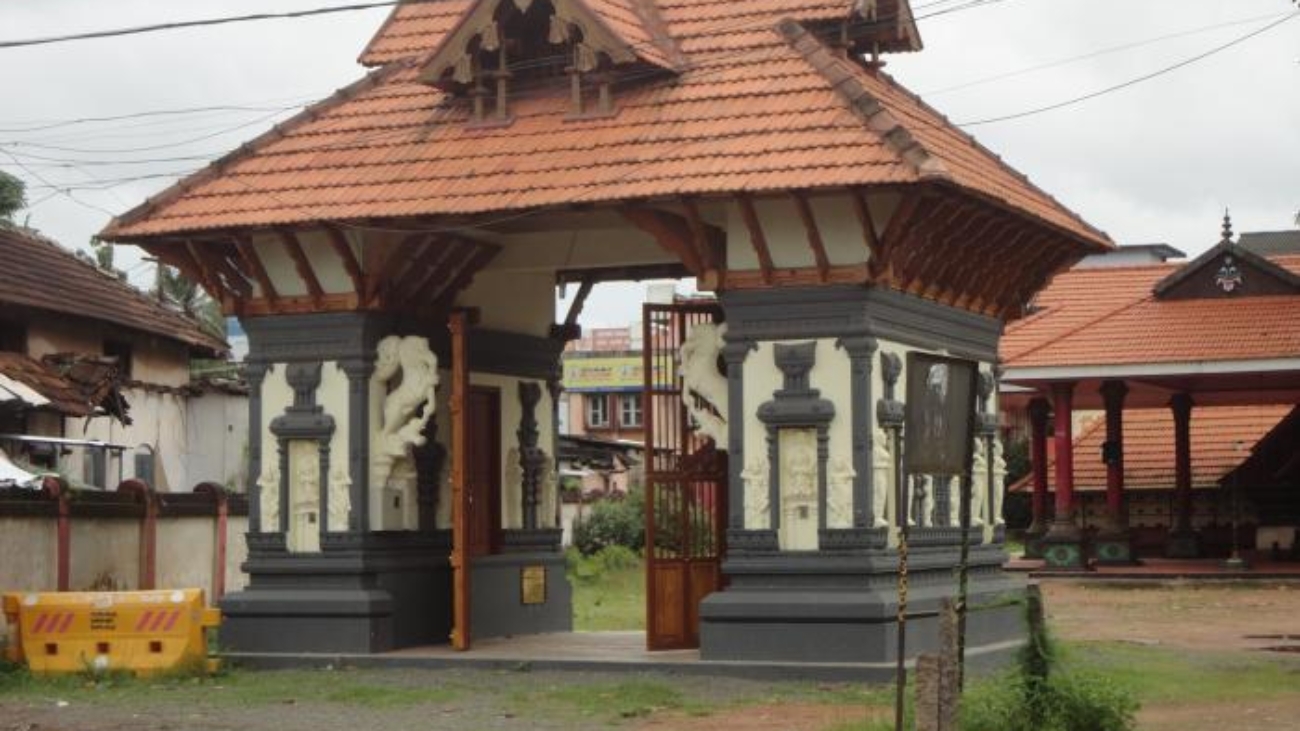
Cultural renewal forms the fourth pillar. Nair identity in South Kerala is deeply tied to temple culture, kalari traditions, matrilineal histories, classical arts, and Travancore courtly heritage. However, much of this has faded from everyday life. Vision 2047 must revive this heritage not romantically but meaningfully. Kalari can be positioned globally as a wellness-martial discipline. Temple festivals, mural arts, classical dance forms, and percussion traditions can be integrated into cultural tourism circuits. Digital archives of family histories, matrilineal lineages, temple architecture, and traditional rituals can strengthen cultural memory. Cultural centres can teach youth about etiquette, philosophy, storytelling, and Kerala’s classical traditions, grounding them in identity while preparing them for global life.
The fifth pillar is social stability. South Kerala Nairs face demographic decline, rising single-person households, delayed marriages, and psychological stress connected to competition and social change. Vision 2047 must address family stability and well-being through community support mechanisms—counselling centres, elderly care networks, youth mental-health programmes, and parenting support workshops. Parental expectations, career pressures, and social isolation must be recognised as real issues. A strong, emotionally stable community is necessary for long-term growth.
The sixth pillar is political and administrative representation. Historically, Nairs played a significant role in Travancore’s governance and later in Kerala’s bureaucracy and politics. Today, representation in top administrative roles and high-level policymaking is declining. Vision 2047 must revive interest in civil services, defence, judiciary, public policy, and political leadership. Leadership academies offering training in communication, negotiation, policymaking, and ethical governance can prepare a new generation of Nair leaders. The goal is not domination, but constructive participation—ensuring the community has a voice in shaping Kerala’s future.
Land and heritage assets must also be used strategically. Many temples, ancestral properties, and trust lands are under-utilised. These can be transformed into premium cultural hubs, eco-retreats, heritage stays, museums, research centres, or educational spaces. Revenue from these can support scholarships, innovation labs, and community welfare. Property management must shift from emotional attachment to strategic planning, ensuring assets generate cultural and economic value.
Women’s empowerment forms another core pillar. Nair women historically enjoyed social mobility and property rights. Today, they are among Kerala’s most educated groups but still underrepresented in entrepreneurship, research leadership, and public decision-making. Vision 2047 must support Nair women to become founders, professors, scientists, diplomats, and policymakers. Women’s career circles, mentorship networks, grants for higher education, and safe community workspaces can accelerate this transformation. A prosperous community requires empowered women at its helm.
Environmental and lifestyle adaptation must also guide long-term planning. Many Nair families live in ecologically sensitive areas—hill slopes, paddy regions, and coastal belts. Vision 2047 must encourage sustainable living, home-based solar energy adoption, rainwater harvesting, and eco-friendly construction. Young Nairs must be encouraged to enter climate-related fields—environmental engineering, conservation science, hydrology, and renewable energy consulting—making the community a leader in Kerala’s climate transition.
The final pillar is unity and long-term planning. South Kerala Nairs are diverse, spread across Travancore’s districts, varying by sub-castes, economic status, and occupational identities. Shared development goals must transcend internal differences. NSS must evolve into a modern institution—data-driven, technologically enabled, professionally managed, and globally connected. Community development councils must collect demographic and economic data, track progress, and plan systematically for 2047. The community must adopt a mindset of collaboration rather than nostalgia, confidence rather than anxiety, and ambition rather than complacency.
By 2047, South Kerala Nairs can become a strong, future-ready community—highly educated, globally connected, culturally confident, economically innovative, and socially cohesive. A community that once shaped Travancore can shape Kerala again—not through dominance, but through excellence, leadership, and collective vision.

Leave A Comment