
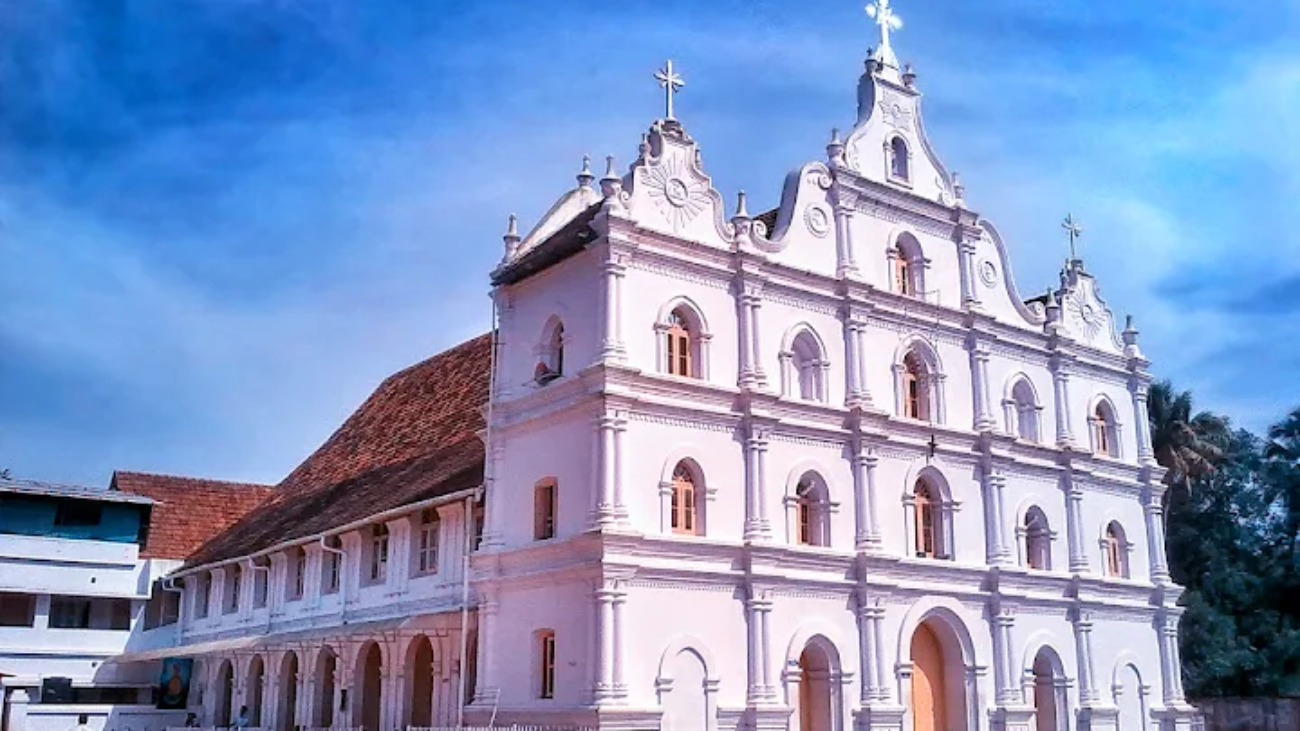
The Roman Catholic community in Kerala is one of the state’s oldest, most organised, and most globally connected Christian groups. With deep historical roots shaped by Portuguese interactions, native Syrian traditions, missionary activity, and centuries of cultural assimilation, Roman Catholics occupy a significant social, economic, and educational space in Kerala. They run some of the state’s most respected schools, colleges, hospitals, and charitable institutions. Catholics are also among Kerala’s largest migrating communities, especially to the Gulf, Europe, Australia, and the Americas. But as Kerala approaches 2047, the community faces new challenges: demographic decline, youth migration, rising educational costs, occupational shifts, secularisation, generational distance from church life, and new economic pressures.
A forward-looking agenda must therefore prepare the Roman Catholic community for a future rooted in identity, opportunity, and resilience.
The first pillar is strengthening educational excellence. The Catholic community built some of Kerala’s strongest educational institutions—arts and science colleges, medical institutions, nursing schools, and technical centres. But the educational sector is changing rapidly due to digital transformation, globalisation, and shifting job markets. By 2047, Catholic institutions must integrate advanced curricula: artificial intelligence, biotechnology, data science, environmental engineering, geriatric care, robotics, entrepreneurship, and global studies. Schools must strengthen bilingual education, civic learning, and competency-based approaches. Scholarships for poorer Catholic families must be expanded to ensure equal opportunity across economic classes. Education has always been a Catholic strength; the future requires upgrading that strength.
Second, professional diversification of youth must be encouraged. Many Catholic families traditionally moved into healthcare, teaching, government service, seafaring, and migration-based careers. But new opportunities exist in knowledge industries, creative sectors, fintech, deep tech, defence research, climate science, and international business. The community must guide its youth beyond predictable career paths. Mentorship networks, parish-level career cells, skill development workshops, and collaborations with Catholic professionals abroad can provide direction. A new generation must emerge with skills adapted to a globalised, technology-driven economy.
Third, the community must modernise its institutions—schools, hospitals, social service centres, orphanages, youth centres, convents, and seminaries. Many face financial pressures, staff shortages, and demographic shifts. By 2047, professional management, digital administration, transparent accounting, and strategic planning must be the norm. Catholic hospitals can become leaders in palliative care, geriatric medicine, physiotherapy, mental health, and rehabilitation services—areas where Kerala’s demand is rising. Social service institutions must adopt modern welfare models, using data-driven approaches and partnerships with local governments. Institutional excellence will preserve Catholic influence in public life.
Fourth, the Roman Catholic Church must renew its engagement with youth. Younger generations often feel disconnected due to fast-changing cultural norms, career pressures, and global exposure. The Church must redesign youth ministries with creative formats—music ministry, sports events, leadership camps, community service projects, digital evangelisation, and intellectual forums. Parishes must become safe spaces where youth can discuss mental health, identity issues, academic stress, relationships, and career confusion. A church that listens will earn loyalty; a church that mentors will shape leaders.
Fifth, the Catholic community must address demographic decline. Falling birth rates and large-scale youth emigration have created imbalances. Parishes are ageing; many households have no younger generation remaining in Kerala. The community must encourage family-friendly environments: affordable childcare centres, parenting support networks, pre-marital counselling, and financial literacy for young couples. Housing support schemes for Catholic families settling in Kerala can counteract migration-driven demographic thinning. A thriving community requires generational renewal.
Sixth, women’s empowerment must be expanded. Catholic women have long been at the forefront of education, nursing, and community service, yet they remain underrepresented in leadership roles in business, politics, and public service. By 2047, the community must strengthen professional training programmes for young women, entrepreneurship incubators, job-placement networks, and parish-level women’s empowerment cells. Convents and religious orders can reinvent their role by training women in community healthcare, digital literacy, counselling, and social work.
Seventh, social justice must continue to be a core identity. Catholic missions historically fought against poverty, illiteracy, discrimination, and marginalisation. Kerala’s modern challenges—migration stress, unemployment, substance abuse, loneliness among the elderly, homelessness, environmental degradation, and coastal vulnerability—require renewed engagement. Parishes can run community kitchens, counselling units, migrant-help desks, environment clubs, and addiction-rehabilitation programmes. Catholic social teaching emphasises human dignity; the community must embody this in daily practice.
Eighth, the economic base of the community must be strengthened. While many Catholics are middle-class, a significant number—especially in coastal regions—struggle with unstable incomes, debt, or occupational decline. Fisherfolk, farm labourers, plantation workers, and informal workers require targeted support. Cooperatives for fish processing, coconut-based products, cashew products, tourism, handicrafts, and spice marketing can improve incomes. Catholic entrepreneurs can be encouraged to guide smaller businesses through mentorship and investments. Economic upliftment ensures social stability.
Ninth, environmental stewardship must be integrated into community life. Catholic social teaching in Pope Francis’s Laudato Si’ places ecological responsibility at the centre of faith. Kerala’s environmental challenges—floods, landslides, coastal erosion, biodiversity loss—demand the Church’s active role. Parishes can organise reforestation drives, water conservation initiatives, climate education classes, and zero-plastic campaigns. Catholic schools can become green campuses. Ecology can become a unifying community mission.
Tenth, the community must strengthen its diaspora connections. Kerala’s Roman Catholic diaspora in North America, Europe, Australia, and the Gulf is professionally successful and influential. By 2047, the community must cultivate structured pathways for diaspora involvement—scholarships, institutional funding, leadership exchanges, cultural festivals, parish partnerships, and business mentorship. A global network strengthens the Kerala community’s economic and cultural capital.
Eleventh, the community must prepare for large-scale elderly care needs. As Catholic families shrink and children migrate, many elderly parish members are left alone. Parishes must establish elderly-care homes, day-care centres, home-visit teams, community nurses, and telemedicine support. Spiritual companionship programmes can reduce loneliness. Elderly citizens are the historical memory of the community; caring for them is a moral obligation.
Twelfth, unity across dioceses must be strengthened. Roman Catholics in Kerala span Latin rite, Syro-Malabar, and Syro-Malankara groups. While theological differences exist, collaboration is valuable in education, health, social service, and public welfare. Inter-diocesan councils can coordinate community development programmes, disaster-response networks, and youth leadership initiatives.
Finally, the Roman Catholic community must cultivate forward-looking leadership. Priests, lay leaders, educators, healthcare professionals, entrepreneurs, and civic leaders must undergo structured leadership development. A new generation must be prepared to guide the community with vision, integrity, compassion, and competence.
By 2047, Kerala’s Roman Catholic community can achieve:
A highly skilled, globally competitive youth population
Revitalised educational and medical institutions
Economic upliftment through entrepreneurship and cooperatives
Stronger families and demographic stability
A dynamic, modern, youth-engaged church life
Enhanced women’s leadership
Deepened diaspora partnerships
A robust elderly care ecosystem
A strong public identity rooted in justice, service, and ecological responsibility
Roman Catholics have shaped Kerala’s cultural and moral landscape for centuries. Kerala Vision 2047 calls the community to carry that legacy into the future with renewed strength—balancing tradition and modernity, spirituality and progress, faith and innovation.
