
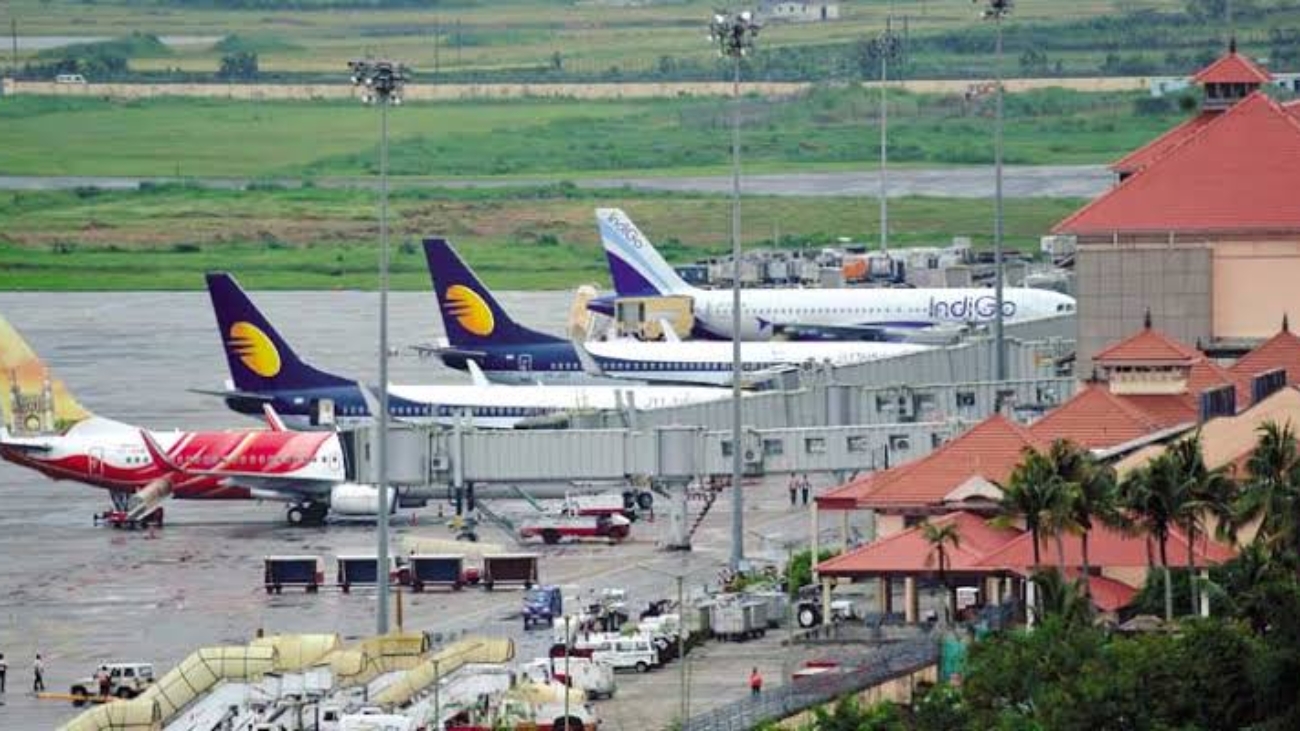
The Angamaly–Koratty–Chalakudy belt sits at one of Kerala’s most strategically important junctions, where connectivity, culture, enterprise, and natural ecosystems converge. With Cochin International Airport (CIAL) as its anchor and NH-544 as its backbone, this belt has the geographic advantage to evolve into a major aerotropolis-driven economic zone by 2047. Angamaly’s trading culture, Koratty’s emerging industrial and IT spaces, and Chalakudy’s tourism and ecological assets form a complementary triangle of opportunity. Kerala Vision 2047 imagines this belt as a globally connected innovation corridor—an aerotropolis region that blends high-value industries, green mobility, and ecological resilience with strong community life.
The transformation begins with Angamaly as the aerotropolis gateway. By 2047, the town can evolve into Kerala’s premier airport city with integrated logistics terminals, business parks, convention centres, and hospitality zones. With CIAL’s leadership in green aviation and solar energy, the surrounding area can attract aviation-linked industries—MRO (Maintenance, Repair, Overhaul) facilities, aircraft component manufacturing, air-cargo processing, drone-technology hubs, and cold-chain logistics for perishables. A dedicated Aero-Logistics Corridor connecting CIAL to Angamaly, Koratty, and Chalakudy can accelerate industrial growth. Transit-oriented development with mixed-use districts, pedestrian boulevards, and airport-linked shuttles can redefine urban mobility in the region.
Koratty, historically known for its church-centred communities and agricultural landscape, is now positioned to become a technology and manufacturing hub. The Infopark campus at Koratty can expand into a North Kochi Tech District by 2047, attracting startups in AI, fintech, agritech, and aviation-tech. Industrial estates can support MSMEs in food processing, precision engineering, modular furniture, pharmaceuticals, and packaging. Koratty’s centrality between Kochi and Thrissur makes it ideal for regional logistics parks, warehousing clusters, and distribution centres. Skill academies in Koratty can offer training in drone operations, aircraft maintenance, AI-enabled logistics, and digital services, preparing youth for high-value jobs.
Chalakudy adds ecological and tourism richness to the belt. As the cultural gateway to Athirappilly, Thumboormuzhi, and Vazhachal, Chalakudy can evolve into a nature–culture tourism hub with modern amenities, curated eco-trails, interpretation centres, and riverfront promenades. By 2047, the Chalakudy River can be revived through scientific river restoration, creation of biodiversity parks, and strict waste control. The town can host a Chalakudy River Research and Eco-Learning Centre studying river hydrology, forest ecosystems, climate resilience, and community conservation. Tourism-based micro-enterprises—homestays, eco-guides, wellness centres, and tribal craft markets—can generate inclusive livelihoods.
Mobility is the backbone uniting all three nodes. A 2047 mobility vision must include a dedicated Angamaly–Koratty–Chalakudy e-bus rapid transit loop with frequent services, app-based ticketing, and multi-modal transfer nodes. Smart traffic systems along NH-544, elevated pedestrian crossings, and cycle highways can reduce congestion and improve safety. A suburban rail corridor linking Angamaly, Koratty, Chalakudy, and Thrissur can drastically enhance regional connectivity. EV charging hubs, hydrogen fuel demonstration corridors, and airport-linked mobility pods can position the belt as Kerala’s clean-mobility pioneer.
Economic diversification must be driven through smart clustering. By 2047, the belt can host several specialized clusters:
1. Aviation & Mobility Cluster (Angamaly–CIAL)
Focusing on drone logistics, aircraft repair, cold-chain cargo, flight-training institutes, and aviation analytics.
2. Tech & Digital Services Cluster (Koratty)
Hosting IT, fintech, agritech, logistics tech, and AI startups within expanded Infopark campuses.
3. MSME Manufacturing Cluster (Koratty–Angamaly perimeter)
Supporting metal fabrication, electronics assembly, food processing, and modular building materials.
4. Eco-Tourism & Wellness Cluster (Chalakudy)
Integrating river-based tourism, Ayurveda centres, nature lodges, farm tourism, and heritage circuits.
Sustainable urban development must shape the belt’s identity. Angamaly’s town centre can be redesigned with pedestrian plazas, green roofs, water-sensitive drainage systems, urban forests, and night-time economy zones. Koratty can adopt compact neighbourhood planning with parks, community halls, coworking hubs, and safe cycling routes. Chalakudy can build eco-friendly public spaces along the river with cultural platforms, children’s parks, and walking tracks. Region-wide solid-waste reforms, decentralized biogas units, greywater recycling, and plastic-free campaigns will support environmental resilience.
Healthcare and education must expand to meet future demands. By 2047, the belt can host multi-specialty hospitals, emergency trauma centres (near the airport corridor), geriatric care centres, and telemedicine networks. Educational institutions can offer specialized programs in aviation sciences, AI engineering, renewable energy, logistics management, forestry, and ecotourism. A regional skill grid can provide continuous upskilling opportunities for workers across industries.
Tourism has immense potential in this belt. By positioning Chalakudy–Athirappilly as Kerala’s premier inland eco-tourism circuit and Angamaly as the international gateway, the region can attract global travellers. A Guruvayoor–Chalakudy–Athirappilly–Angamaly spiritual–eco circuit can integrate religious tourism, nature tourism, and cultural experiences. Digital tourism apps can provide AR storytelling, trail navigation, and curated cultural itineraries.
Social inclusion must remain central. Farmers in Kurumassery, Manjapra, Meloor, and Chalakudy can benefit from agritech support, storage facilities, and farm-to-market digital platforms. Women’s SHGs can run catering units, snack enterprises, craft markets, and eco-tourism services. Workers in traditional sectors—carpenters, masons, auto drivers, and small traders—need training in modern tools, digital payments, and new job roles emerging from the aerotropolis economy. Tribal communities near Athirappilly must be involved in eco-tourism governance, forest conservation, and cultural documentation.
Kerala Vision 2047 ultimately imagines the Angamaly–Koratty–Chalakudy belt as one of the state’s most dynamic growth corridors—globally connected, technologically advanced, ecologically resilient, and socially inclusive. With the airport as its catalyst, industry as its engine, and the riverine–forest landscape as its identity anchor, this belt can emerge as a flagship model of Kerala’s next-generation development—harmonizing opportunity with sustainability, and progress with cultural depth.
