
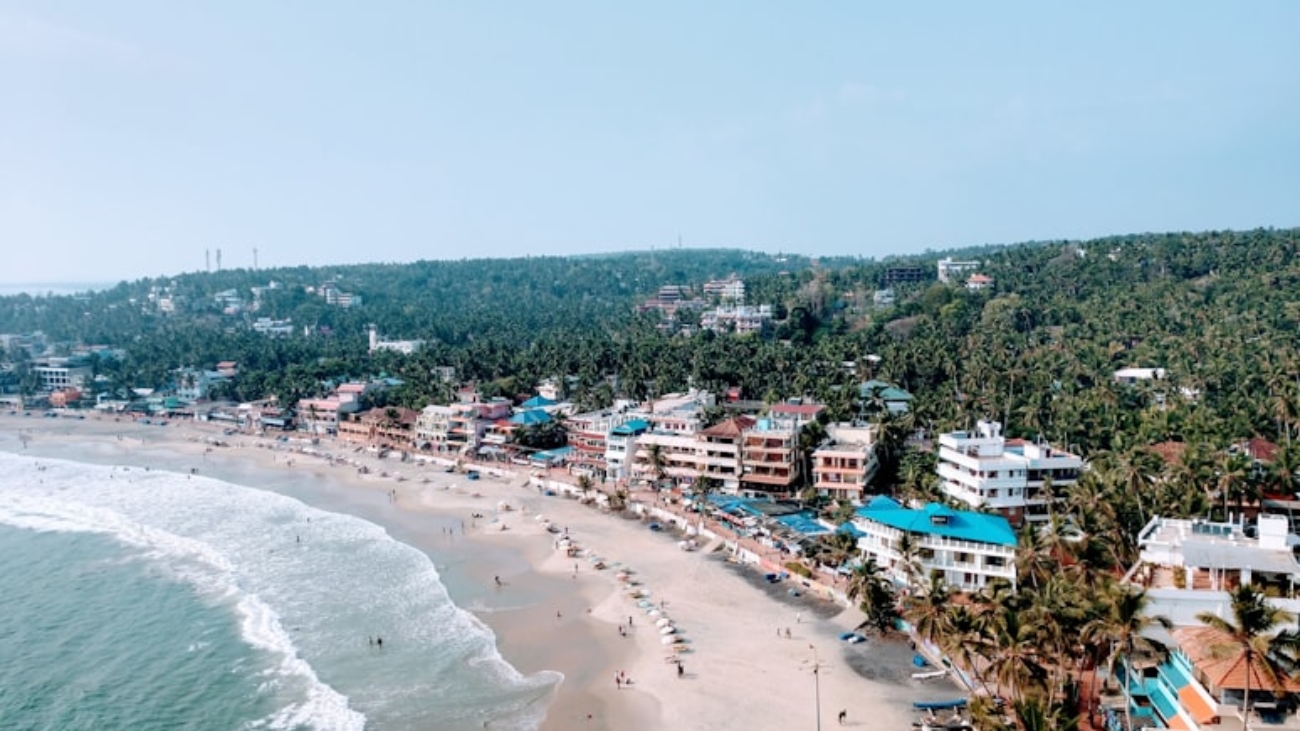
Thiruvananthapuram’s coastline is one of Kerala’s greatest natural and cultural assets, stretching from the serene backwaters of Veli to the international harbour emerging at Vizhinjam. By 2047, Kerala’s aspiration is to shape these beaches into a unified, resilient, high-value tourism zone—one that combines global-class infrastructure with local heritage, environmental responsibility, and community prosperity. A comprehensive beach development strategy for the district must therefore move beyond beautification and aim at transforming the coastline into a continuous corridor of economic opportunity, social vitality, and ecological protection.
Veli, with its unique meeting point of lake and sea, represents a gateway to the capital’s coastal tourism. By 2047, Veli can evolve into a family-friendly waterfront district centred on leisure, culture, and ecological education. The development vision includes a reimagined Veli Tourist Village with sustainable architecture, shaded walkways, and viewing decks that highlight the lagoon’s changing ecosystem. A dedicated cycling boulevard connecting Veli to Shangumukham can encourage carbon-neutral tourism. Water taxis operating between Veli, Akkulam, and the city’s main transit points will integrate tourism with mobility. Community-run kiosks, digital interpretation centres, and year-round festivals celebrating local cuisine and crafts can make Veli a lively arrival zone for domestic and international visitors.
A few kilometres south lies Valiyathura, historically known for its iconic pier and the fishing communities that define its identity. Kerala Vision 2047 imagines Valiyathura as a heritage maritime hub where traditional livelihoods coexist with modern tourism. Restoring the damaged pier using climate-resilient engineering will unlock opportunities for cultural promenades, angling tourism, and sunset viewing decks. The local fisher population must be central to the development model: co-operative-run seafood courts, boat tours, and storytelling experiences on marine life can create new income streams without disrupting existing livelihoods. A coastal housing upgrade programme with climate-proof homes, sanitation, and community centres will ensure development benefits reach households most vulnerable to sea-level rise.
Shankumukham, long valued for its wide sands and proximity to the airport, can transform into the capital’s international beachfront showcase by 2047. The vision includes restoring its shoreline through scientific nourishment, building a continuous beach promenade linking the sculpture zones, and establishing a cultural arena that hosts open-air performances, film festivals, and digital art shows. Smart lighting, dune protection systems, and AI-enabled crowd and waste management can make Shankumukham Kerala’s model for clean and safe urban beaches. Aviation-themed attractions, such as a viewing gallery for take-offs and landings, can create a distinctive visitor experience. With new mobility integration from the airport, tourists can begin their Kerala journey with a seamless transition onto a vibrant and welcoming beach ecosystem.
Kovalam, already the district’s flagship global destination, must evolve into a next-generation wellness and blue-economy hub. By 2047, Kovalam can reposition itself as South Asia’s centre for coastal wellness tourism—offering ayurveda residencies, marine therapy, digital detox retreats, and ocean-facing convention venues. A unified promenade connecting Lighthouse Beach, Eve’s Beach, and Samudra Beach can create a walkable tourism district that balances commercial vibrancy with ecological sensitivity. Wastewater recycling, plastic-free operations, live beach monitoring, and a mandatory sustainability certification for all establishments will ensure Kovalam remains environmentally stable amidst rising visitor numbers. Small entrepreneurs must be protected through dedicated vendor zones, multilingual training, and micro-financing so that development enhances—not replaces—local participation.
Poovar, with its rare estuary where river, lake, sea, and beach meet, represents a crucial ecological treasure. Kerala Vision 2047 sees Poovar as a low-impact eco-retreat zone, where nature-based tourism is prioritised over mass commercialisation. Enhanced mangrove protection, guided canoe trails, birdwatching circuits, and eco-sensitive floating facilities will allow Poovar to attract discerning eco-travellers. Strict zoning laws must prevent overbuilding and safeguard the delicate sandbar. Local communities, especially boat operators, must receive training in conservation, safety, and multilingual hospitality so that they become custodians of the region’s unique biodiversity. By 2047, Poovar can stand as India’s finest example of balancing tourism with ecosystem preservation.
Vizhinjam, emerging as a major international deep-sea port, presents both a challenge and an opportunity for Kerala’s coastal future. By 2047, the area can be developed into an integrated marine economic zone where cruise tourism, coastal transport, fishing infrastructure, and urban services converge. A modern cruise terminal can bring high-value travellers who will disperse into Kovalam, Poovar, and the city. Urban design must ensure that port expansion coexists with vibrant public spaces—beachfront parks, maritime museums, seafood markets, and promenades. Coastal road connectivity, pedestrian safety, and smart city services will be essential to prevent the port’s growth from marginalising local communities. Vizhinjam can become a model of how ports and tourism can mutually reinforce each other rather than compete for space.
A unified coastal plan for Thiruvananthapuram requires harmonising these six destinations into a single experiential journey. Digital tourism platforms should allow visitors to explore the coast through curated trails—heritage walks in Valiyathura, sunset circuits in Kovalam, biodiversity tours in Poovar, and aviation-themed experiences in Shankumukham. A district-wide coastal protection system using offshore reefs, dune restoration, and continuous monitoring is essential given climate risks. Community participation must remain at the heart of every intervention: fisher families, micro-entrepreneurs, youth groups, and local artisans must benefit from the value created along the coast.
By 2047, Thiruvananthapuram’s beaches can collectively narrate a story of Kerala’s evolution—where tradition meets technology, ecology anchors development, and tourism becomes a source of dignity and livelihood for all. This coastal renaissance will not only strengthen the district’s economy but also offer India a blueprint for sustainable and inclusive shoreline development.
