
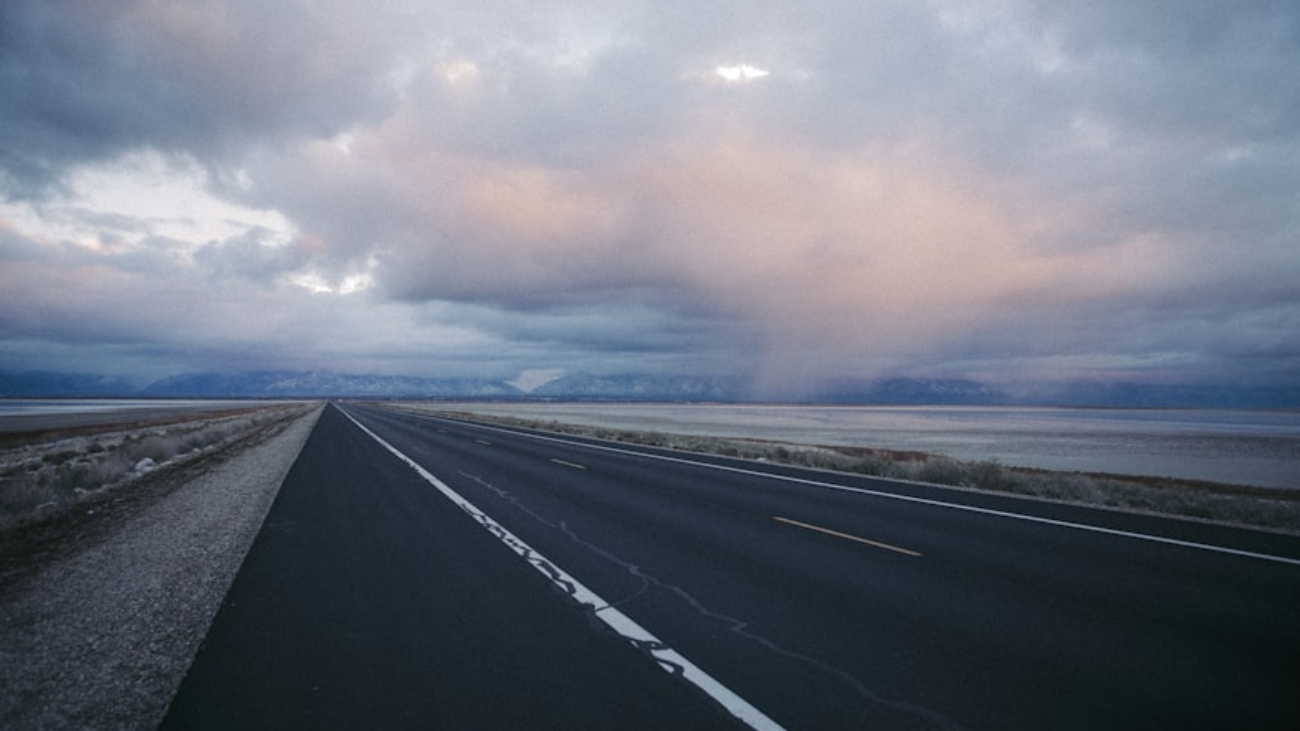
Kerala’s identity is inseparable from its monsoons. The rains define its agriculture, its forests, its culture, and also its greatest engineering challenge. Every year, roads crack, potholes multiply, and entire stretches collapse under the pressure of waterlogging, floods, landslides, and saturated soil. For decades, Kerala has accepted this as an unavoidable cycle. But Kerala Vision 2047 imagines a future where the state finally masters the science of building roads that resist rain, survive monsoons, and remain safe and functional regardless of climate extremes.
The first step in achieving rain-resistant roads is to recognise that water—not traffic—is the primary cause of road failure in Kerala. When water enters the pavement layers, the soil loses strength, the asphalt loses binding, and the entire structure begins to deform. Therefore, a rain-resistant road is not just a thicker road; it is a road designed, constructed, and maintained as a water-management system. The road and the drainage must be conceived as one integrated engineering unit.
Drainage is the backbone of rain-proofing. Kerala must redesign its roads with deeper side drains, properly shaped shoulders, and cross-drainage structures placed at scientifically calculated intervals. Every road should have a clear path for water to exit, from the crown of the pavement to the drains and finally into natural water bodies or engineered soak pits. Clogged drains must become a thing of the past. By 2047, drainage should be monitored by sensors, cleaned by mechanised systems, and inspected regularly before and during monsoon months. If roads are the arteries of mobility, drains are the lifelines that keep them alive.
The second crucial component is the pavement structure itself. Rain-resistant roads require properly compacted subgrades, moisture-proof layers, and asphalt mixes designed specifically for Kerala’s climate. Too often, failures occur not because of surface damage but because the base layers were not compacted or protected adequately. Advanced methods such as cement stabilisation, aggregate interlocking, geo-textile reinforcement, and waterproof membranes can drastically improve performance. Asphalt should be modified using polymers, fibres, or crumb rubber to increase water resistance and reduce stripping. Concrete pavements, especially in urban and high-stress zones, offer long life and significant resilience against rainfall.
Kerala’s hill regions add another dimension of complexity. In places like Idukki, Wayanad, and Pathanamthitta, monsoon damage is intensified by slopes, erosive soils, and landslides. Rain-resistant roads here require slope management: retaining walls, gabion structures, soil nailing, and engineered vegetation that stabilises slopes. Kerala cannot build roads in the hills with the same philosophy used in plains. By 2047, every hill highway must be engineered with slope stability studies, hydrology models, and rain-induced risk maps.
Technology will be a powerful ally. A rain-resistant Kerala will rely on digital tools to predict, detect, and prevent damage. Roads must be periodically scanned with ground-penetrating radars to identify hidden moisture pockets and subsurface voids. IoT-based moisture sensors embedded in pavement layers can alert engineers when water infiltration reaches dangerous levels. GIS-based road information systems should map every vulnerable stretch and trigger preventive action before damage begins. Drone inspections during monsoons can detect cracks, blocked drains, or developing slides with speed and accuracy.
Construction practices must also evolve. A rain-resistant road can only be built when temperature, moisture, compaction, and material quality are controlled with precision. Paving during rain, poor curing, and rushing through layers must become unacceptable practices. Kerala Vision 2047 calls for mechanised construction: automated pavers, temperature-controlled asphalt batch plants, compaction sensors, and continuous quality checks. Human judgment must be supplemented with machine-verified data so that each layer of the road is built with scientific accuracy.
Maintenance will also play a central role. A rain-resistant road is not an infrastructure that is forgotten after inauguration. It requires timely desilting of drains, pre-monsoon inspections, sealing of minor cracks before they expand, and strengthening of shoulders to prevent edge failures. Kerala must transition from reactive maintenance to predictive maintenance, where data guides intervention. Temporary patchworks must give way to structured, long-lasting repair systems.
Rain-resistant roads also contribute to sustainability. Well-designed drainage prevents soil erosion, protects water bodies from sediment load, and enhances groundwater recharge. Permeable shoulders and engineered soak pits can turn rainfall into a resource instead of a threat. In coastal areas, where high water tables complicate drainage, the use of raised pavements, sub-surface drains, and salt-resistant materials will be crucial.
By 2047, Kerala should be a global model for monsoon-adapted road engineering. A visitor travelling during heavy rain should experience smooth, safe, flood-free roads that reflect engineering discipline and climate-ready design. Roads should remain intact through multiple monsoons, not disintegrate after the first downpour. Government budgets should shift from endless repairs to long-term durability investments. Citizens should be able to trust that the state’s roads are engineered not to survive the rain but to work with it.
Kerala Vision 2047 envisions a state where monsoons no longer destroy mobility, where engineering triumphs over climate stress, and where rain-resistant roads become a benchmark of good governance. When Kerala masters the art of building roads that withstand the rain, it will unlock a new era of safety, reliability, and resilience for generations to come.
