
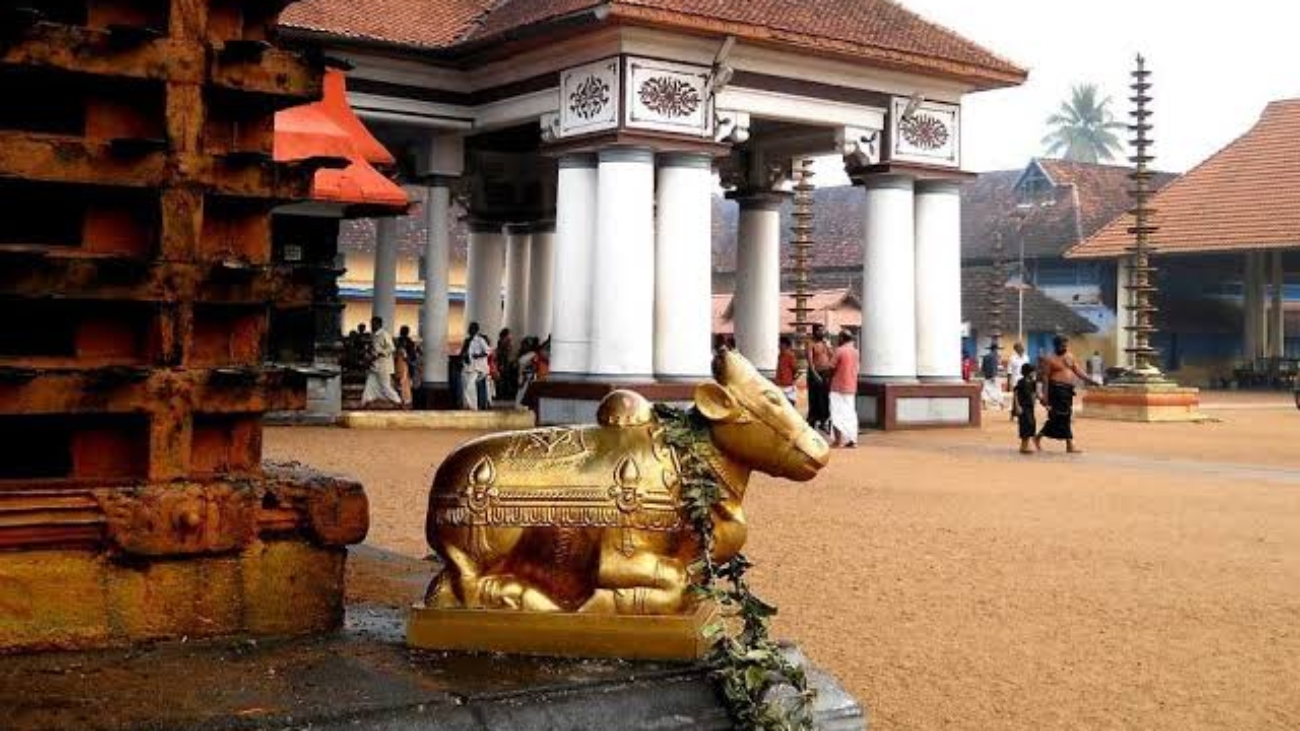
Vaikom taluk—strategically positioned between Kottayam’s midland agricultural belt and the booming industrial–commercial ecosystem of Ernakulam—is one of the most geographically and economically advantageous regions of central Kerala. Surrounded by backwaters, fisheries, paddy fields, boat-building traditions, coir belts, and strong educational institutions, Vaikom is poised to evolve into a diversified manufacturing hub by 2047. With a projected population of 6–6.5 lakh and around 3.7 lakh working-age residents, the taluk has both the human capital and resource base to transition into a ₹9,000–₹11,000 crore annual manufacturing economy. Its future lies in water-based industries, green construction materials, coir-tech, electronics, agro-processing, and renewable energy components.
The first major pillar for Vaikom’s industrial future is the creation of a Backwater Marine Processing, Aquaculture & Blue Economy Cluster, building on the region’s strong inland and coastal fisheries. Located near Thanneermukkom, Kumarakom and Vembanad Lake, the taluk receives steady inflows of freshwater and brackish fish. A 30-acre processing cluster with IQF freezing tunnels, automated filleting, drying units, value-added fish-cut centres, fish-oil extraction, nutraceutical lines and ready-to-cook product facilities can process 40,000–50,000 tonnes of fish annually by 2047. This cluster can generate ₹2,000–₹2,400 crore in annual revenue and create 15,000–18,000 direct jobs. The global rise in demand for collagen, omega-rich fish oils and premium seafood snacks positions Vaikom as a crucial inland processing hub. Integrated aquaculture farms in Udayanapuram, Thalayolaparambu and bordering Kuttanad can enhance raw material availability.
A second major pillar is Vaikom’s natural strength in coir and natural fibres. A Coir-Tech, Sustainable Fibres & Green Materials Cluster can modernise the traditionally strong coir economy into a tech-driven sector. A 25-acre industrial zone with automated defibering machines, fibre-cleaning systems, power looms, coir–polymer composite units, biodegradable packaging units, geo-textile plants and erosion-control mat production can generate ₹1,000–₹1,300 crore annually and create 12,000–15,000 jobs. With global attention shifting toward sustainable materials, Vaikom can emerge as Kerala’s centre for eco-friendly construction mats, biodegradable packaging, automotive non-wovens, and geotextile solutions for riverbank protection.
Vaikom’s backwater geography and boat-making traditions create a strong foundation for a Boat-Building, Water Transport Systems & Marine Equipment Hub. A 20–25 acre marine-manufacturing cluster can produce inland ferries, electric boats, FRP craft, pontoons, jetty components, navigation accessories, marine-grade solar systems, boat interiors, and water-sport equipment. By 2047, this cluster can contribute ₹1,200–₹1,500 crore in output and create 10,000–12,000 jobs. With Kerala expanding water-based transport—including Water Metro and inland ferry networks—Vaikom can become a major supplier of vessels and maritime hardware.
A fourth opportunity emerges from Vaikom’s rapid integration into the Kochi industrial ecosystem: a Digital Electronics, LED Systems & Smart Devices Assembly Cluster. A 20-acre zone with 40–60 MSMEs can produce LED lights, home-automation devices, micro-inverters, CCTV units, IoT sensors, water-level alarms, agricultural monitoring tools, and small appliances. By 2047, this sector can generate ₹900–₹1,200 crore and create 7,000–9,000 jobs. Vaikom’s proximity to Kochi’s electronics supply chain makes scaling highly feasible.
The taluk’s agricultural base also supports a High-Value Agro-Processing, Functional Foods & Spice Derivatives Park. Produce from Vaikom, Kottayam midlands, Kuttanad and the Idukki foothills flows naturally into the region. A 25-acre park with dehydration systems, spice distillation labs, fruit pulpers, rice-value-addition units, ready-to-cook mix plants and nutraceutical blending can process 1,20,000–1,40,000 tonnes of produce annually. By 2047, this cluster can generate ₹1,500–₹1,800 crore and create 12,000–14,000 jobs. The combination of spices, fruits, rice derivatives and herbal blends can feed Kerala’s growing wellness and packaged-food markets.
Vaikom’s role in tourism—due to proximity to Kumarakom, Vaikom temple, backwater tourism circuits and heritage villages—supports a Sustainable Interiors, Prefab Construction & Resort Materials Cluster. A 20-acre hub can manufacture bamboo composites, engineered wood products, modular interiors, jetty furniture, eco-resort components, waterproof outdoor panels, CNC-crafted furniture and signage systems. By 2047, this sector can produce ₹700–₹900 crore annually and create 6,000–8,000 jobs. As Kerala’s tourism moves toward boutique, eco-friendly, water-adaptive infrastructure, Vaikom can supply the design and material backbone.
To integrate these clusters, Vaikom requires a Backwater Logistics, Cold-Chain & Industrial Services Park, ideally positioned near the Vaikom–Kumarakom corridor. A 25-acre logistics hub with 20,000 pallet spaces, 2,500 tonnes of cold storage, inland water cargo linkages, packaging services, testing labs, e-commerce fulfilment and digital freight systems can reduce logistics costs from 10–12 percent to 5–6 percent. This can save local industries ₹150–₹180 crore annually. Waterway cargo can reduce transport costs for fish, coir goods, agro-products and interiors.
Human capital development is essential. By 2047, Vaikom must train 12,000–15,000 technicians annually in coir-tech, marine engineering, food processing, CNC machining, electrical systems, renewable-energy components, automation, QA/QC and electronics assembly. A Vaikom Institute of Backwater Manufacturing & Technology (VIBMT) can anchor the skill ecosystem. Gulf-return workers—common in Vaikom and Kottayam—should be transitioned into supervisory roles, marine-tech fabrication, machinery maintenance, and renewable-energy entrepreneurship. Women should comprise at least 45 percent of the workforce in coir-tech, food processing, electronics and medical supplies.
Digital transformation will unify Vaikom’s evolving industrial structure. A Vaikom Manufacturing Digital Grid, connecting 1,000–1,200 MSMEs, can enable predictive maintenance, cluster-level ERP systems, AI-based quality inspection, cloud scheduling, shared procurement, export documentation support and IoT-enabled supply-chain visibility. Productivity gains of 20–30 percent are achievable, especially in coir-tech, food-tech and marine-manufacturing units.
Sustainability must shape every decision. By 2047, Vaikom’s industrial zones should run on 75–80 percent renewable energy, including rooftop solar, canal-top solar and biomass-powered micro-grids. Industrial water reuse must reach 80 percent, especially in marine and agro-processing clusters. A circular materials recovery facility processing 12,000–15,000 tonnes annually of fish waste, coir residue, agro-waste and packaging scrap can feed recycled inputs back into multiple clusters. Backwater protection, salinity management and green-belt buffers must be embedded into all industrial master plans.
If implemented with institutional discipline, ecosystem coordination and sustainable practices, Vaikom taluk can become a world-class inland–backwater manufacturing hub by 2047. With ₹9,000–₹11,000 crore in annual output, 70,000–85,000 direct jobs, strong marine–agro integration, advanced coir-tech, digital electronics clusters and deep sustainability practices, Vaikom’s transformation will strengthen the entire Kottayam–Ernakulam industrial belt. Its success will showcase Kerala’s ability to build climate-adaptive, innovation-driven, globally competitive manufacturing ecosystems.
