
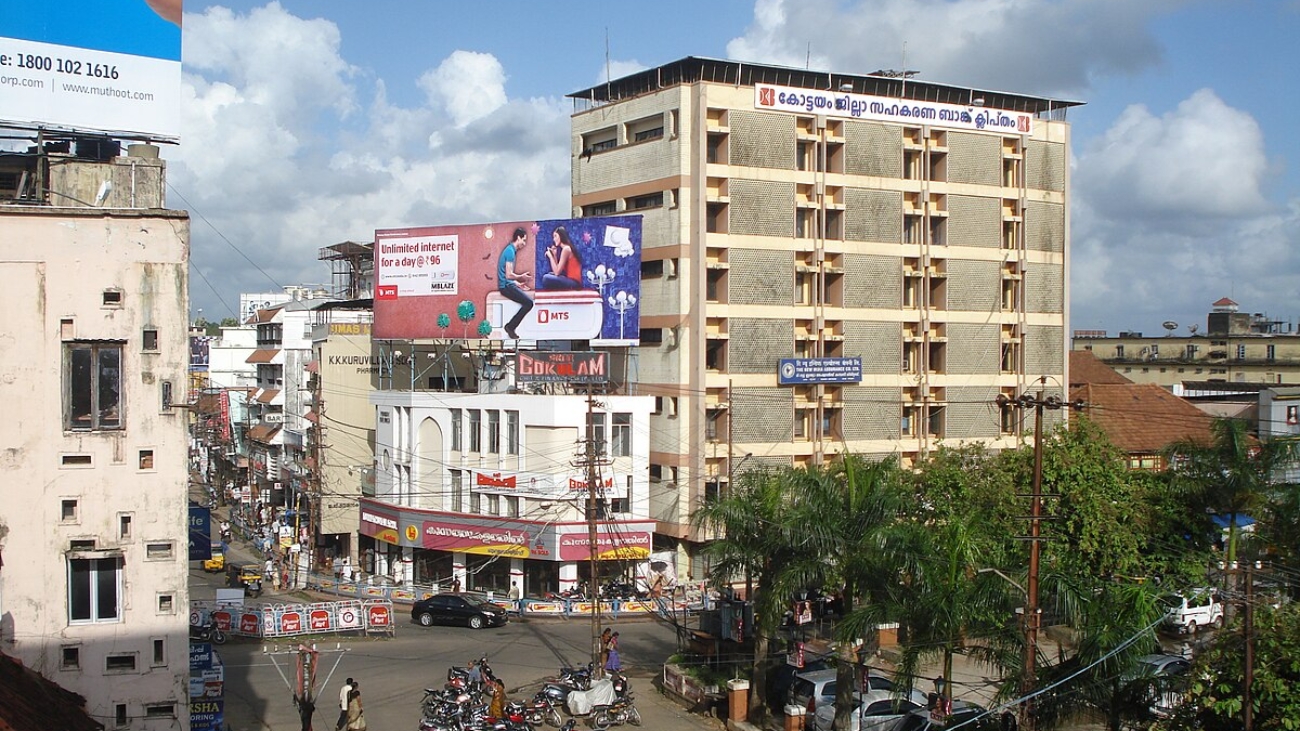
Kottayam taluk—anchored by one of Kerala’s strongest educational ecosystems and positioned between the commercial corridors of Kochi, the agro-belts of Changanassery and Kanjirappally, and the tourism-rich lake regions—is uniquely placed to evolve into a high-value, knowledge-driven manufacturing hub by 2047. With a projected population of 7–7.5 lakh, including nearly 4.3 lakh working-age residents, Kottayam has the intellectual and human-capital strength to build future-oriented industries. By 2047, the taluk can transform into a ₹12,000–₹15,000 crore annual manufacturing economy, anchored in medical devices, digital electronics, publishing-tech manufacturing, agro-processing, green materials, and precision engineering.
The most powerful industrial pillar for Kottayam is the establishment of a Medical Devices, Diagnostics & Home-Health Manufacturing Mega Cluster, building on the region’s rich healthcare infrastructure, skilled female workforce, and long-standing expertise in medical education. A 40-acre medical manufacturing zone with ISO- and GMP-compliant cleanrooms, sterilisation units, microfluidics labs, injection-moulding lines, precision tubing systems, biochemical-testing labs, and assembly floors can produce syringes, IV lines, catheters, diagnostic kits, test-strip consumables, orthopaedic supports, sanitary products and home-care equipment. By 2047, this cluster alone can generate ₹3,000–₹3,500 crore in annual output and support 25,000–30,000 direct jobs. With Kerala’s rising geriatric population and strong demand for affordable diagnostics, Kottayam can emerge as a leading medical-supplies manufacturing hub for South India.
A second pillar rooted in Kottayam’s educational and technological foundations is a Digital Electronics, IoT Devices & Smart Systems Assembly Cluster. A 25–30 acre electronics zone with SMT lines, sensor calibration labs, PCB assembly units and cleanroom environments can produce LED lighting systems, energy-monitoring devices, CCTV kits, micro-inverters, smart-home systems, industrial IoT modules, environmental sensors, and marine electronics for the Vembanad region. By 2047, this sector can generate ₹1,800–₹2,200 crore in revenue and create 15,000–18,000 jobs. With Kerala moving toward complete digitisation of public infrastructure and widespread adoption of smart devices, Kottayam will benefit from strong domestic demand.
Kottayam’s long-standing identity as India’s “publishing capital” creates a unique manufacturing opportunity: a Print-Tech Equipment, Packaging Machinery & Educational Materials Cluster. A 20-acre cluster can manufacture printing hardware, binding machines, packaging equipment, stationery products, learning aids, office tech, and book-related devices. By 2047, this cluster can generate ₹700–₹900 crore annually and support 6,000–8,000 jobs. As Kerala’s educational exports and publishing ecosystem expand, this sector can integrate advanced digital printing, automation and AI-powered educational tools.
The taluk’s agro-economic hinterland also enables a High-Value Agro-Processing, Rice Blends & Functional Foods Park. A 25-acre food-tech zone equipped with dehydration tunnels, fruit pulpers, spice distillation units, fermentation tanks, extrusion lines and ready-to-cook packaging plants can process 1,40,000–1,60,000 tonnes of produce annually. This sector can generate ₹1,800–₹2,100 crore in turnover and support 14,000–17,000 jobs, particularly for women. Kottayam can specialise in branded rice blends, herbal formulations, plant-based proteins, minimally processed foods, and clean-label functional foods for domestic and export markets.
A strong and emerging sector for Kottayam is a Timber, Bamboo & Advanced Interior Materials Cluster, driven by the region’s carpentry heritage and proximity to wood resources from Idukki. A 20-acre industrial hub can produce engineered-wood panels, bamboo composites, modular construction systems, prefab resort interiors, CNC-crafted furniture, waterproof boards, and eco-friendly outdoor materials. By 2047, this sector can generate ₹800–₹1,000 crore in annual output and provide 7,000–9,000 jobs. Demand from tourism hubs like Kumarakom, Vagamon and Thekkady will further fuel this industry.
Kottayam’s technical education ecosystem also makes it ideal for a Precision Engineering & Light Fabrication Hub, especially for machinery used in agro-processing, food production, medical-device assembly, and small industrial systems. A 20–25 acre engineering zone equipped with CNC machines, metal-cutting systems, welding robots, 3D printers, powder-coating units and mechatronics labs can generate ₹900–₹1,200 crore annually and create 8,000–10,000 jobs.
To integrate these diverse sectors, Kottayam needs a Central Kerala Industrial Logistics, Cold-Chain & Services Park, ideally located near the Ettumanoor–Kottayam–Chingavanam corridor. A 30-acre logistics zone with 30,000 pallet spaces, 3,000 tonnes of cold storage, packaging units, bonded warehouses, testing labs, e-commerce fulfilment and digital freight-management systems can reduce logistics inefficiency from 10–12 percent to 5–6 percent by 2047. This can save ₹200–₹250 crore annually for local manufacturers. Enhanced connectivity to ports via Kochi’s highway networks will strengthen export capacity for electronics, food products and medical supplies.
Human capital development must be the foundation of Kottayam’s rise. The taluk must train 18,000–20,000 technicians annually across medical-device assembly, electronics manufacturing, automation, QA/QC systems, CNC machining, design engineering, polymer science, food technology, and supply-chain operations. A dedicated Kottayam Institute of Advanced Manufacturing & Medical Technologies (KIAMMT) can become the intellectual and skill anchor for industry, collaborating with universities, hospitals and private companies. Women—who historically contribute strongly to Kottayam’s labour patterns—should form at least 50 percent of the new industrial workforce, particularly in medical and electronics clusters.
Digital transformation must unify the entire industrial ecosystem. A Kottayam Manufacturing Digital Grid, connecting 1,400–1,600 MSMEs, can enable predictive maintenance, AI-based quality control, shared procurement systems, cloud production scheduling, export workflow automation, IoT-based machine monitoring and cluster-wide energy optimisation. Productivity increases of 20–30 percent are achievable, making small enterprises globally competitive.
Sustainability must be embedded into every industrial decision. By 2047, Kottayam must target 80 percent renewable energy usage, supported by rooftop solar, canal-top solar, biomass units and micro energy storage. Industrial water reuse should reach 80 percent, particularly in food-tech and medical clusters. A circular materials recovery facility processing 15,000–18,000 tonnes of agro-waste, medical-plastic scrap, packaging materials, timber waste and electronics scrap can ensure resource circularity. The taluk must integrate flood-resilient drainage, wetland buffers and ecological zoning to protect environmentally sensitive midlands.
If implemented with strong planning, institutional coordination and a deep commitment to innovation, Kottayam taluk can become one of Kerala’s most advanced inland manufacturing hubs by 2047. With ₹12,000–₹15,000 crore in annual output, 1,00,000–1,20,000 direct jobs, leadership in medical-device manufacturing, digital electronics, food-tech and precision engineering, and a world-class skill-development ecosystem, Kottayam can play a central role in transforming Kerala into a high-value, innovation-driven industrial state.
