
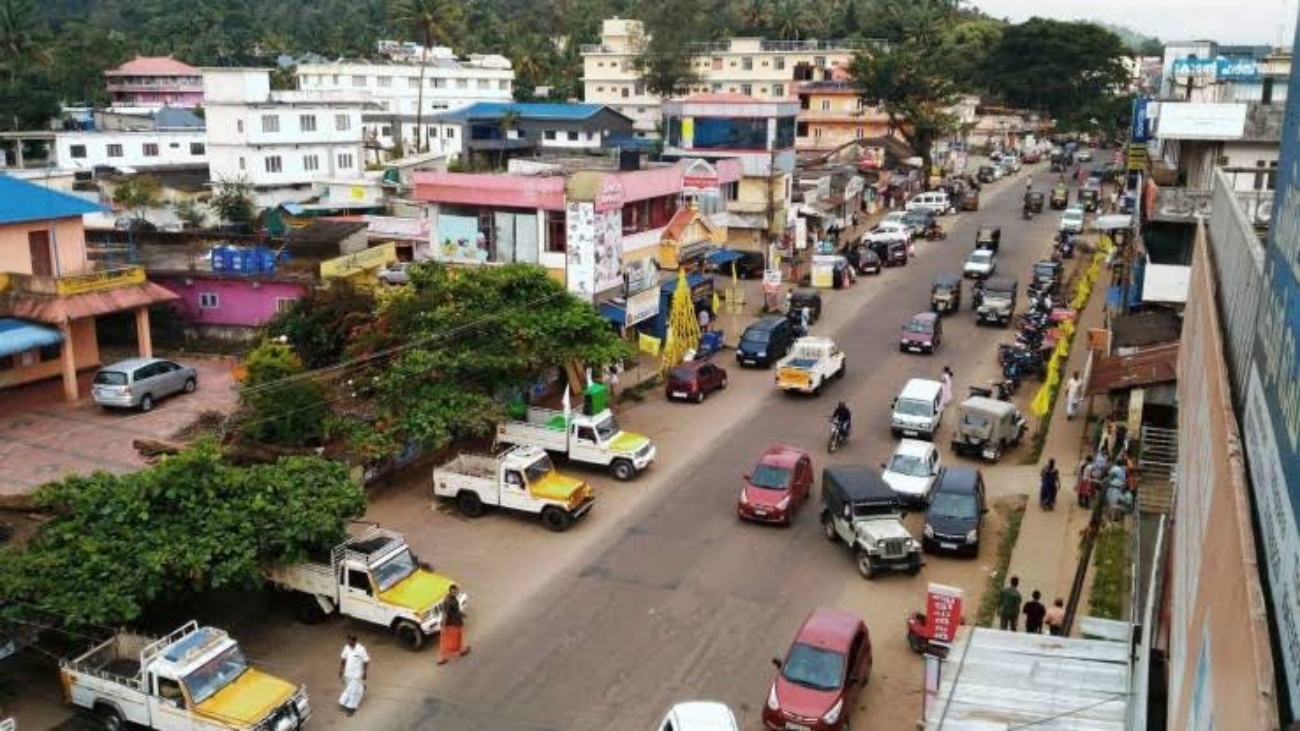
Nedumkandam taluk—positioned deep within Idukki’s high ranges and surrounded by plantations, spice estates, cold-weather vegetable farms and tribal belts—is one of Kerala’s most strategically important upland economies. As a gateway between the midlands and Tamil Nadu’s agricultural belts, the taluk sits on a dynamic trade corridor for cardamom, pepper, ginger, vegetables, fruits, dairy and forest-based products. With a projected population of 4–4.5 lakh by 2047 and nearly 2.5 lakh working-age residents, Nedumkandam has the demographic strength to evolve into a ₹8,000–₹10,000 crore annual manufacturing economy, anchored in spice extraction, cold-chain agro-processing, herbal production, engineering services, climate-resilient materials and rural machinery.
The most powerful industrial pillar for Nedumkandam’s future is a Cardamom, Pepper & High-Value Spices Processing Mega Cluster. With plantations stretching across Vandanmedu, Kattappana, Udumbanchola and Nedumkandam, the taluk sits at the geographic heart of Kerala’s premium spice industry. A 35-acre spice-tech cluster equipped with drying tunnels, steam sterilization units, high-pressure distillation plants, aroma-oil extractors, oleoresin manufacturing, fermentation facilities and precision grading systems can process 50,000–60,000 tonnes of spices annually by 2047. This sector alone can generate ₹2,500–₹3,000 crore in annual output and create 20,000–24,000 direct jobs. As global demand for premium pepper oil, cardamom concentrates, spice extracts and nutraceutical-grade flavours rises, Nedumkandam can position itself as a world leader in high-altitude spice processing.
A second major pillar is the development of a Cold-Chain Vegetables & Highland Agro-Processing Park, leveraging the region’s large-scale vegetable cultivation—cabbage, carrot, beans, cauliflower, peas, beetroot, tomatoes, leafy greens—and fruit production. A 30-acre food-tech zone equipped with controlled-atmosphere storage, freeze dryers, sorting–grading systems, quick-freezing tunnels, dehydration units, pickling lines and ready-to-cook processing facilities can handle 1,20,000–1,40,000 tonnes of produce annually. By 2047, this sector can contribute ₹1,500–₹1,800 crore in annual revenue and create 15,000–18,000 jobs. Highland vegetables are in high demand across Kerala and Tamil Nadu, and Nedumkandam can become the cold-chain backbone supplying fresh and value-added products.
Distinctively, Nedumkandam has tremendous scope to establish a Herbal, Ayurvedic & Botanical Extracts Manufacturing Hub, due to the region’s biodiversity and proximity to forest belts. A 20-acre herbal cluster equipped with GMP-certified facilities, essential oil distillers, solvent extraction units, powdering lines, phytochemical labs and packaging systems can produce balms, herbal powders, botanical extracts, therapeutic oils, ayurvedic medicines and plant-based nutraceuticals. By 2047, this cluster can generate ₹800–₹1,200 crore and support 8,000–10,000 jobs. Kerala’s global leadership in Ayurveda gives Nedumkandam a unique branding advantage for wellness exports.
Given the topography of the region—prone to landslides, soil erosion and heavy monsoons—Nedumkandam is an ideal centre for a Climate-Resilient Construction & Slope-Protection Materials Cluster. A 15–20 acre zone can manufacture geotextiles, erosion-control mats, slope-stabilisation anchors, drainage systems, flood barriers, lightweight blocks, moisture-resistant boards and climate-adaptive construction materials. By 2047, this sector can reach ₹700–₹900 crore in output and create 6,000–8,000 direct jobs. With climate change intensifying risks across the high ranges, demand for these materials will only increase.
A strong complementary sector emerges from the taluk’s engineering and workshop culture—particularly among Gulf-return technicians and mechanical workers. A Rural Machinery, Plantation Tools & Light Engineering Hub over 20 acres can manufacture pepper threshers, spice dryers, cardamom grading machines, vegetable washers, mini-processing units, micro-hydro components, solar mounting frames and small fabrication systems. By 2047, this cluster can generate ₹800–₹1,000 crore in annual output and create 7,000–9,000 jobs.
Nedumkandam’s dairy belt—stretching through Udumbanchola, Karunapuram and Pampadumpara—provides the foundation for a Highland Dairy Products & Nutritional Foods Cluster. A 10–15 acre cluster with pasteurisation units, cheese-making lines, milk-powder systems, probiotic-fermentation labs and ice-cream facilities can generate ₹400–₹600 crore annually and create 4,000–6,000 jobs. Specialty cheeses, probiotic drinks, flavoured yoghurts and nutritional powders can serve Kerala’s urban markets.
Tourism-linked micro-manufacturing is another high-potential area. A High-Range Interiors, Timber Engineering & Eco-Tourism Materials Cluster (10–15 acres) can produce engineered wood, bamboo composites, modular resort interiors, prefab huts, CNC-crafted furniture, signage and elevated walkways. This sector can generate ₹400–₹500 crore by 2047 and support 3,000–5,000 jobs, driven by destinations like Ramakkalmedu, Kalvari Mount and Thekkady.
To integrate these clusters, Nedumkandam must develop a High-Range Logistics, Cold-Chain & Export Services Park, strategically located on the Kattappana–Nedumkandam belt. A 25-acre logistics infrastructure with 20,000 pallet spaces, 2,500 tonnes of cold storage, packaging facilities, quality labs, e-commerce fulfilment and digital freight management can reduce current logistics inefficiencies from 12–15 percent to 6–7 percent. This alone can save ₹150–₹200 crore annually for manufacturers. Improved connectivity to Kochi and Thoothukudi ports can expand export capacity for spices and herbal goods.
Human capital development will shape Nedumkandam’s rise. The taluk must train 10,000–12,000 technicians annually across spice technology, herbal processing, food engineering, CNC machining, logistics operations, climate-materials production, packaging technology, mechatronics and quality control. A dedicated Nedumkandam Institute of Highland Manufacturing & Plantations Technology (NIHMPT) can anchor skill development. Gulf-return workers must be elevated into supervisory roles, fabrication entrepreneurship and machinery maintenance. Women should constitute at least 45 percent of the industrial workforce, especially in spices, agro-processing and herbal manufacturing.
Digital transformation must unify the taluk’s dispersed MSMEs. A Nedumkandam Manufacturing Digital Grid, connecting 700–900 enterprises, can provide AI-based quality grading, cloud production scheduling, predictive maintenance, farm-to-factory traceability, shared procurement, export documentation and logistics optimisation. Productivity gains of 20–30 percent are achievable, especially in spice and vegetable-processing clusters.
Sustainability must define every industrial decision. By 2047, Nedumkandam must achieve 80 percent renewable-energy penetration, powered by rooftop solar, micro-hydro, agro-waste biomass and community-level battery storage. Industrial water reuse must reach 85 percent in spice and herbal clusters. A circular materials recovery centre processing 8,000–10,000 tonnes annually of spice residue, vegetable waste, packaging scrap and biomass can feed into nutraceutical, compost and fibre-based industries. Landslide-sensitive zones must be protected through green buffers, slope stabilisation and strict zoning.
If implemented with scientific precision, environmental discipline and strong institutional support, Nedumkandam taluk can become one of India’s most advanced high-range manufacturing ecosystems by 2047. With ₹8,000–₹10,000 crore in annual output, 60,000–75,000 direct jobs, and leadership in spices, cold-chain agro-products, herbal extracts, climate-resilient materials and rural machinery, the taluk can redefine mountain-region industrialisation in Kerala. Its rise will strengthen the Idukki–Kottayam–Pathanamthitta high-range corridor and position Kerala as a global player in premium spice, wellness and sustainable agro-industries.
