
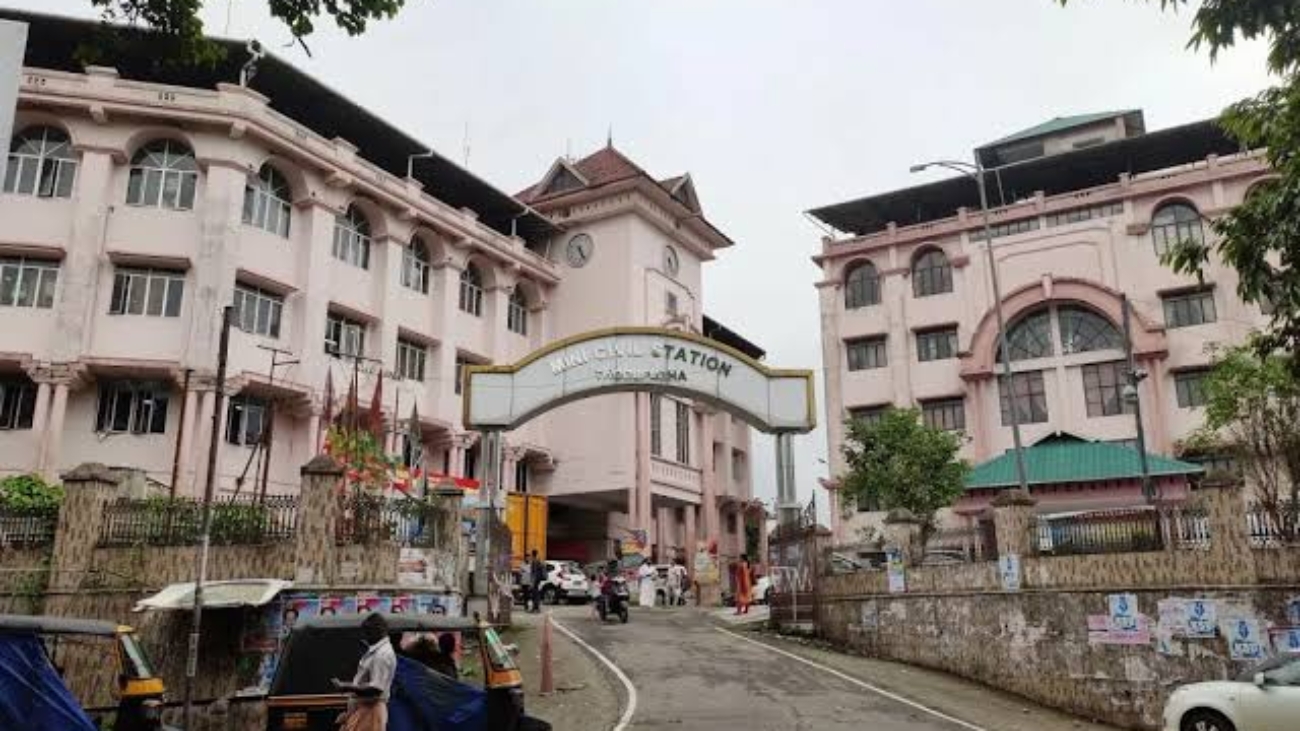
Thodupuzha taluk—at the foothills of the Western Ghats and functioning as Idukki’s commercial capital—is uniquely positioned to become one of Kerala’s most diversified inland manufacturing hubs by 2047. With direct connectivity to Ernakulam, Kottayam and central Kerala, and acting as the gateway to the plantation belts of Idukki, Thodupuzha enjoys a powerful combination of market access, skilled labour, agro resources, and industrial feasibility. By 2047, the taluk can evolve into a ₹12,000–₹15,000 crore annual manufacturing economy, driven by food-tech, rubber engineering, herbal products, green construction materials, engineering components, renewable-energy equipment and highland agro-processing. With a projected population of 7–7.5 lakh, including nearly 4.5 lakh working-age residents, Thodupuzha has the demographic strength to anchor central Kerala’s manufacturing transformation.
The most powerful industrial pillar for Thodupuzha is the creation of a Rubber Engineering, Polymers & Advanced Materials Cluster, leveraging its proximity to vast rubber plantations in Muttom, Karimannoor, Velliyamattom, Vazhithala, Kalloorkkad and Thodupuzha’s midland belt. A 40-acre polymer manufacturing zone equipped with automated compounding units, glove-production lines, EV-grade sealing systems, precision moulding centres, footwear-component units, hose manufacturing and rubber–metal bonded products can produce 30,000–35,000 tonnes annually by 2047. This cluster alone can generate ₹3,000–₹3,500 crore in annual output and support 25,000–30,000 direct jobs. As India grows its EV, medical and engineering industries, demand for high-quality rubber components will continuously rise, giving Thodupuzha a national-scale advantage.
The second major pillar is a High-Value Agro-Processing, Functional Foods & Spice-Tech Park, drawing produce from the highland regions of Idukki and the midlands of Thodupuzha. A 35-acre food-tech cluster equipped with freeze dryers, dehydration systems, fruit pulpers, rice-extrusion lines, spice distillation labs, ready-to-cook packaging units and fermentation systems can process 2,00,000–2,40,000 tonnes of agricultural produce annually. By 2047, this sector can generate ₹2,000–₹2,500 crore and create 18,000–22,000 direct jobs, many of them for women. Thodupuzha can specialise in cardamom blends, pepper powders, fruit-based functional foods, nutraceuticals, flavoured rice mixes, clean-label snacks and herbal drinks.
Thodupuzha’s strong herbal and Ayurvedic tradition offers a major opportunity to develop a Herbal, Wellness & Botanical Extracts Manufacturing Hub, supplied by biodiversity from Vannapuram, Udumbannoor, Karimannoor and adjoining forested regions. A 20-acre cluster with essential oil extractors, solvent extraction plants, phytochemical labs, GMP-certified production units and automated packaging lines can generate ₹900–₹1,200 crore annually and support 8,000–10,000 jobs. Wellness teas, herbal powders, therapeutic oils, botanical blends and nutraceutical capsules can supply Kerala’s ayurveda industry and export markets.
A major emerging sector for Thodupuzha is Green Construction Materials, Timber Engineering & Eco-Friendly Interiors, leveraging carpentry traditions and wood inflows from Idukki. A 25-acre cluster can produce engineered wood, bamboo composites, modular interiors, prefabricated home components, CNC-designed furniture, waterproof outdoor panels and eco-resort materials. By 2047, this sector can generate ₹1,000–₹1,200 crore in output and create 10,000–12,000 jobs. Kerala’s construction and tourism sectors, increasingly seeking sustainable materials, will provide strong demand.
With a strong base of engineering workshops, fabricators and returning Gulf technicians, the taluk is ideal for a Light Engineering, Precision Manufacturing & Industrial Machinery Hub. A 20–25 acre cluster equipped with CNC machining, welding robots, fabrication lines, powder-coating units, 3D-printing labs and mechatronics systems can produce agro-machinery, food-processing tools, solar mounting systems, EV accessories, pumps, hardware components and workshop equipment. By 2047, this cluster can generate ₹1,800–₹2,100 crore in output and support 15,000–18,000 jobs.
Thodupuzha’s location makes it an ideal site for a Renewable Energy Components & Electrical Equipment Manufacturing Cluster, supplying Ernakulam’s construction ecosystem and the hydroelectric grid of Idukki. A 20-acre cluster can produce LED fixtures, wiring harnesses, micro-inverters, distribution panels, charge controllers, turbine auxiliaries, and solar–hydro hybrid components. By 2047, this sector can generate ₹1,200–₹1,500 crore and create 8,000–10,000 jobs.
With large-scale vegetable cultivation in highland pockets around Thodupuzha—including Vannapuram, Karimannoor, Velliyamattom and Kanjikkuzhy—a Highland Vegetables & Cold-Chain Processing Cluster becomes feasible. A 15–20 acre facility equipped with controlled-atmosphere storage, quick-freezing tunnels, sorting–grading systems, packing lines and dehydration units can process 80,000–1,00,000 tonnes of vegetables annually. By 2047, this sector can generate ₹600–₹800 crore and support 5,000–7,000 jobs.
The success of these clusters requires robust industrial connectivity. Thodupuzha must build a Central Idukki Logistics, Testing & Export Services Park, ideally along the Thodupuzha–Muttom or Thodupuzha–Kalayanthani belt. A 30-acre logistics park with 30,000 pallet spaces, 3,000 tonnes of cold storage, bonded warehouses, e-commerce fulfilment centres, advanced testing labs, packaging facilities and a digital freight-management system can reduce logistics inefficiency from 10–13 percent to 5–6 percent. This can save manufacturers ₹200–₹250 crore annually. Enhanced connectivity to Kochi port and Cochin Airport will strengthen exports, particularly for herbs, food products and rubber goods.
Human capital development must guide Thodupuzha’s Vision 2047 journey. The taluk should train 18,000–20,000 technicians annually across rubber engineering, food processing, herbal extraction, CNC machining, automation systems, electronics assembly, quality control and renewable energy technologies. A new Thodupuzha Institute of Advanced Manufacturing & Agro Technologies (TIAMAT) can anchor skill development and industry partnerships. Gulf-return workers—strong in the region—should transition into supervisory roles, machinery maintenance, fabrication entrepreneurship and export operations. Women should represent 45–50 percent of the workforce in food-tech, herbal, electronics and packaging units.
Digital transformation must unify the industrial ecosystem. A Thodupuzha Manufacturing Digital Grid, connecting 1,500–1,800 MSMEs, can provide cloud-based production scheduling, AI-based defect detection, predictive maintenance, shared procurement systems, supply-chain visibility, export documentation automation and digital warehousing. This can improve productivity by 20–30 percent, making MSMEs globally competitive.
Sustainability must be integrated into every cluster. By 2047, Thodupuzha should achieve 80 percent renewable energy adoption, powered by rooftop solar, agro-residue biomass, hydro integration and community energy storage. Industrial water reuse must reach 85 percent, especially in rubber, food-tech and herbal clusters. A circular materials recovery facility processing 15,000–18,000 tonnes of agro-waste, rubber scrap, wood residues, spice waste and packaging material annually can feed into bioenergy, composting, eco-boards and specialty materials.
If executed with institutional discipline, infrastructure upgrades and ecosystem-wide digital integration, Thodupuzha can become one of Kerala’s most advanced inland industrial districts by 2047. With ₹12,000–₹15,000 crore in annual output, 1,00,000–1,20,000 direct jobs, and leadership in rubber engineering, food-tech, herbal wellness, precision machinery and green materials, the taluk will anchor central Kerala’s manufacturing transformation. Its rise will redefine Idukki’s economic identity—shifting from a purely agricultural–tourism district to a balanced, innovation-driven industrial powerhouse.
