
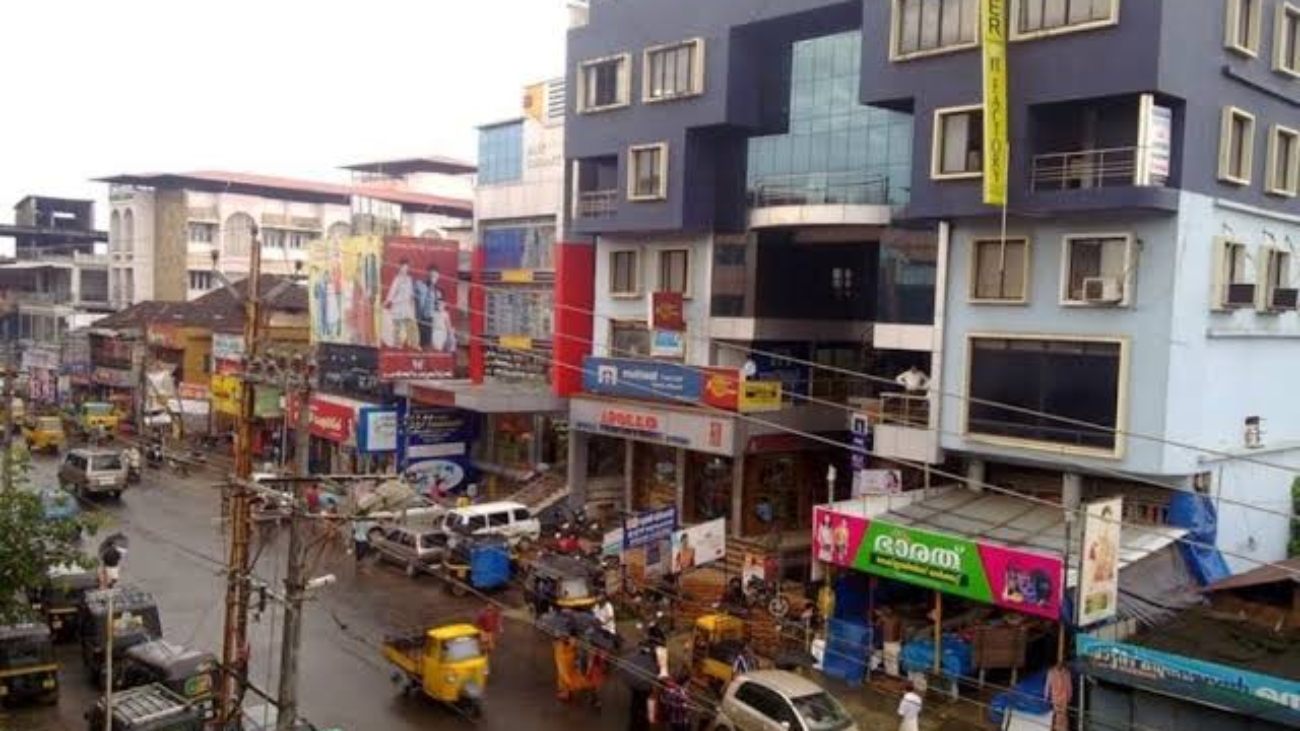
Chavakkad taluk—stretching across Guruvayur, Kunnamkulam fringes, Punnayur, Orumanayur, Vadanappally, Edakkazhiyur, Pavaratty and coastal belts—is one of Kerala’s most commercially dynamic small-geography economies. It combines the purchasing power of Gulf-returnee families, the employment depth of the tourism–pilgrimage town of Guruvayur, the agricultural productivity of its midland villages, and the fisheries potential of its coastline. By 2047, Chavakkad can realistically evolve into a ₹9,000–₹11,000 crore annual manufacturing ecosystem, anchored in seafood, food-tech, natural fibres, footwear, ethnic garments, green construction materials, small machinery, creative industries and packaging. With a projected population of 4.2–4.6 lakh, including 2.8 lakh working-age residents, the taluk has a strong consumer economy and an abundant workforce suited for diverse manufacturing clusters.
The strongest pillar of Chavakkad’s 2047 vision is a Marine Processing, Coastal Food-Tech & Aqua Exports Cluster, utilising the fishing centres at Vadanappally, Chettuva and Punnayur. A 30-acre marine industrial park equipped with IQF systems, automated freezing, filleting lines, ready-to-cook seafood packaging, fish-drying tunnels, fish-meal production, collagen extraction and marine nutraceutical processing can handle 1,00,000–1,20,000 tonnes of raw material annually. This cluster can generate ₹1,500–₹1,800 crore and create 15,000–18,000 jobs. Chavakkad can become a major supplier of mid-value seafood products for domestic and Gulf markets.
A second major pillar is a Coir, Natural Fibre & Green Materials Cluster, building on strong coconut belts and traditional coir units in Orumanayur, Punnayur and Pavaratty. A 30-acre fibre-tech hub with automated spinning machines, coir-ply manufacturing, geotextile looms, biodegradable mats, natural-fibre composites, eco-panels, cushion fillers and recyclable packaging can generate ₹1,200–₹1,500 crore and provide 12,000–15,000 jobs. Global interest in natural, biodegradable materials gives Chavakkad a strong export opportunity.
Chavakkad’s Gulf migration links and strong retail economy make it ideal for a Footwear, Leatherette Goods & Accessories Manufacturing Cluster. A 20-acre cluster equipped with cutting machines, moulding lines, stitching units, PU sole injection, footwear assembly, school-shoe production, leatherette handbags, belts and small accessories can generate ₹700–₹900 crore and support 7,000–9,000 workers. Gulf-returnee investment can accelerate growth in this cluster.
Given Guruvayur’s tourism orbit and strong apparel demand, a Garments, Ethnic Wear & Tailoring-Tech Hub should also be built. A 20-acre apparel zone with power-loom support, boutique production, embroidery units, dyeing, finishing, children’s wear manufacturing, ethnic wear units and garment-printing lines can generate ₹600–₹800 crore and provide 6,000–8,000 jobs, especially for women.
The taluk’s agricultural belt—vegetables, banana, coconut, nutmeg, fruits—creates space for a Processed Foods, Bakery-Tech & Functional Nutrition Cluster. A 25-acre food-tech zone with dehydration systems, chips lines, banana wafers, fruit concentrates, ready-to-eat meal production, spice-mix packaging and bakery-ingredient manufacturing can process 90,000–1,10,000 tonnes annually. This cluster can generate ₹1,000–₹1,300 crore and support 8,000–10,000 workers.
Chavakkad’s strong micro-enterprise base supports a Light Engineering & Rural Machinery Manufacturing Cluster, especially near Punnayur and Kunnamkulam fringes. A 15–20 acre zone with fabrication units, welding clusters, lathe workshops, pump assembly, coconut-processing equipment, fish dryers, banana slicers, irrigation machinery and micro-tools can generate ₹500–₹700 crore and provide 4,000–6,000 jobs.
Tourism around Guruvayur, Chavakkad Beach and Chettuva backwaters drives demand for a Creative Manufacturing, Souvenirs & Handicraft Cluster. A 10-acre craft-tech hub with handmade décor manufacturing, religious souvenir production, woodcraft micro-units, shell craft, artisanal jewellery, premium packaging and boutique gift items can generate ₹200–₹300 crore and support 2,000–3,000 artisans.
To integrate all these clusters, Chavakkad requires a West Thrissur Logistics, Cold-Chain & Packaging Hub, ideally located between Chavakkad and Kunnamkulam. A 25–30 acre logistics park with 15,000–20,000 pallet spaces, 1,500 tonnes of cold storage, seafood-preprocessing support, e-commerce fulfilment nodes, packaging labs, sterilisation units and a digital freight-management grid can reduce supply-chain inefficiencies from 10–12 percent to 6 percent, saving industries ₹120–₹150 crore annually.
Human capital development is essential for Chavakkad’s 2047 transformation. The taluk must train 12,000–14,000 workers annually across seafood technology, coir-fibre processing, garment manufacturing, footwear assembly, food safety, CNC machining, packaging, digital design, marketing and micro-enterprise skills. A dedicated Chavakkad Institute of Coastal & Agro-Industrial Technologies (CICAIT) should serve as the skill, R&D and incubation hub. Women—central to garment, food and coir industries—should represent 50 percent of the trained workforce.
Digital transformation must unify the taluk’s MSMEs. A Chavakkad MSME Digital Grid, connecting 1,200–1,400 micro and small units, can provide AI-based quality inspection, cloud production scheduling, digital invoicing, e-commerce integration, supply-chain monitoring, predictive maintenance for machines and export documentation automation. Such digitisation can increase productivity by 20–25 percent, especially in food-tech, seafood and apparel sectors.
Sustainability must be deeply integrated into the taluk’s industrial identity. By 2047, Chavakkad should achieve 75–80 percent renewable-energy usage, powered by rooftop solar, biomass from coconut husk and agro-waste, waste-to-energy systems and district-level battery networks. Water reuse should exceed 85 percent in seafood, coir and food-processing clusters. A circular economy plant processing 8,000–10,000 tonnes of fish residue, agro waste, packaging scrap and fibre waste annually can produce compost, biochar, eco-panels, biodegradable packaging and biomass briquettes.
If implemented with cooperative-oriented development, migration capital, coastal-sensitive planning and MSME strengthening, Chavakkad can become Kerala’s most dynamic coastal–consumer manufacturing taluk by 2047. With ₹9,000–₹11,000 crore in annual output, 85,000–1,00,000 direct jobs, and leadership in seafood, coir-tech, garments, processed foods, footwear, creative manufacturing and rural machinery, the taluk will anchor Thrissur’s western growth corridor and strengthen Kerala’s coastal manufacturing presence.
