
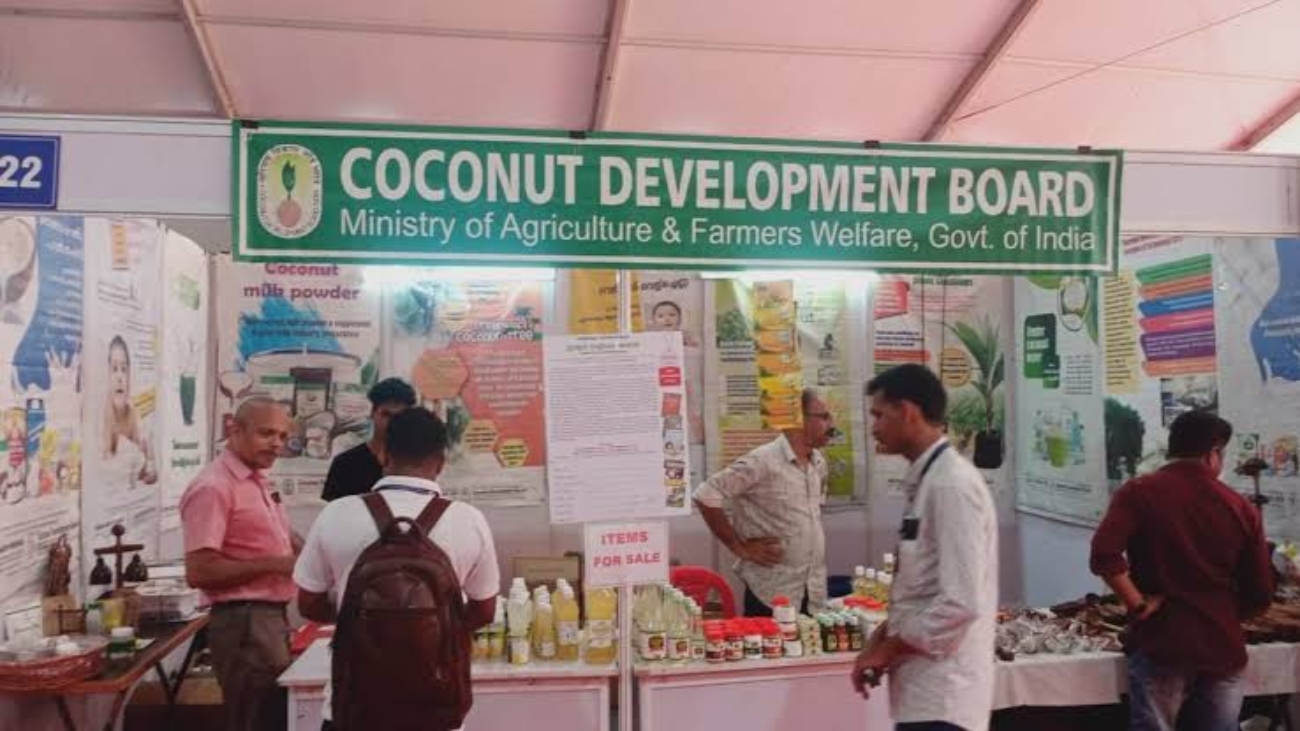
The Kerala State Coconut Development Corporation (KSCDC) represents one of the state’s most strategic yet underpowered institutions. Coconut is cultivated across almost every district in Kerala and supports millions of small and marginal farmers, yet institutional support has not kept pace with the crop’s economic and technological potential. Kerala Vision 2047 must elevate KSCDC from a limited operational body into the central anchor of a modern coconut bioeconomy that stabilizes farmer income, drives value addition, and positions Kerala as a global coconut hub.
At present, KSCDC’s interventions are largely focused on procurement, limited processing, and support activities around coconut oil and copra. While valuable, these efforts operate at a scale far below what the coconut economy demands. Farmers continue to suffer from price volatility, aging palms, labor shortages, and weak market linkages. By 2047, KSCDC must move beyond episodic market intervention and assume a continuous market-making role that gives coconut farmers confidence and predictability.
Price instability is the most immediate pain point. Coconut prices in Kerala swing sharply due to imports, seasonal gluts, and demand fluctuations. Vision 2047 requires KSCDC to function as a stabilizing institution, using strategic procurement, buffer stocking, and forward contracts linked to processors. Farmers should not be forced into distress sales simply because market coordination failed. A credible institutional buyer can set a floor of confidence even when it does not absorb the entire market.
Replantation is a long-term structural challenge that demands institutional leadership. A large share of Kerala’s coconut palms are past peak productivity. Individual farmers hesitate to replant because coconut takes years to yield returns. By 2047, KSCDC should lead a state-wide coconut rejuvenation mission, combining subsidized replanting, assured intercropping income, and long-tenure financial support. Coconut gardens must be redesigned as diversified agroforestry systems rather than single-crop holdings.
Value addition is where KSCDC can fundamentally change farmer economics. Kerala exports too much raw coconut value and imports too many finished coconut products. Vision 2047 should see KSCDC actively developing and partnering in downstream industries—virgin coconut oil, coconut milk and cream, coconut sugar, fiber products, biochar, activated carbon, cosmetics, and nutraceuticals. Every additional processing step retained within Kerala multiplies farmer-linked value.
Decentralized processing infrastructure is essential. Coconut production is spread across thousands of villages, but processing remains centralized and insufficient. By 2047, KSCDC should facilitate block- and taluk-level processing units owned by cooperatives, FPOs, or public–private partnerships. This reduces transport losses, creates rural employment, and keeps value close to the farmer.
The circular economy potential of coconut is unmatched. Husk, shell, water, kernel, leaves, and even trunk wood all have economic uses. Vision 2047 demands that KSCDC treat coconut as a zero-waste crop. Integration with the coir sector, renewable energy, sustainable packaging, and green materials can turn agricultural residue into industrial opportunity. Farmers should benefit from multiple revenue streams linked to a single crop.
Farmer organization must be central to this transformation. Most coconut growers are smallholders with weak bargaining power. By 2047, KSCDC should actively nurture coconut-focused farmer producer organizations, providing them with technical support, market access, and equity participation in processing ventures. Farmers must move from being raw material suppliers to stakeholders in the coconut value chain.
Market intelligence and branding are often overlooked but critical. Kerala coconut products enjoy a reputation for quality, yet branding remains fragmented. Vision 2047 should position KSCDC as the custodian of a unified “Kerala Coconut” identity, built on quality standards, traceability, and sustainability. Domestic and global consumers should immediately associate Kerala coconut with trust and premium value.
By 2047, the Kerala State Coconut Development Corporation must stand as more than a support agency. It should become the institution that turns coconut into a pillar of food security, rural employment, green industry, and farmer dignity. When coconut is treated not as a traditional crop but as a strategic bioeconomic asset, Kerala’s farmers gain stability and the state gains a globally competitive advantage.
