
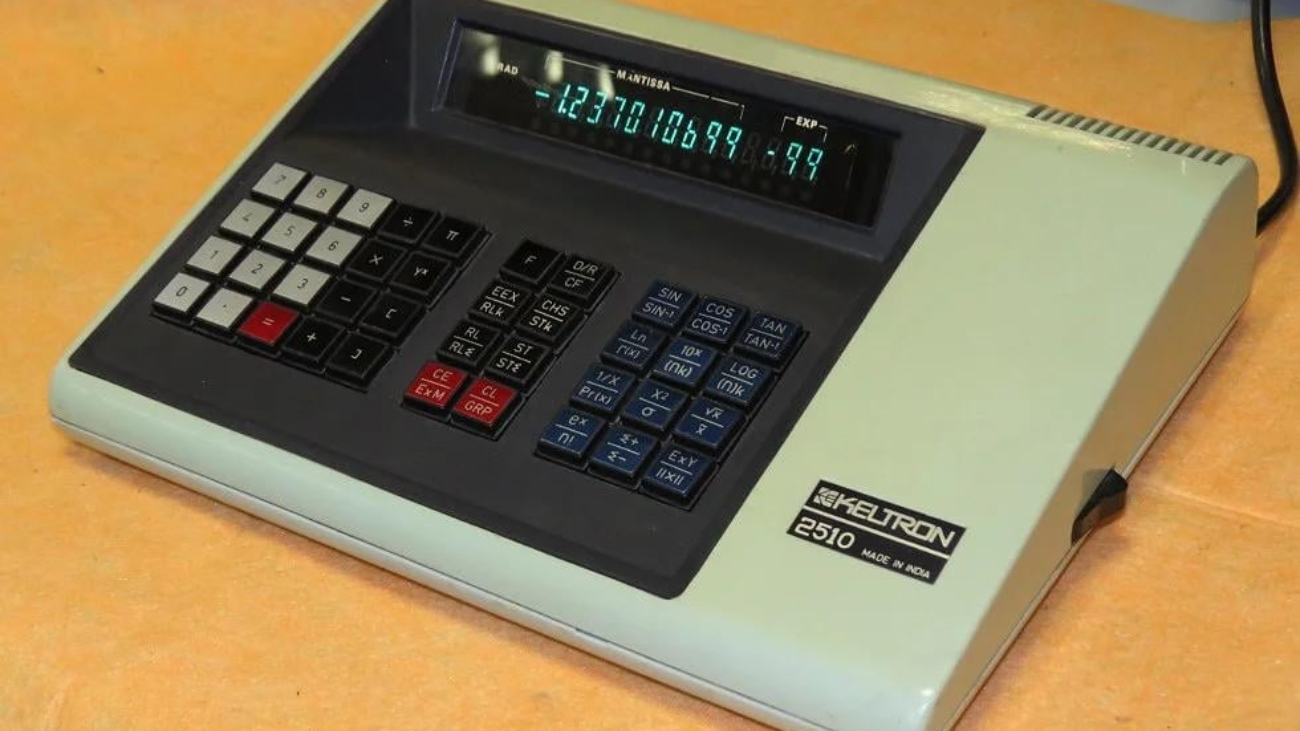
Kerala’s mechanical engineering capability does not exist only in shipyards, power plants or defence bases. It also lives inside a quieter but equally critical institution that designs, fabricates, installs and maintains physical systems across the state’s digital and public infrastructure. The Kerala State Electronics Development Corporation, widely known as KELTRON, represents this intersection of mechanical engineering, systems integration and public-sector execution. Established in 1973, KELTRON is one of the oldest state-owned electronics organisations in India, but its relevance today lies as much in mechanical systems as in electronics.
KELTRON operates in a domain where mechanical engineering is inseparable from real-world deployment. Every digital system ultimately rests on physical structures: enclosures, racks, mounts, frames, housings, kiosks, cabinets and environmental protection systems. KELTRON designs and fabricates these elements at scale, ensuring that electronic and digital systems can survive Kerala’s climate, usage patterns and long operating lifecycles. This is not academic design work. It is applied mechanical engineering under public-service constraints.
One of KELTRON’s major mechanical contributions lies in fabrication and enclosure systems. Control panels, outdoor cabinets, surveillance housings and equipment racks must withstand heat, humidity, dust and monsoon exposure for years. Mechanical engineers at KELTRON work on sheet-metal design, structural rigidity, thermal management, vibration resistance and ingress protection. Even small design decisions, such as gasket selection or ventilation layout, can determine whether a system lasts two years or ten.
Statewide surveillance and monitoring systems illustrate the scale of this work. Thousands of CCTV cameras are deployed across cities, highways, institutions and public spaces. Each camera requires a mechanically stable mounting system, weatherproof housing, alignment accuracy and long-term resistance to corrosion. KELTRON’s role involves site surveys, mechanical design standardisation, fabrication, installation and maintenance planning. When deployments scale into the tens of thousands of units, mechanical reliability becomes a system-level concern rather than an isolated engineering task.
Public information systems and kiosks form another area of mechanical intensity. Touchscreen kiosks, display boards and integrated terminals used in government offices and public spaces must endure continuous usage, occasional misuse and environmental stress. Mechanical engineers design frames, supports, hinges and access panels that balance strength with serviceability. These systems must allow technicians to access internal components easily while remaining tamper-resistant to the public. Achieving this balance requires practical engineering judgement built through experience.
KELTRON’s mechanical engineering also plays a role in integrated command-and-control centres. These facilities combine video walls, server racks, cooling systems, cable management and structural layouts into unified operational spaces. Mechanical design ensures that equipment loads are safely supported, airflow is managed, noise is controlled and maintenance access is preserved. Unlike private-sector data centres built for single clients, these facilities serve public agencies and must remain operational continuously, often for decades.
Manufacturing and assembly capabilities are central to KELTRON’s identity. Unlike purely design-oriented organisations, KELTRON maintains fabrication units where mechanical components are produced, assembled and tested. Welding, bending, machining, surface finishing and assembly are performed under one institutional roof. This vertical integration reduces dependency on external vendors and allows design feedback to flow directly from field issues back into fabrication improvements.
Maintenance is another underappreciated aspect of mechanical engineering at KELTRON. Public infrastructure does not end at installation. Systems deployed across Kerala require periodic inspection, repair and upgrades. Mechanical wear, corrosion and fatigue are inevitable. KELTRON engineers plan maintenance cycles, standardise spare parts and design components with repairability in mind. Over a 10- to 15-year lifecycle, this approach significantly reduces downtime and replacement costs.
The scale of KELTRON’s mechanical footprint becomes clear when viewed cumulatively. Thousands of installations across departments, districts and institutions translate into a vast distributed mechanical system. Even if each installation appears modest in isolation, together they represent a statewide network of physical assets that must perform reliably. Mechanical standardisation across such a network is a complex engineering and organisational challenge that KELTRON has addressed over decades.
KELTRON’s public-sector nature shapes its engineering philosophy. Projects are evaluated not only on initial cost but on durability, maintainability and public accountability. Mechanical engineers are encouraged to design conservatively, favour proven materials and prioritise long-term performance. This contrasts with short-cycle commercial projects where replacement rather than repair is often the default strategy. In public infrastructure, failure is visible and costly, making reliability paramount.
Another important dimension is skill development. Over decades, KELTRON has trained generations of mechanical technicians, supervisors and engineers. Many professionals who start their careers at KELTRON later move into other public utilities, infrastructure projects and private firms across Kerala. The mechanical practices and discipline they carry with them influence standards far beyond the organisation itself. This diffusion of expertise is one of KELTRON’s lasting contributions.
KELTRON also operates at the boundary between mechanical and electronic engineering. Thermal management of electronic systems, structural support for sensitive equipment and vibration isolation are all interdisciplinary challenges. Mechanical engineers must understand electronic constraints, while electronics teams depend on sound mechanical design. This integration prepares KELTRON for future infrastructure where cyber-physical systems become the norm.
As Kerala’s infrastructure becomes increasingly sensor-driven and automated, the demand for physical endpoints will grow. Smart poles, control cabinets, edge devices and field enclosures will proliferate across utilities, transport, healthcare and governance. Each of these requires mechanical design suited to Kerala’s environment. If such systems scale into the hundreds of thousands of units by 2047, the importance of indigenous mechanical capability becomes strategic.
Climate resilience adds another layer of relevance. Rising temperatures, heavier rainfall and extreme weather events place greater stress on physical infrastructure. Mechanical designs that once sufficed may fail under new conditions. KELTRON’s ability to iterate designs, adapt materials and update standards within a public framework will be critical in ensuring infrastructure resilience over the next 25 years.
There is also a strategic dimension of autonomy. Dependence on imported enclosures, cabinets and integrated systems introduces vulnerabilities in cost, supply chains and maintenance. By maintaining in-state mechanical fabrication and systems integration capability, Kerala retains control over critical infrastructure components. This autonomy is especially important for systems related to security, governance and essential services.
Despite its long history, KELTRON rarely features in popular discussions about Kerala’s engineering strengths. Its work lacks the visibility of large industrial plants or defence installations. Yet its impact is pervasive. Wherever public digital or monitoring infrastructure exists, mechanical systems designed or executed by KELTRON are likely present in some form.
As Kerala looks toward 2047, mechanical engineering will not disappear behind software and automation. On the contrary, the physical layer will become more important as systems scale and complexity increases. Sensors, networks and platforms all rely on mechanical integrity at the ground level. KELTRON represents this grounding force in Kerala’s engineering ecosystem.
The organisation’s value lies not in cutting-edge novelty, but in continuity, execution and reliability. These qualities are often overlooked until they fail. Kerala’s advantage is that institutions like KELTRON have been quietly preventing such failures for decades. In a future defined by interconnected systems and rising expectations, this kind of engineering capability will matter more, not less.
