
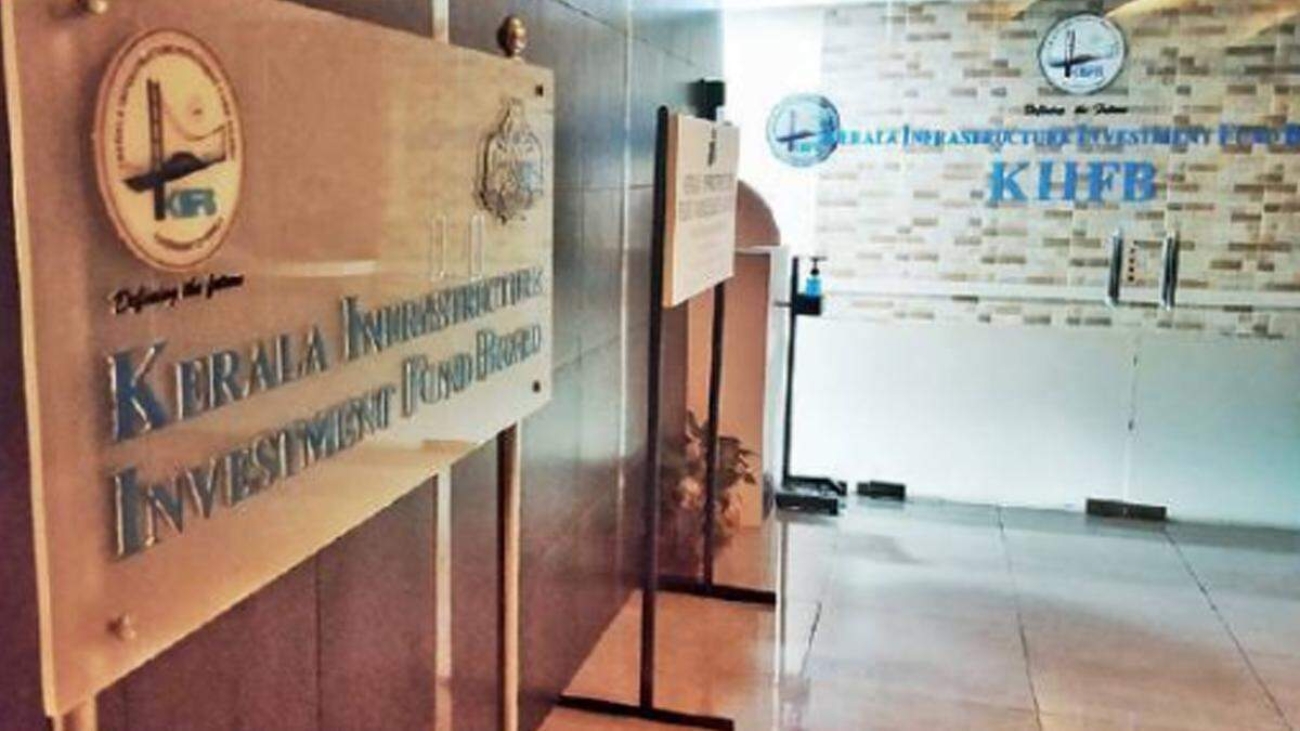
Kerala’s mechanical engineering story is not shaped only at the level of factories or workshops. A significant part of it is decided much earlier, at the stage where large public infrastructure projects are conceived, funded and structured. The Kerala Infrastructure Investment Fund Board, KIIFB, operates precisely at this level. While it is often described as a financing institution, KIIFB is also a powerful shaper of mechanical systems across Kerala’s public infrastructure. As Kerala looks toward 2047, the mechanical consequences of KIIFB’s decisions will be visible across hospitals, transport hubs, water systems and public buildings for decades.
KIIFB funds projects that are large in scale and long in life. Roads, bridges, medical colleges, hospitals, terminals, water infrastructure and public facilities funded through KIIFB are expected to operate for 30 to 50 years. Mechanical engineering choices embedded in these projects are therefore not short-term optimisations. They define energy consumption, maintenance burden, reliability and resilience across generations. Once built, these systems are difficult and expensive to change.
Hospitals funded through KIIFB provide a clear example of mechanical intensity. Modern hospitals are among the most mechanically complex public buildings. HVAC systems operate continuously, maintaining strict temperature, humidity and air-quality standards. Medical gas pipelines, vacuum systems, sterilisation equipment, lifts and backup power systems all rely on mechanical reliability. Mechanical failures in hospitals do not cause inconvenience; they directly affect patient safety. KIIFB-funded healthcare infrastructure therefore demands conservative design, redundancy and long-term maintainability.
Transport infrastructure introduces another layer of mechanical engineering. Bus terminals, intermodal hubs, parking structures and public buildings involve elevators, escalators, ventilation systems, fire suppression, drainage and structural-mechanical coordination. Mechanical engineers must design systems that can handle peak crowd loads, continuous usage and exposure to dust, heat and monsoon conditions. KIIFB’s project frameworks influence whether these systems are designed for minimal compliance or long-term robustness.
Water and sanitation projects funded through KIIFB are mechanically intensive by nature. Pumping stations, treatment plants, reservoirs and distribution systems depend on rotating machinery operating for thousands of hours each year. Pump selection, motor efficiency, vibration control and ease of maintenance directly affect operating cost and service reliability. A pump chosen for lower upfront cost but poor efficiency can waste energy for decades. These choices are often locked in at the funding and specification stage.
Fire and safety systems are another mechanical domain shaped by KIIFB projects. Large public buildings require fire pumps, pressurisation systems, smoke extraction fans and emergency ventilation. These systems are rarely used in normal conditions, but must work flawlessly under emergency stress. Mechanical engineers design them with redundancy, simple logic and fail-safe behaviour. KIIFB’s insistence on compliance and auditability pushes projects toward higher safety standards.
One of KIIFB’s most important mechanical influences is standardisation. By funding large numbers of similar projects across districts, KIIFB indirectly encourages standard mechanical specifications and design approaches. This reduces variability, simplifies maintenance and allows public agencies to build familiarity with systems. Standardisation also improves procurement efficiency and spare-parts availability over time.
Energy efficiency has become a central concern in KIIFB-funded projects. Public buildings consume large amounts of power over their lifetime. Mechanical systems such as chillers, pumps and air-handling units dominate this consumption. Engineers evaluate lifecycle cost rather than just capital cost, comparing energy savings over 20 to 30 years against higher upfront investment. These decisions affect the state’s long-term energy demand and operating budgets.
Maintenance realities are a recurring constraint. Public infrastructure must be maintained by government agencies with limited staffing and resources. Mechanical systems that are too complex or proprietary often degrade rapidly in practice. KIIFB projects increasingly emphasise maintainable design: accessible equipment, clear documentation, standard components and local serviceability. This pragmatic approach determines whether infrastructure performs as intended beyond the inauguration phase.
Mechanical resilience to climate stress is becoming unavoidable. Kerala faces heavier rainfall, flooding and higher ambient temperatures. Drainage systems, pump capacities, cooling systems and structural-mechanical interfaces must account for these conditions. Under-designed systems fail repeatedly under stress. KIIFB-funded projects are now expected to incorporate climate resilience into mechanical design, increasing safety margins and robustness.
Another important dimension is coordination across disciplines. Mechanical systems do not exist in isolation. They interact with civil structures, electrical systems and digital controls. Poor coordination leads to cramped layouts, inaccessible equipment and operational conflicts. KIIFB’s project appraisal processes increasingly emphasise integrated design reviews, forcing mechanical considerations to be addressed early rather than retrofitted later.
The scale of KIIFB-funded mechanical infrastructure is substantial. Hundreds of projects, each containing dozens or hundreds of mechanical systems, collectively represent thousands of pumps, motors, fans, lifts and plant equipment deployed across Kerala. Even marginal improvements in design quality translate into massive cumulative benefits in energy savings, uptime and maintenance cost.
There is also a long-term skills implication. Contractors, consultants and engineers who repeatedly work on KIIFB-funded projects adapt to higher standards and better practices. Over time, this raises the baseline quality of mechanical engineering in the state. Lessons learned from one project are carried into the next, slowly building institutional knowledge beyond any single organisation.
Unlike private projects driven by speed or return on investment, KIIFB-funded infrastructure prioritises durability and public value. Mechanical engineers operating in this ecosystem learn to think in decades rather than quarters. This mindset is critical for a state that must manage limited resources under growing demand.
As Kerala approaches 2047, public infrastructure will carry more load with fewer people. Automation, monitoring and predictive maintenance will become standard. Yet the physical systems themselves must be sound. Sensors cannot compensate for poor mechanical design. KIIFB’s role in shaping that design therefore becomes strategic.
The success of Kerala’s future infrastructure will depend not on how impressive projects look at launch, but on how quietly and reliably they function year after year. Mechanical systems are central to this reliability. KIIFB’s influence ensures that these systems are considered seriously, funded adequately and designed with long horizons in mind.
In the broader mechanical engineering landscape, KIIFB represents upstream power. It decides what gets built, how it gets specified and what standards are enforced. This upstream influence often matters more than downstream execution. By shaping the conditions under which mechanical engineering operates, KIIFB quietly defines the quality of Kerala’s public infrastructure.
As the state’s ambitions grow, so will the complexity of its infrastructure. Mechanical engineering will remain the backbone beneath digital controls and smart interfaces. KIIFB stands at the point where ambition becomes machinery. Its effectiveness will strongly influence how resilient, efficient and maintainable Kerala’s infrastructure is by 2047.
