
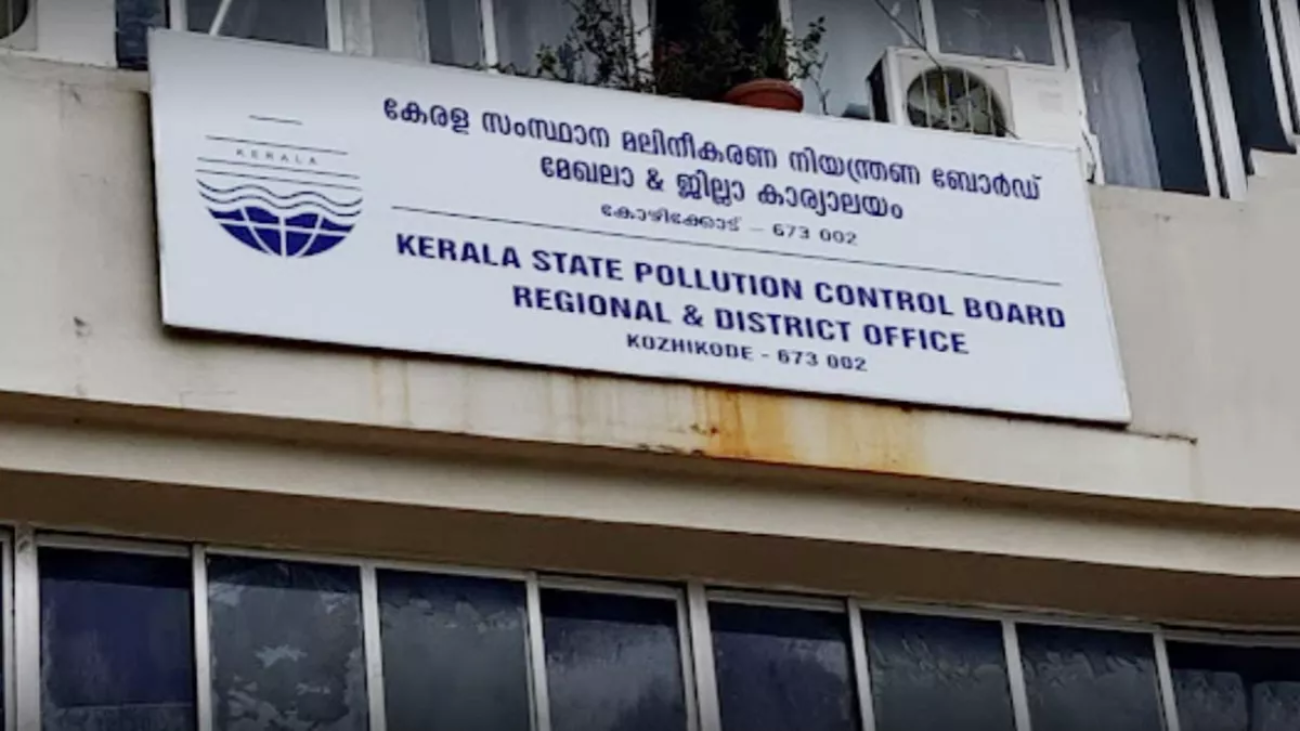
Kerala’s chemical infrastructure is often imagined in terms of factories, reactors and industrial plants. Yet one of the most consequential chemistry-driven institutions in the state does not manufacture products at all. Instead, it measures, analyses, regulates and enforces chemical reality across every sector of the economy. The Kerala State Pollution Control Board operates at the point where chemistry meets public health, environment and law. Its work determines whether air is breathable, water is potable and industrial growth remains within safe limits. As Kerala moves toward 2047, the chemical competence embedded in this institution will shape the state’s environmental and economic future more than any single plant or project.
Chemistry within the Kerala State Pollution Control Board is applied, continuous and statewide. Unlike laboratory research isolated from real-world variability, KSPCB’s chemical work deals with constantly changing samples drawn from rivers, lakes, groundwater, industrial effluents, municipal sewage, ambient air and soil. Each sample represents a living system influenced by climate, season, human activity and industrial processes. The board’s laboratories analyse thousands of such samples every year, translating raw chemical data into regulatory decisions with immediate consequences.
Water chemistry is one of the board’s most visible responsibilities. Kerala’s dense population and dispersed settlement patterns place immense pressure on surface and groundwater resources. KSPCB laboratories analyse parameters such as pH, dissolved oxygen, biochemical oxygen demand, chemical oxygen demand, heavy metals, nutrients and microbial indicators. These numbers are not abstract. A rise in ammonia levels signals sewage intrusion. Elevated heavy metals point to industrial discharge. Changes in dissolved oxygen affect aquatic life. Each result feeds into decisions that affect drinking water safety, fisheries, irrigation and ecosystem health.
Industrial effluent chemistry represents a more complex challenge. Kerala hosts a wide range of industries, from chemical plants and refineries to food processing units and small workshops. Effluents vary widely in composition, volume and hazard level. KSPCB chemists must understand acids, alkalis, solvents, oils, dyes, metals and complex organic compounds. They evaluate whether treatment systems are functioning correctly, whether discharge meets permissible limits and whether dilution or concealment is being attempted. This work requires not only analytical skill but chemical intuition developed through experience.
Air quality chemistry has become increasingly important as urbanisation and traffic intensify. KSPCB monitors particulate matter, sulphur dioxide, nitrogen oxides, ozone and volatile organic compounds across cities and industrial zones. These pollutants interact chemically in the atmosphere, forming secondary compounds that often cause more harm than their precursors. Understanding these interactions is essential for interpreting data correctly and recommending control measures. Chemistry here intersects with meteorology, combustion science and public health.
Hazardous waste characterisation is another critical chemical function. Industries generate wastes that cannot be disposed of through normal municipal channels. KSPCB chemists classify these wastes based on toxicity, reactivity, flammability and persistence. Improper classification can lead to environmental contamination that persists for decades. Chemical analysis ensures that wastes are routed to appropriate treatment, storage or disposal facilities. This is slow, meticulous work with long-term implications.
Laboratory infrastructure under KSPCB must maintain high standards of accuracy and reliability. Instruments such as spectrophotometers, chromatographs, titration systems and particulate analysers must be calibrated regularly. Sample handling protocols must prevent contamination or degradation. Results must be defensible in legal and administrative proceedings. Chemistry here operates under scrutiny not only from scientists but from courts, industries and the public.
Field chemistry adds another layer of complexity. Many samples are collected under difficult conditions, during monsoons, floods or industrial incidents. Chemical properties can change rapidly between collection and analysis. Preservatives, temperature control and timing become critical. Chemists must design protocols that account for these variables to ensure that laboratory results reflect reality rather than artefacts.
The regulatory role of KSPCB gives chemistry a normative dimension. Analytical results are compared against standards derived from toxicology, environmental science and policy. These standards evolve over time as scientific understanding improves. Chemists must stay current with changing norms while interpreting legacy data sets. This balance between continuity and adaptation is central to credible regulation.
One of the board’s less visible but most important functions is trend analysis. Individual samples tell limited stories. Long-term chemical data reveals patterns. Gradual increases in nutrient levels may indicate failing sewage systems. Seasonal spikes in particulates may point to specific sources. Trend-based chemistry supports preventive action rather than reactive enforcement. This capability becomes increasingly important as environmental pressures accumulate.
Chemistry at KSPCB also operates under social and political pressure. Industrial closures, fines or restrictions based on chemical findings affect livelihoods and investments. At the same time, failure to enforce standards imposes health and environmental costs on the public. Chemists must therefore operate with integrity and rigor, aware that their measurements can trigger conflict. Objectivity is not optional; it is foundational.
Climate change adds new dimensions to environmental chemistry. Higher temperatures affect reaction rates, dissolved oxygen levels and pollutant persistence. Intense rainfall alters dilution patterns and runoff chemistry. Salinity intrusion affects groundwater composition in coastal areas. KSPCB’s chemical frameworks must adapt to these shifts, recognising that historical baselines may no longer apply. Chemistry becomes a tool for understanding transition rather than stability.
The scale of KSPCB’s chemical responsibility is often underestimated. Thousands of industries, hundreds of local bodies and millions of citizens fall within its monitoring ambit. Each enforcement action or clearance relies on chemical assessment. Even small improvements in analytical efficiency or accuracy compound across the system, improving outcomes at scale.
Human capacity is central to this work. Chemists at KSPCB develop expertise that blends analytical skill with field awareness and regulatory understanding. This combination is rare. Unlike academic chemists, they must work within legal frameworks. Unlike inspectors, they must interpret complex chemical data. Preserving and upgrading this expertise is critical as experienced staff retire.
Digital tools increasingly support chemical work, from data management systems to real-time monitoring networks. Yet digitalisation does not replace chemistry. Sensors must be calibrated. Data must be interpreted. Anomalies must be investigated physically. The chemical layer remains foundational, with digital systems acting as amplifiers rather than substitutes.
As Kerala approaches 2047, environmental pressures will intensify. Industrial activity will diversify. Urban density will increase. Climate variability will strain ecosystems. In this context, the role of KSPCB’s chemical capability becomes more strategic. It will not only enforce compliance but guide sustainable limits. Chemistry will inform where growth is possible and where restraint is necessary.
Unlike industrial chemistry focused on output, regulatory chemistry focuses on boundaries. It defines what should not happen as much as what can. This boundary-setting function is essential for long-term viability. Economies that ignore it accumulate hidden costs that surface later as health crises or environmental collapse.
Kerala’s development model has long emphasised human well-being alongside economic activity. The chemical work of the Kerala State Pollution Control Board operationalises this philosophy daily. It translates abstract environmental values into measurable, enforceable parameters. This translation is one of the hardest tasks in public governance.
By 2047, the success of Kerala’s environmental strategy will depend less on declarations and more on the quiet accuracy of chemical measurements made year after year. Trust in air, water and soil quality rests on this accuracy. Once lost, it is difficult to restore.
The Kerala State Pollution Control Board represents chemistry in service of society rather than industry. Its laboratories are not sites of production but of protection. In a future where environmental margins shrink, this form of applied chemistry will become increasingly central to governance.
