
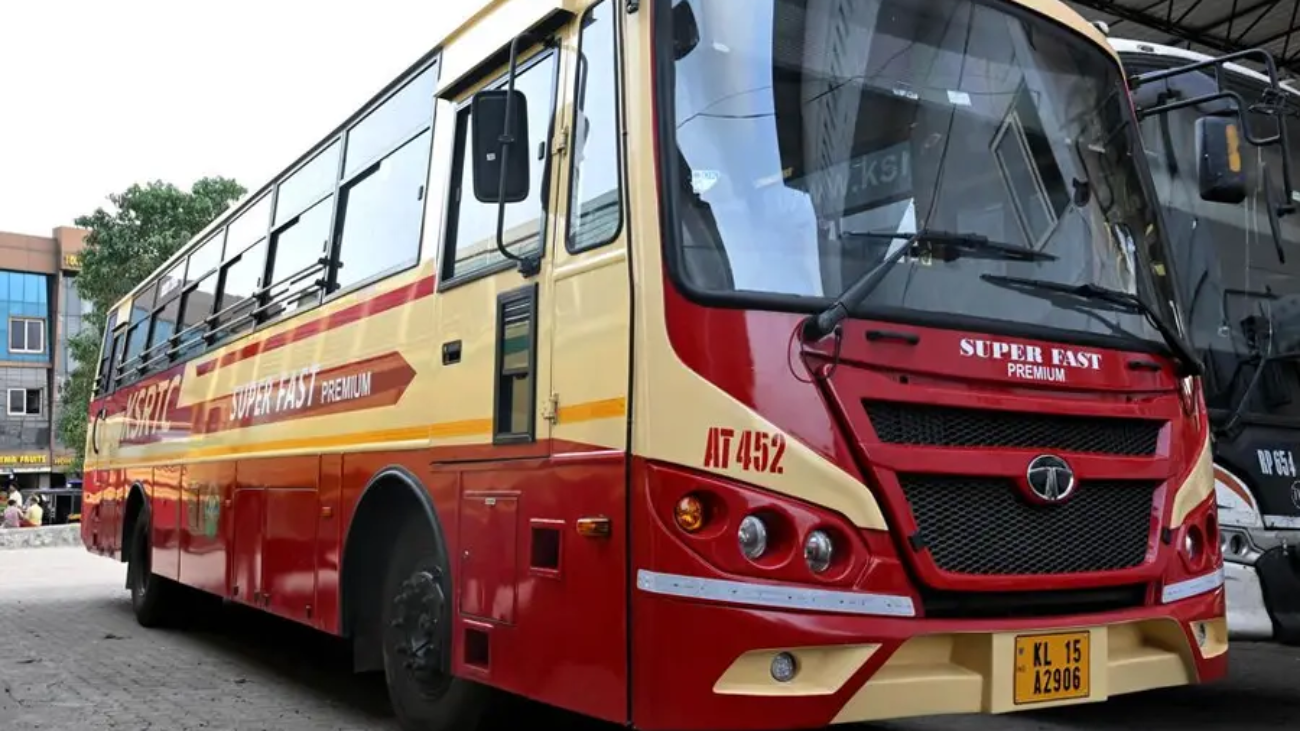
KSRTC owns and operates some of the largest heavy vehicle workshops in South India, yet these facilities are currently valued only for routine maintenance and repair. By 2047, this perspective becomes a strategic mistake. The global shift toward electric mobility will not eliminate maintenance; it will fundamentally change its nature. Batteries, power electronics, motors, and control systems will require remanufacturing, refurbishment, and life-extension at scale. A standalone vision positions KSRTC workshops as Kerala’s public remanufacturing backbone for electric public transport and commercial fleets.
Kerala is likely to operate more than 20,000 electric buses and medium commercial EVs across public and private operators by 2047. Battery packs typically retain economic value even after first-life usage drops below optimal performance. Industry data shows that 60 to 70 percent of battery capacity remains after 6 to 8 years, making remanufacturing and second-life applications viable. If KSRTC upgrades just three major workshops to handle battery and drivetrain remanufacturing, each facility can realistically process 5,000 battery packs per year. At an average recovered value of ₹1.5 lakh per pack, this represents ₹75 crore per year per facility, or ₹225 crore annually across three centres.
This is not speculative technology. Battery disassembly, cell balancing, module replacement, and reassembly are already standard practices in mature EV markets. KSRTC’s advantage lies in scale, land availability, and an existing skilled workforce accustomed to heavy systems. Retrofitting workshops with clean rooms, diagnostic rigs, and safety infrastructure requires upfront investment, estimated at ₹60 to ₹80 crore per facility. Even at the higher end, capital recovery is achievable within five to six years based on conservative throughput assumptions.
Beyond batteries, electric motors and power electronics represent another revenue stream. Failure rates in these components are low but costly when they occur. Private fleet operators typically replace entire units due to lack of repair capability. KSRTC remanufacturing centres can offer certified refurbishment at 40 to 50 percent lower cost. If each centre refurbishes 2,000 motors or inverters annually at an average service value of ₹50,000, that adds another ₹30 crore per year across three centres. This creates a diversified non-fare revenue base that is resilient to passenger demand fluctuations.
The employment implications are significant. Each remanufacturing centre can directly employ 300 to 400 technicians, engineers, and safety staff, with another 500 indirect jobs in logistics, testing, and component supply. These are high-skill, future-proof jobs aligned with Kerala’s educational profile. Instead of losing technical talent to other states or countries, KSRTC becomes an anchor employer in advanced mobility manufacturing services.
There is also a strategic environmental benefit. Battery remanufacturing reduces raw material imports, particularly lithium, cobalt, and nickel, whose global supply chains are volatile and geopolitically sensitive. Extending battery life by even three years reduces lifecycle emissions by up to 30 percent per vehicle. This allows Kerala to claim genuine circular-economy credentials rather than symbolic green branding. State climate targets become operationally grounded in public-sector infrastructure.
Institutionally, this model requires separating workshop operations from daily bus maintenance accounting. A dedicated KSRTC Remanufacturing and Circular Mobility Division can operate with commercial autonomy while guaranteeing service priority for KSRTC’s own fleet. Pricing, quality standards, and warranties must meet private-sector expectations to attract external clients such as private bus operators, logistics firms, municipal corporations, and future metro feeder fleets.
Over time, these centres can expand into second-life battery applications. Retired bus batteries can be repurposed for depot-level energy storage, grid balancing, and rural microgrids. If 10,000 second-life battery packs of 100 kWh each are deployed statewide, that is 1,000 MWh of distributed storage capacity. Even at a conservative valuation of ₹4 per unit cycled, this creates additional annual value while supporting KSEB’s renewable integration goals.
By 2047, transport systems will be judged not only on movement of people but on how intelligently assets are used across their full lifecycle. A remanufacturing-led KSRTC shifts the narrative from perpetual replacement to disciplined reuse and value recovery. It turns workshops from hidden cost centres into visible industrial assets serving the entire state.
