
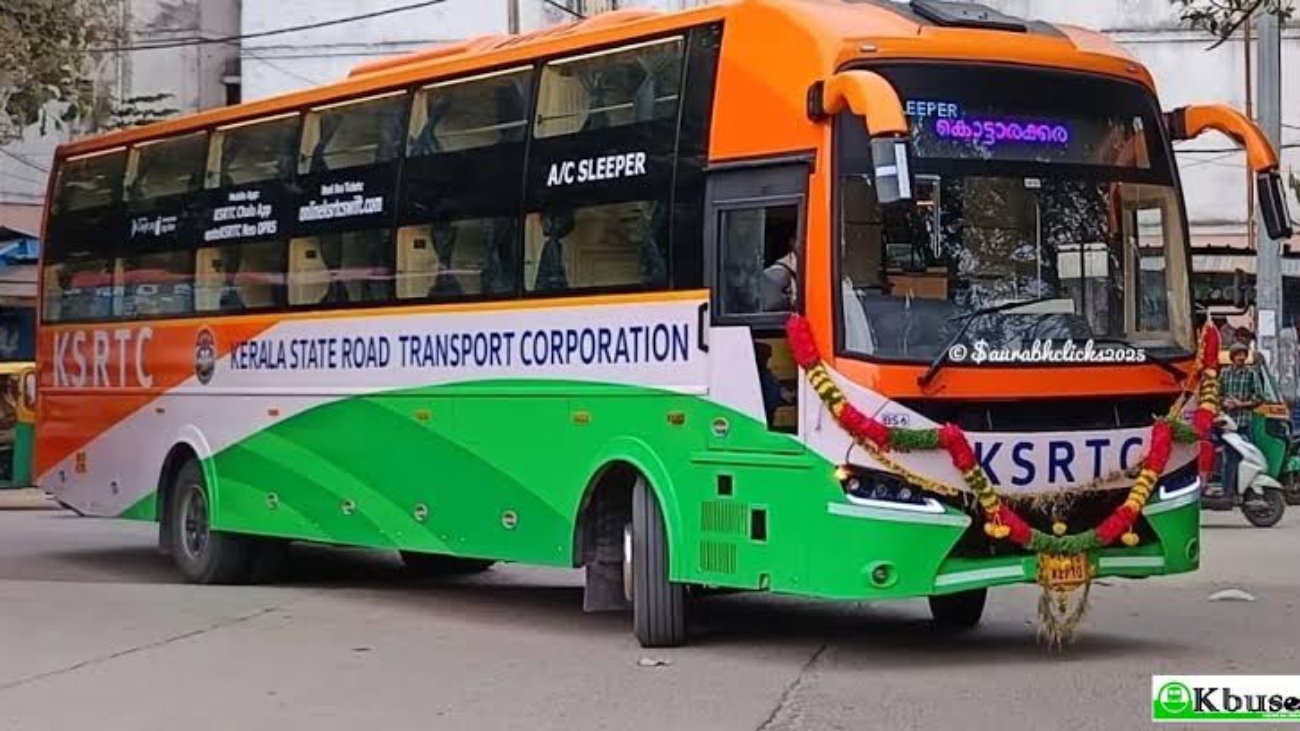
KSRTC’s physical footprint across Kerala is far larger than its transport role suggests. Depots, bus stands, and terminal land parcels occupy prime urban and semi-urban locations, many of which remain underutilised outside peak operating hours. A standalone vision treats these spaces as productive public assets that generate continuous economic value without compromising transport operations. By 2047, KSRTC can function as one of Kerala’s largest distributed urban infrastructure landlords, supporting small businesses, services, and public utilities.
Kerala has over 90 major KSRTC depots and bus stations, with land holdings ranging from a few acres in rural areas to extremely high-value parcels in city centres like Thiruvananthapuram, Ernakulam, and Kozhikode. Even conservative estimates suggest that 30 to 40 percent of built-up depot space remains idle for most of the day. If just 50 depots are partially redeveloped to host structured commercial and civic activities, the economic impact becomes substantial. A single medium-sized depot can accommodate 80 to 120 small commercial units without affecting bus movement.
Assume an average of 100 units per depot across 50 depots, creating 5,000 units statewide. At an average rent of ₹12,000 per month, this yields ₹7.2 crore per month or ₹86 crore annually. This revenue is stable, predictable, and largely insulated from fuel price volatility or seasonal passenger fluctuations. Unlike advertising revenue, it does not depend on ridership spikes or political goodwill.
The nature of commercial activity matters. Priority can be given to mobility-aligned services such as affordable food courts, last-mile delivery hubs, medical kiosks, repair services, public toilets, co-working spaces for gig workers, and government service centres. Bus stands are already natural convergence points. Formalising this ecosystem improves passenger experience while converting informal, low-quality vending into regulated, hygienic, revenue-generating activity. If even 20 percent of units are reserved for women-led enterprises or self-help groups, it directly aligns KSRTC asset monetisation with Kerala’s social development goals.
Vertical development offers even greater potential. Many urban bus stations sit on land that can legally support multi-storey development. A public–public partnership model with Kerala Infrastructure Investment Fund Board or local bodies can finance airspace development without outright privatisation. Even one 10-storey mixed-use building on a prime city depot, with 2 lakh square feet of leasable space at ₹60 per square foot per month, generates ₹14.4 crore annually from a single site. Replicated across just five city locations, this alone can exceed ₹70 crore per year.
Beyond revenue, this model reduces KSRTC’s political vulnerability. When a significant share of income comes from land-based annuities rather than daily fares, financial stability improves. Salary payments, maintenance cycles, and fleet upgrades become less dependent on emergency government bailouts. This structural resilience is far more valuable than periodic one-time subsidies.
Operational safeguards are critical. Depot redesign must preserve turning radii, safety zones, and emergency access. Technology-driven access control ensures commercial activity does not interfere with operations. Night-time utilisation can be especially aggressive, as bus movement drops significantly between midnight and early morning. Warehousing for e-commerce, cold storage for fisheries, and municipal storage can all operate during these hours with minimal conflict.
There is also a city-planning benefit. KSRTC hubs can become anchors for transit-oriented development in towns that lack formal metro or suburban rail systems. Concentrating services around bus terminals reduces urban sprawl and shortens travel distances. Over time, this lowers congestion and improves the financial viability of bus services themselves.
Institutionally, this requires separating land and asset management from transport operations. A KSRTC Urban Assets Corporation can professionalise leasing, maintenance, compliance, and redevelopment while ensuring public ownership remains intact. Transparent auctions, long-term leases, and digital monitoring prevent the leakage and politicisation that historically plague public land assets.
By 2047, Kerala will need every square metre of public land to work harder. KSRTC already owns this land. Treating it as a living economic infrastructure rather than dormant real estate can quietly transform the corporation’s finances and relevance without a single fare hike.
