
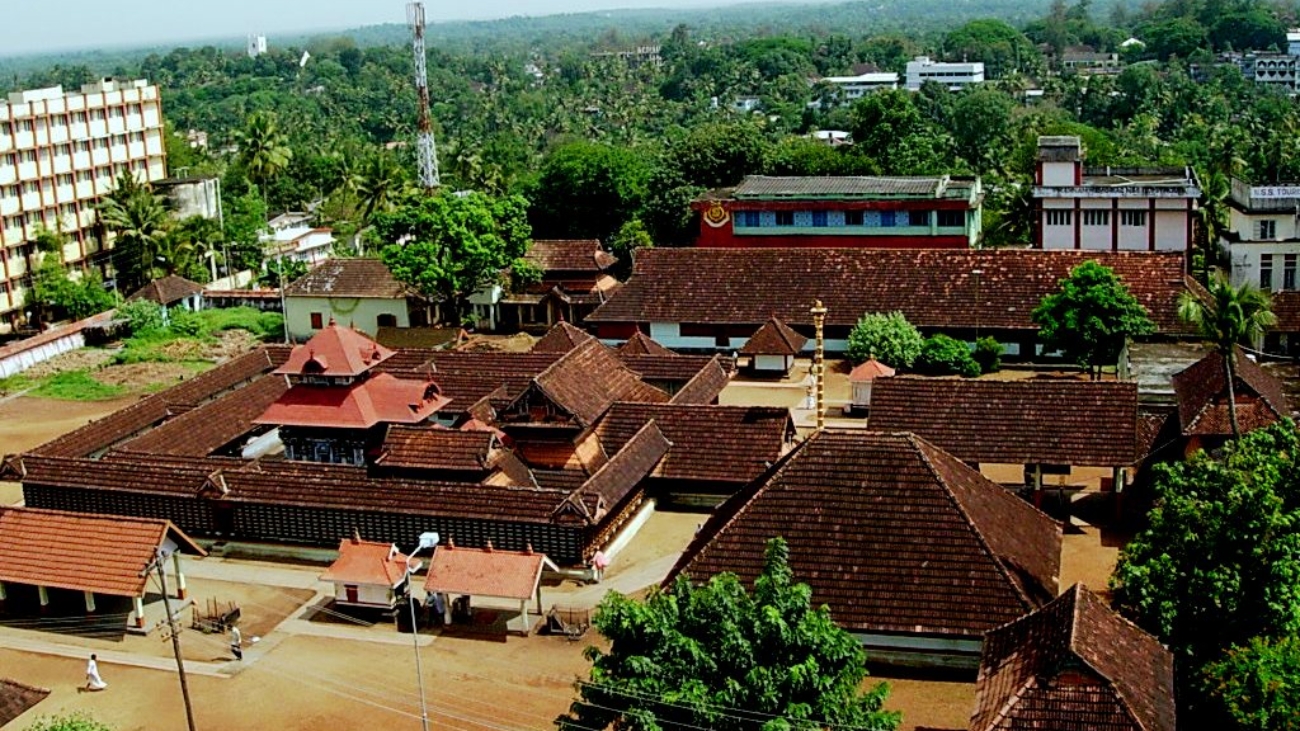
Saiva Vellala communities in Kerala, particularly region-specific groups such as Cherakula Vellala in Palakkad and adjoining areas, have historically been agrarian cultivators with strong links to land management, irrigation practices, crop planning, and temple-linked rural administration. Their economic role was not limited to cultivation alone; they functioned as organisers of agrarian labour, custodians of local water systems, and managers of seasonal production cycles. This positioned them closer to farm management than farm labour, a distinction that has blurred in modern Kerala.
In the present economy, Saiva Vellala households face a structural squeeze. Agriculture’s share in Kerala’s GDP has fallen below 9 percent, landholdings have fragmented, and younger generations find farming economically unviable. Average operational landholdings in many Saiva Vellala families range from 0.5 to 2 acres, insufficient to generate stable income under traditional cropping models. Annual household income from agriculture alone often falls between ₹1.5 and ₹3 lakh, forcing dependence on remittances, casual labour, or government transfers.
Kerala Vision 2047 must reposition Saiva Vellala communities from marginal cultivators to operators of high-efficiency agrarian systems. Kerala still spends over ₹30,000 crore annually across agriculture, irrigation, input subsidies, price support, procurement, and allied schemes. Yet productivity per hectare for many crops remains below national and global benchmarks. This is not due to land quality, but due to weak farm management, poor aggregation, and limited technology adoption.
The first strategic shift is consolidation without dispossession. Vision 2047 must enable cluster farming models where 50–200 acres are managed as a single operational unit while retaining individual ownership. Saiva Vellala farmers, with their historical managerial role, are well placed to act as cluster operators. If even 10 percent of Kerala’s cultivable land, roughly 2 lakh hectares, is brought under such management, it transforms the economics of farming. Input costs drop by 15–20 percent, mechanisation becomes viable, and output consistency improves.
Crop strategy must move away from low-margin staples toward mixed high-value portfolios. Kerala imports vegetables, fruits, pulses, and animal feed worth over ₹20,000 crore annually. Vision 2047 can target import substitution through controlled-environment farming, seed production, fodder cultivation, and perennial high-value crops. A 10-acre protected cultivation cluster can generate ₹1–1.5 crore in annual turnover if professionally managed. Scaling this to 5,000 clusters statewide creates a ₹50,000 crore agribusiness layer anchored in local landholders.
Technology integration is non-negotiable. Soil sensors, drip irrigation, fertigation, satellite-based crop monitoring, and yield analytics must become standard. The cost of equipping one hectare with basic precision-agriculture tools is now under ₹1.2 lakh. A state-backed financing and training program upgrading 50,000 hectares annually would require ₹600 crore per year, a fraction of existing agricultural subsidies. Productivity gains of 30–50 percent are achievable within three seasons.
Saiva Vellala communities can also anchor Kerala’s agri-logistics and procurement infrastructure. Post-harvest losses in fruits and vegetables range between 15 and 25 percent. Establishing packhouses, cold storage units, and grading facilities at the taluk level can reduce this drastically. Kerala has 75 taluks; even two integrated agri-logistics hubs per taluk implies 150 units. Each unit, operating at ₹20 crore scale, supports farmers across 2,000–3,000 hectares and stabilises price realisation.
Income outcomes must be explicit. Today, many cultivator households earn less than ₹25,000 per month from land. Under cluster-managed, tech-enabled farming, net monthly income per participating household can realistically reach ₹60,000–₹1,00,000 depending on crop mix. If 1 lakh households achieve an average increase of ₹40,000 per month, this injects ₹4,800 crore annually into Kerala’s rural economy.
Vision 2047 must also integrate Saiva Vellala farmers into agri-processing. Rice milling, oil extraction, spice processing, fruit pulping, and feed manufacturing add 2–4 times value compared to raw produce sales. Kerala’s food processing sector currently underperforms despite strong demand. A network of farmer-owned processing units, each with turnover of ₹50–₹100 crore annually, can anchor rural industrialisation. Even 200 such units statewide create a ₹15,000–₹20,000 crore value layer.
Governance reform is a hidden advantage. Cluster operators can interface directly with banks, insurers, buyers, and government agencies, reducing transaction costs. Digital land records, crop contracts, and input tracking can be managed centrally. This professionalisation reduces farmer distress and credit risk, lowering default rates and insurance claims.
Climate resilience must be embedded. Flood-tolerant cropping systems, raised-bed cultivation, diversified income streams, and water-harvesting infrastructure reduce vulnerability. Kerala loses thousands of crores annually to climate-related agricultural damage. Preventive investment through professional land management costs far less than post-loss compensation.
Intergenerational continuity depends on profitability and status. Young members abandon farming because it appears risky and stagnant. A Vision 2047 pathway that treats agriculture as a technology-enabled enterprise with managerial roles, equity participation, and scale can attract educated youth back to land-based production.
By 2047, Saiva Vellala–led agrarian enterprises can anchor a ₹60,000–₹70,000 crore high-productivity agricultural economy in Kerala, reducing imports, stabilising food systems, and restoring land as a viable economic asset. This is not a return to the past, but a forward-looking reconstruction of agrarian power grounded in data, scale, and professional management.
