
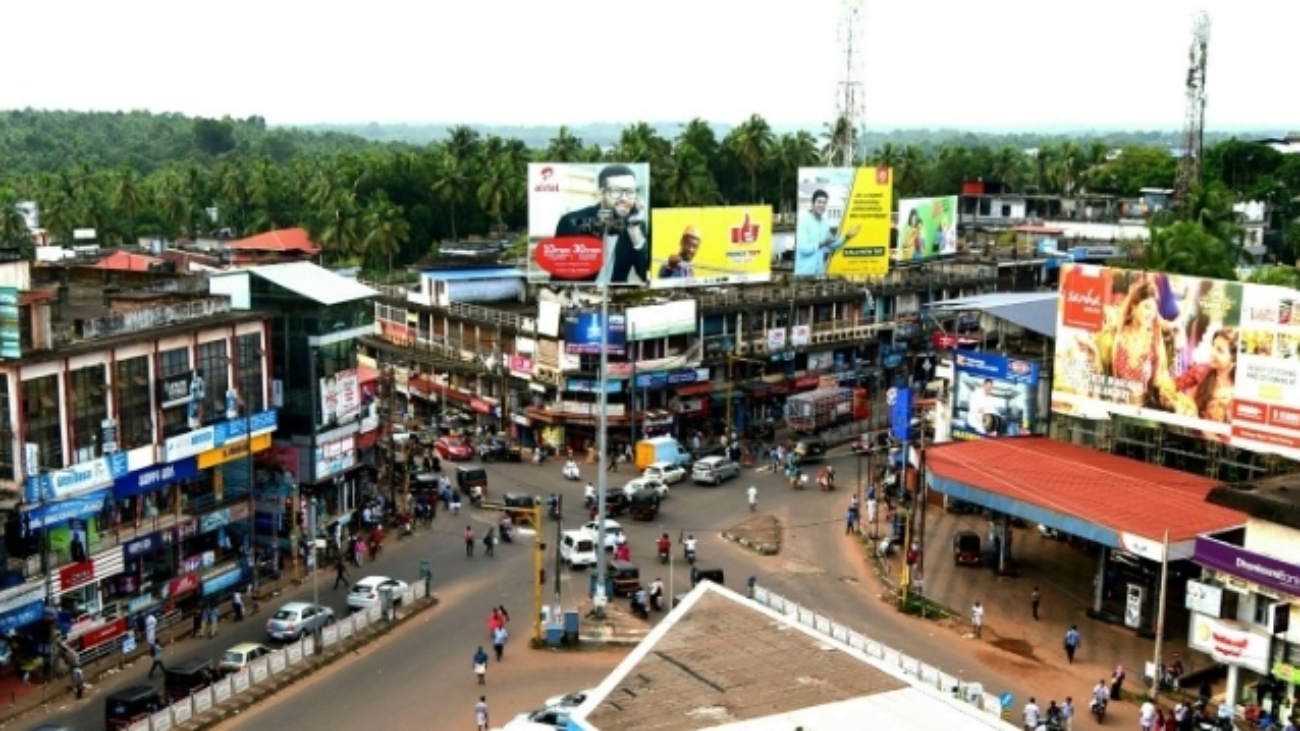
Malappuram
Malappuram’s smart city future must be shaped around demographic intelligence rather than physical spectacle. This is one of the youngest, fastest-changing urban regions in Kerala, with high population density, strong migration links, and intense pressure on land, education, and employment. A smart Malappuram in 2047 must be designed to manage human volume, aspiration, and movement with precision rather than relying on expansion and construction alone.
The defining challenge of Malappuram is density without structure. Settlements have grown rapidly along roads, hills, and commercial corridors, creating continuous urban stretches without clear centers. Smart city planning must introduce deliberate urban nodes where services, transport, education, and commerce are concentrated. When people know where the city’s functional centers are, movement becomes efficient and chaos reduces naturally.
Mobility in Malappuram must prioritize reliability over capacity. Roads are narrow, terrain is uneven, and expansion is limited. Smart transport systems must focus on frequent public transport, predictable schedules, and strong last-mile connectivity. Staggered institutional timings, coordinated school hours, and demand-responsive buses can significantly reduce congestion without widening roads.
Education is the most powerful lever in Malappuram’s future. The city has an extraordinary concentration of students, coaching centers, and aspirational youth. Smart city development must integrate education with employability. Skill centers, digital work hubs, testing facilities, and mentorship spaces must exist close to where students live. When education converts to income locally, migration becomes optional rather than compulsory.
Employment planning in Malappuram must account for its global connections. Gulf migration has shaped household economics and expectations for decades. Smart cities must channel remittances into productive local investment. Financial literacy, business incubation, cooperative enterprises, and local venture platforms can convert private savings into shared economic growth. Cities that mobilize household capital grow quietly but steadily.
Housing policy in Malappuram requires special sensitivity. High density combined with rising land prices risks overcrowding and informal expansion. Smart cities must promote vertical efficiency without sacrificing light, ventilation, and social space. Well-designed low- to mid-rise housing clusters with shared amenities can accommodate growth while maintaining quality of life.
Public health planning must respond to density and lifestyle shifts. Non-communicable diseases, mental health stress, and lifestyle-related conditions are rising. Smart cities must integrate preventive health into urban design. Walkable streets, shaded public areas, noise management, and accessible clinics reduce long-term health burdens more effectively than hospital expansion alone.
Water management in Malappuram must be micro-local. Hills, slopes, and scattered settlements create uneven water availability and flood risk. Smart systems must map water flow at the street and neighborhood level. Rainwater harvesting, localized storage, and slope-sensitive drainage reduce both scarcity and flooding. Water intelligence here is spatial intelligence.
Waste management is particularly challenging in dense, dispersed settlements. Smart Malappuram must prioritize decentralized waste processing. Neighborhood-level segregation, composting, and material recovery reduce transport burden and environmental damage. Cleanliness in high-density cities depends more on system design than on enforcement.
Public spaces in Malappuram must compensate for private space constraints. When homes are compact, cities must offer generous public environments. Parks, libraries, sports grounds, and community halls are not optional extras. They are essential for youth engagement, social cohesion, and mental health. Smart cities invest in shared space to stabilize dense living.
Digital infrastructure in Malappuram must support productivity rather than consumption alone. High-quality connectivity should enable remote work, digital services, education delivery, and entrepreneurship. Smart cities must ensure that bandwidth translates into income, not just entertainment. Digital access without economic pathways creates frustration rather than growth.
Women’s participation in the urban economy requires deliberate design. Safety, mobility, childcare access, and flexible workspaces determine whether talent is utilized or wasted. Smart Malappuram must integrate these factors into neighborhood planning. When women participate fully, household stability and educational outcomes improve across generations.
Governance in Malappuram must be data-driven and transparent. High population density amplifies the cost of poor decisions. Smart governance systems must track service delivery, infrastructure stress, and demographic change continuously. When policy responds to real conditions rather than assumptions, trust improves.
Civic communication is critical in a fast-moving city. Smart Malappuram must communicate plans, disruptions, and expectations clearly and consistently. Misinformation spreads quickly in dense networks; clarity prevents conflict. Cities that explain themselves govern more smoothly.
Economic diversification is essential for resilience. Dependence on remittances alone exposes the city to global shocks. Smart city policy must nurture local services, education-linked industries, healthcare support services, and small manufacturing. Multiple income streams stabilize urban life.
By 2047, a smart Malappuram should feel organized rather than crowded. Youthful energy should translate into visible opportunity. Density should feel efficient, not suffocating. The city’s intelligence will lie in how well it manages people, not just space.
