
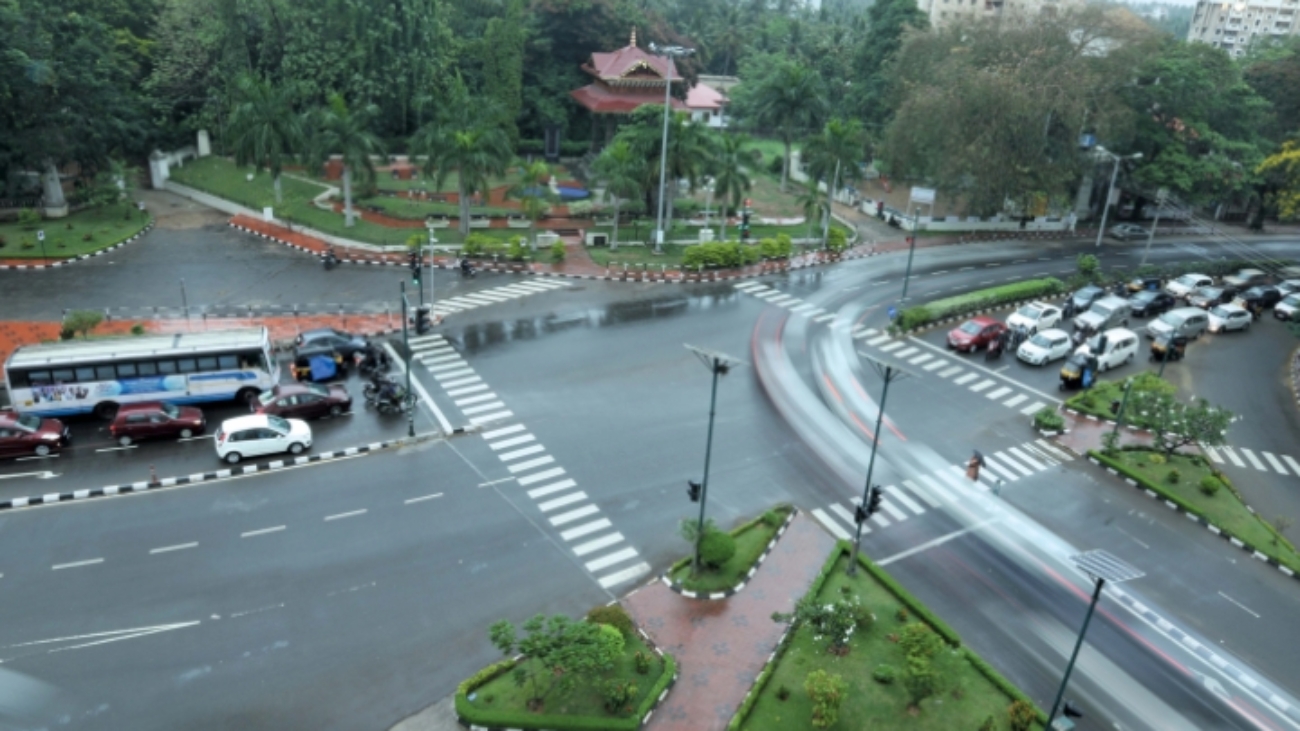
Thiruvananthapuram’s smart city future must be anchored in institutional intelligence rather than symbolic capital status. As Kerala’s administrative and knowledge capital, the city hosts government, research institutions, space science, IT, healthcare, and education at an unusual density. Yet these strengths often operate in silos. A smart Thiruvananthapuram in 2047 must become a city where institutions interlock smoothly, converting authority, knowledge, and talent into coordinated urban outcomes.
The city’s defining advantage is institutional depth. Secretariat offices, universities, research centers, Technopark, hospitals, and cultural institutions coexist within a relatively compact geography. Smart city planning must focus on synchronizing these entities rather than expanding outward. When institutions share data, timelines, and objectives, the city gains efficiency without physical growth.
Mobility in Thiruvananthapuram must prioritize predictability for a working population that depends heavily on schedules. Government offices, IT campuses, hospitals, and educational institutions generate rhythmic daily movement. Smart transport systems must align routes and frequencies with institutional timings rather than generic peak-hour assumptions. Reliable public transport and last-mile connectivity matter more than speed in a city driven by routine.
Technopark is a major economic engine, but its integration with the city remains incomplete. A smart city vision must dissolve the boundary between tech zones and urban life. Housing, services, cultural spaces, and public transport must allow technology workers to live as citizens rather than commuters. When tech talent engages with the city, innovation spills beyond campuses.
The city’s coastline and hills create a unique environmental profile. Smart Thiruvananthapuram must treat these features as protective and productive assets rather than development constraints. Coastal zones require climate-sensitive planning, while hill areas demand strict ecological discipline. Urban expansion must respect slope stability, water flow, and vegetation. Cities that ignore terrain pay later through landslides and floods.
Public administration itself must become a smart city function. As the seat of government, Thiruvananthapuram should pioneer transparent, data-driven governance. Project tracking, budget visibility, service performance, and outcome measurement should be publicly accessible and institutionally enforced. The capital must set operational standards for the rest of the state rather than merely issue directives.
Healthcare planning in Thiruvananthapuram must emphasize integration. The city hosts advanced medical facilities, but access and continuity vary across neighborhoods. Smart systems must link primary care, diagnostics, hospitals, transport, and home care. An ageing population and medical tourism both demand seamless health infrastructure rather than isolated excellence.
Education and research institutions must connect more directly to urban problem-solving. Smart cities turn campuses into living laboratories. Urban mobility, climate resilience, digital governance, and public health challenges should be addressed through partnerships between government, academia, and industry. When research solves local problems, relevance and retention improve.
Housing policy in Thiruvananthapuram must protect diversity. Rising land values near institutional zones risk pushing service workers outward. Smart city planning must ensure mixed-income housing close to workplaces. Cities hollow out when only one income group can live near opportunity.
Public spaces in Thiruvananthapuram must support both contemplation and interaction. As a city shaped by administration and academia, spaces for reflection, walking, discussion, and culture are essential. Libraries, museums, beaches, parks, and cultural venues must remain accessible and well-connected. Civic culture strengthens when public space is generous.
Digital infrastructure in the capital must emphasize reliability and security. As a governance and research hub, data integrity matters as much as connectivity. Smart city systems must be robust, interoperable, and trusted. Failure in the capital carries symbolic and practical consequences.
Economic diversification in Thiruvananthapuram must move beyond IT dependence. Research services, policy consulting, healthcare support, education services, climate science, and space-related industries offer complementary growth paths. Smart city planning must nurture these sectors deliberately rather than assume automatic spillover.
Climate resilience is a governance responsibility here. Flooding, heat stress, and coastal risk must be addressed through anticipatory planning. The capital must demonstrate how climate intelligence is integrated into daily decision-making. Leadership is shown through example, not statements.
Civic communication in Thiruvananthapuram must be precise and respectful. As a politically aware city, vague messaging creates friction. Smart governance here depends on explanation, consultation, and consistency. Cities that communicate well govern calmly.
By 2047, a smart Thiruvananthapuram should feel composed, competent, and quietly powerful. Institutions should cooperate rather than compete. Systems should function without spectacle. The city’s intelligence will be visible in how smoothly authority translates into service.
