
Kerala in 2047 will be defined not only by what it builds, but by what it chooses to stop doing. Societies mature not when they endlessly add programs, institutions, and promises, but when they develop the discipline to subtract what no longer works. Vision Kerala 2047 must therefore confront the politics of subtraction, an area where Kerala has historically struggled.
Over decades, layers of schemes, committees, boards, and missions have accumulated. Each began with intent, but many outlived their relevance. Administrative overlap has increased costs while reducing clarity. By the mid-2020s, Kerala operated hundreds of welfare and development programs across departments, often targeting similar beneficiaries with different criteria. By 2047, such fragmentation will be fiscally and operationally untenable. Consolidation is not cruelty; it is governance hygiene.
Public spending efficiency will become a central concern. Kerala already spends a higher proportion of its budget on social sectors than most Indian states. Yet outcomes often plateau beyond a point. For example, incremental increases in spending on education do not automatically translate into better employability, and healthcare expenditure does not proportionally reduce lifestyle disease burdens. Vision Kerala 2047 must move from input-based funding to outcome-based budgeting. Money must follow results, not precedents.
The subsidy culture also needs recalibration. Subsidies helped Kerala reduce poverty and inequality in earlier decades. But by 2047, poorly targeted subsidies risk distorting incentives and trapping households in low-productivity equilibrium. Data-driven targeting can ensure support reaches those who need it while freeing resources for capability building. A family that gains stable income should naturally graduate out of subsidies. Permanence should not be the default.
Kerala’s administrative machinery must also learn to exit activities better handled elsewhere. The state does not need to directly run every service. When regulation, quality control, and accountability are strong, service delivery can be diversified. Vision Kerala 2047 must distinguish between what the state must do, what it should oversee, and what it should step away from. Overreach weakens focus.
One sensitive area is public employment. Government jobs provided stability and social mobility for generations. However, unchecked expansion of public payrolls creates long-term fiscal stress. By 2047, the state cannot afford to be the primary employer of aspiration. Instead, it must become the enabler of private, cooperative, and civic employment. Public service should be prestigious, but not bloated.
Kerala’s political culture must also learn to say no. Promises without fiscal backing erode credibility. Competitive populism may win elections, but it accumulates debt and disappointment. Vision Kerala 2047 requires political maturity where leaders explain trade-offs honestly. Citizens are more capable of understanding constraints than often assumed. What they resent is being misled.
The education system, too, must let go of outdated rituals. Endless examinations, rigid syllabi, and rote performance metrics consume enormous time and energy. By 2047, assessment must focus on application, collaboration, and adaptability. Schools and colleges must be allowed to drop ineffective practices without fear of backlash. Tradition should not override evidence.
Kerala’s economy must also confront the cost of smallness. While small enterprises are resilient, excessive fragmentation limits bargaining power, innovation, and income growth. Vision Kerala 2047 must encourage aggregation where it adds value. Shared platforms, collective procurement, common branding, and pooled logistics can allow small producers to compete globally without losing autonomy.
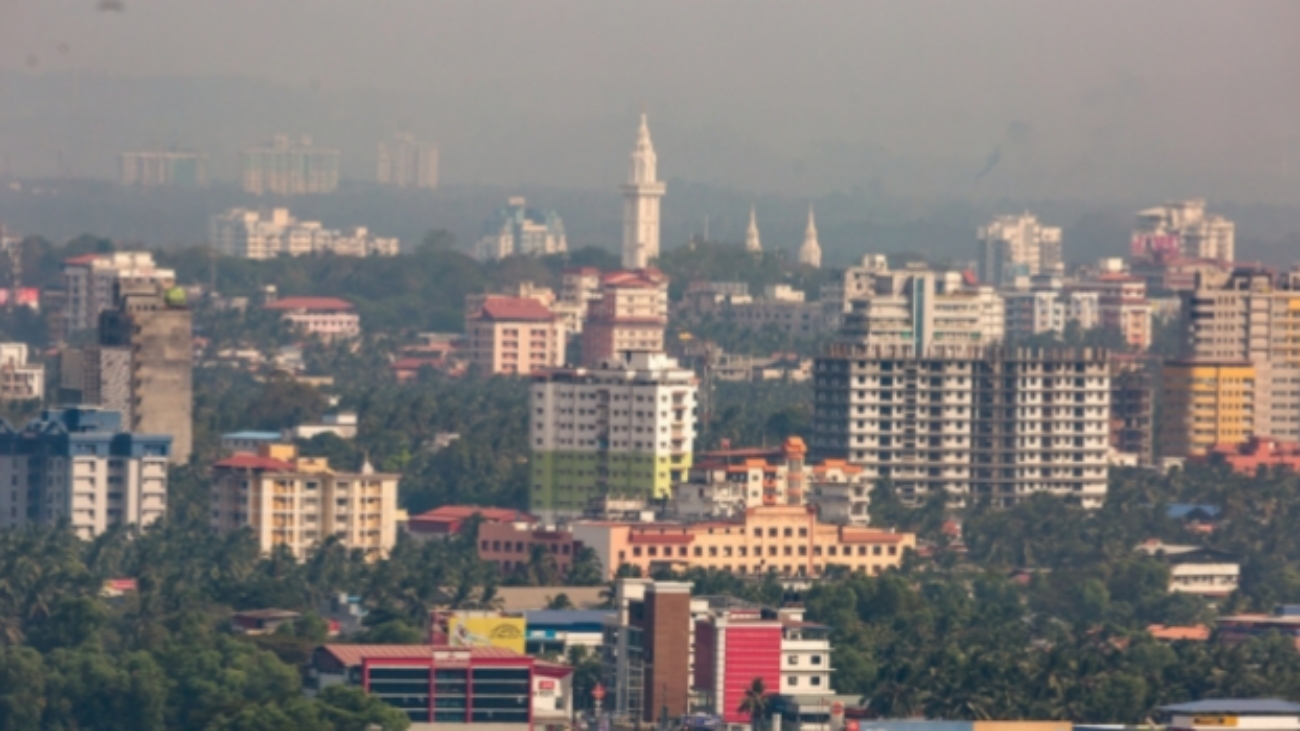
Urban planning requires similar subtraction. Uncontrolled ribbon development along highways, mixed land use without infrastructure planning, and reactive approvals have created chronic inefficiencies. By 2047, Kerala must stop building in ways that lock in congestion and vulnerability. Saying no to certain constructions today prevents larger disasters tomorrow. Planning restraint is a form of foresight.
Environmental policy also demands difficult choices. Kerala cannot simultaneously promise unrestricted development and ecological preservation. Coastal zones, wetlands, and hill regions are already under stress. Vision Kerala 2047 must enforce clear limits backed by science. Compensation, rehabilitation, and alternative livelihoods must accompany restrictions, but boundaries must be real. Ambiguity benefits no one except short-term exploiters.
Another area needing subtraction is performative governance. Excessive reporting, ceremonial launches, and publicity-driven initiatives consume administrative bandwidth. By 2047, governance must value quiet effectiveness over visible busyness. When systems work well, they rarely make headlines. This requires a cultural shift in both administration and media expectations.
Kerala’s civil society also has a role. Activism that blocks without proposing alternatives can stall progress. Vision Kerala 2047 needs a more solution-oriented civic engagement. Critique must be matched with responsibility. When citizens participate in design and monitoring, resistance often transforms into collaboration.
Technology offers tools for this transition, but it cannot substitute for judgment. Automated systems can highlight inefficiencies, but humans must decide what to stop, merge, or redesign. Vision Kerala 2047 must invest in administrative capacity that understands systems thinking, not just rule enforcement. The quality of decisions matters more than their quantity.
The emotional dimension of subtraction should not be underestimated. Ending programs, reforming institutions, and changing entitlements provoke anxiety. Kerala’s social compact has long been built on assurances. Vision Kerala 2047 must therefore pair reform with reassurance. Change should be gradual, predictable, and fair. Shock therapy rarely works in cohesive societies.
Intergenerational fairness must guide these decisions. Borrowing today to fund unsustainable practices burdens tomorrow’s citizens. Vision Kerala 2047 must frame reform as a moral obligation to future generations. When youth understand that restraint today creates opportunity tomorrow, support for reform strengthens.
Ultimately, Kerala’s strength has always been its capacity for collective reflection. Vision Kerala 2047 must revive this strength, not as nostalgia, but as disciplined choice-making. Progress is not the accumulation of everything possible. It is the careful selection of what truly matters.
Kerala does not need to become larger, louder, or faster than everyone else. It needs to become clearer. Clear about priorities, limits, and responsibilities. That clarity will be its greatest competitive advantage in a crowded, chaotic world.
