
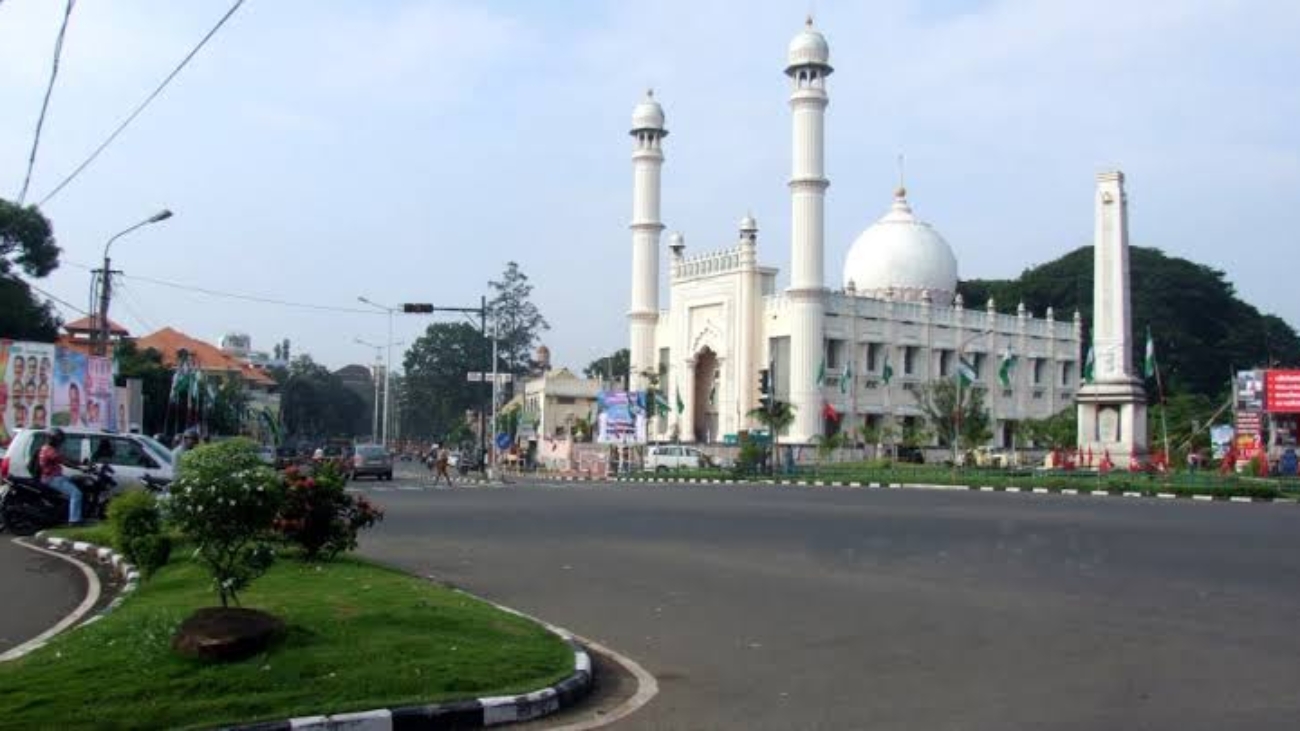
Kerala Vision 2047, when framed again through Thiruvananthapuram, must move beyond its identity as a calm administrative capital and reposition itself as a high-functioning economic command city. By 2047, India will mark 100 years of independence, and Kerala’s challenge will not be literacy or life expectancy, but relevance, productivity, and fiscal sustainability. Thiruvananthapuram, with a population approaching 1.2 million in the urban region and significantly more in its influence zone, must absorb this responsibility consciously.
The city today has one of the highest concentrations of government employment in the state. While this has ensured stability, it has also capped income velocity. Public sector-driven cities typically show slower income growth compared to cities anchored in export-oriented services and innovation ecosystems. Vision 2047 must rebalance this structure. If even 30 percent of the city’s workforce transitions into globally billable services, advanced healthcare, research, and high-skill digital work, average household incomes can realistically double in real terms over two decades.
Digital infrastructure in Thiruvananthapuram must evolve from connectivity to coordination. By 2047, the city should operate as a digitally orchestrated capital where policy simulation, budgeting, urban planning, and service delivery are data-driven. Globally, cities that use predictive analytics for governance report budget overruns falling by 15 to 20 percent. Applied to Kerala’s capital, this alone could improve fiscal discipline across departments that collectively spend tens of thousands of crores annually.
Education must shift from institutional prestige to outcome accountability. Thiruvananthapuram hosts premier institutions, yet graduate migration remains high. Vision 2047 should ensure that at least 60 percent of graduates find high-quality employment within Kerala within one year of graduation. This requires embedding industry-linked projects, paid apprenticeships, and problem-solving labs directly into curricula. If 80,000 students annually gain such exposure and even half of them secure higher-value jobs locally, the city retains talent worth several thousand crores in future income.
Healthcare will increasingly dominate public expenditure as Kerala ages. By 2047, nearly 25 percent of Thiruvananthapuram’s population could be above 60 years. Without preventive systems, healthcare costs could consume an unsustainable share of household and government spending. Vision 2047 must institutionalise predictive and preventive healthcare using population health data, wearable technology, and AI-supported diagnostics. Evidence from OECD countries shows that preventive care can reduce hospitalisation rates by up to 30 percent among elderly populations. For a city-scale system, this translates into massive savings and improved quality of life.
Employment creation must stop being measured in headcount and start being measured in income quality. Thiruvananthapuram should aim to create at least 250,000 high-income jobs by 2047, each earning above ₹20 lakh annually in today’s value. This generates a gross income pool of ₹50,000 crore per year, driving consumption, housing, education, and service sector growth without relying on environmentally damaging industries. Technopark, instead of expanding horizontally, must densify vertically in value creation through AI services, aerospace software, defence analytics, health technology, and climate modelling.
Infrastructure planning must acknowledge that Thiruvananthapuram’s biggest constraint is not land, but coordination. Road expansions alone will not solve congestion. By 2047, integrated land-use planning combined with intelligent transport systems can reduce per capita travel distance. Cities that adopt compact development models reduce infrastructure costs by 10 to 15 percent over long periods. This makes fiscal sense for a state with limited borrowing headroom.
Climate resilience is not optional for a coastal capital. Sea-level rise projections, increasing rainfall intensity, and heat stress will directly impact Thiruvananthapuram. Vision 2047 must commit a fixed annual investment of at least 2 percent of city GDP into resilience infrastructure. This includes coastal protection, stormwater management, green buffers, and urban cooling strategies. Studies consistently show that every rupee invested in resilience saves multiple rupees in avoided losses. For Kerala, this is a fiscal survival strategy.
Governance quality will ultimately decide whether Vision 2047 succeeds or fails. Thiruvananthapuram must lead Kerala into outcome-based governance where departments are evaluated on measurable results rather than file movement. Public dashboards tracking health outcomes, learning outcomes, employment quality, infrastructure uptime, and climate indicators can transform citizen trust. International experience suggests transparency alone can improve service delivery efficiency by 10 to 20 percent.
Culturally, Thiruvananthapuram must preserve its role as Kerala’s intellectual conscience. A capital city that only administers but does not think becomes hollow. Vision 2047 must protect spaces for research, art, debate, and policy experimentation. These are not luxuries but economic assets in a knowledge-driven century. Cities that retain intellectual vibrancy attract talent even without aggressive incentives.
By 2047, Thiruvananthapuram should stand as a city that proves Kerala’s model can evolve again. Not through slogans, but through numbers, systems, and quiet competence. A capital that delivers high incomes, strong health outcomes, climate safety, and credible governance becomes Kerala’s strongest argument to the future.
