
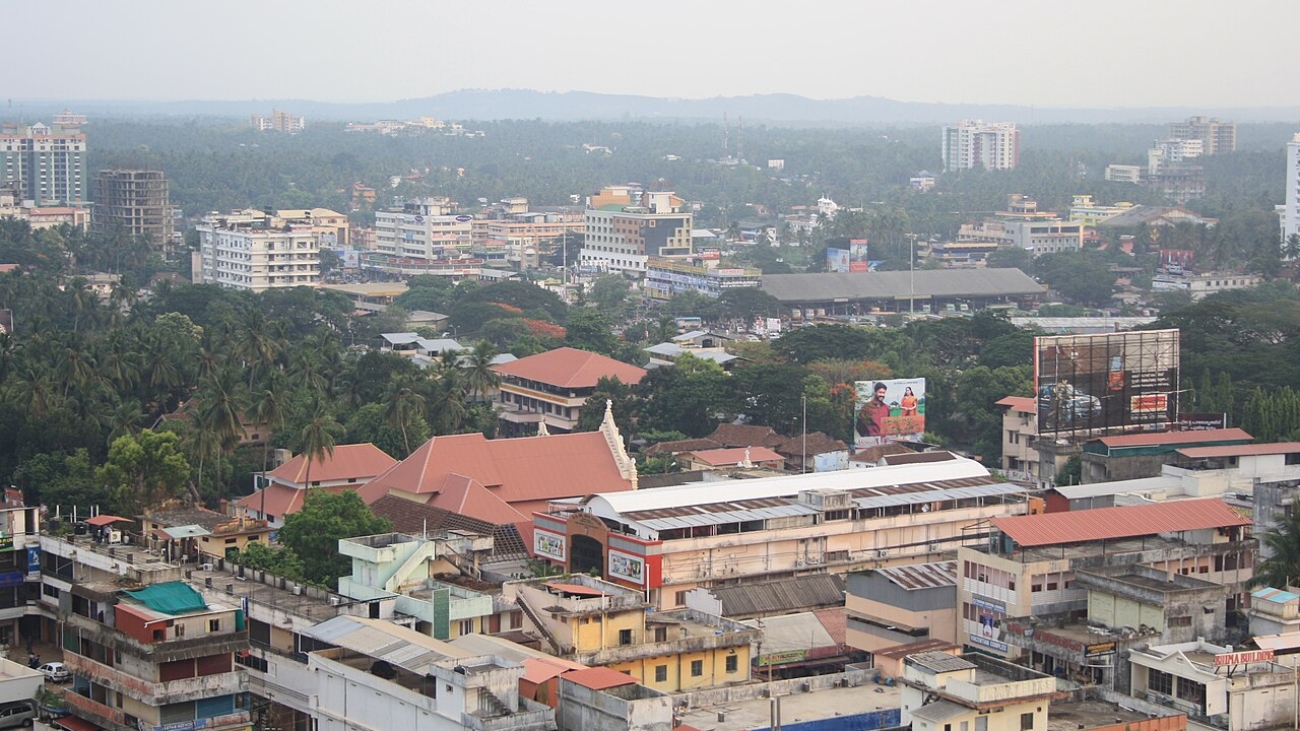
Kerala Vision 2047, when imagined once more through Thiruvananthapuram, must treat the city not as a beneficiary of state policy but as the primary instrument through which Kerala executes its long-term transformation. Capitals are not meant to merely host power; they are meant to concentrate intelligence, coordination, and decision velocity. By 2047, when India approaches a USD 30 trillion economy, a passive capital will weaken the entire state’s competitiveness. Thiruvananthapuram must therefore evolve into a city that governs with precision, produces income at scale, and absorbs future risks before they become crises.
The district currently depends heavily on public administration, education, and traditional services, with government-linked employment forming a stabilising but limiting backbone. Stability without productivity creates fiscal pressure over time. Kerala already spends a significant portion of its revenue on salaries, pensions, and healthcare. Vision 2047 requires Thiruvananthapuram to actively expand the state’s revenue base rather than merely distribute it. If the city can raise its contribution to state GDP from roughly 13 percent today to at least 18 percent by 2047, the additional output could exceed ₹1.5 lakh crore annually at future price levels, fundamentally altering Kerala’s fiscal capacity.
Digital infrastructure must become invisible yet decisive. By 2047, governance in Thiruvananthapuram should operate on continuous data flows rather than periodic reporting. Budget allocations, infrastructure maintenance, hospital capacity, school performance, land use, and environmental indicators must be monitored in real time. Cities that have adopted continuous governance models internationally have reduced cost overruns by up to 20 percent and improved service reliability by similar margins. For a capital that oversees thousands of crores in annual expenditure, such gains are equivalent to discovering a new revenue source without raising taxes.
Education in Thiruvananthapuram must stop being supply-driven and become demand-synchronised. The city produces tens of thousands of graduates every year, yet a large share either migrates or accepts jobs far below their qualification level. Vision 2047 must ensure that education institutions are contractually linked to labour market outcomes. If at least 70 percent of graduates from city-based institutions secure employment earning above the state median income within twelve months, the social return on education investment rises sharply. Assuming 60,000 such graduates annually, even an average income uplift of ₹4 lakh per person injects ₹2,400 crore into the local economy each year.
Healthcare will increasingly shape the city’s economic destiny. Thiruvananthapuram already functions as a referral hub for advanced treatment, but treatment-centric systems are fiscally unsustainable in an ageing society. By 2047, one in four residents may be senior citizens. Vision 2047 must reorient the city into a preventive health command centre using predictive analytics, community health monitoring, and early intervention. Evidence from countries with strong preventive systems shows reductions of 25 to 35 percent in avoidable hospital admissions among older populations. Applied at city scale, this reduces pressure on both families and public health budgets while extending healthy working years.
Employment strategy must explicitly prioritise income intensity. Thiruvananthapuram does not need millions of jobs; it needs hundreds of thousands of high-quality jobs. By 2047, the city should target at least 300,000 professionals earning above ₹25 lakh annually in today’s value. This alone creates an annual income pool exceeding ₹75,000 crore. Such income density fuels housing upgrades, education spending, healthcare investment, and local entrepreneurship without requiring heavy industry or large-scale land acquisition. Technopark and associated ecosystems must therefore move decisively into deep-tech, aerospace software, defence analytics, climate modelling, digital public infrastructure design, and advanced healthcare technology.
Urban infrastructure must be evaluated through lifecycle economics rather than upfront cost. Roads, buildings, drainage systems, and public assets in Thiruvananthapuram often suffer from maintenance deficits rather than design flaws. Vision 2047 must mandate full lifecycle costing for every major project. International benchmarks show that lifecycle-based planning can reduce total asset costs by 15 to 25 percent over 30 years. For a capital city with long-lived public assets, this approach preserves fiscal space and improves service reliability simultaneously.
Transport planning must accept that congestion is an economic tax. If the average worker in Thiruvananthapuram loses even 30 minutes per day due to inefficiencies, the cumulative productivity loss across a million workers runs into tens of millions of hours annually. Vision 2047 should aim to cut average daily commute times by at least 20 percent through integrated land use, intelligent traffic systems, public transport optimisation, and remote-work-friendly urban design. The economic value of time saved alone justifies these investments.
Climate resilience must be embedded into every planning decision. Thiruvananthapuram’s coastal exposure, rainfall variability, and heat trends will intensify by mid-century. Vision 2047 must lock in a rule-based commitment to invest at least 2 percent of city GDP annually in resilience infrastructure. Studies across Asian coastal cities show that such investments can reduce disaster-related economic losses by up to 40 percent. This is not environmental idealism; it is risk management for public finances and household security.
Governance reform is the invisible architecture holding Vision 2047 together. Thiruvananthapuram must pioneer performance-linked governance where departments are evaluated on outcomes rather than procedures. Public dashboards tracking education outcomes, health indicators, employment quality, infrastructure uptime, and environmental metrics must become routine. Transparency alone has been shown to improve service outcomes by 10 to 15 percent by reducing waste and inertia. For a capital city, this also sets behavioural standards for the rest of the state.
Culturally, Thiruvananthapuram must remain a thinking city. Capitals that lose their intellectual core become administrative warehouses. Vision 2047 must preserve and expand spaces for research, policy experimentation, art, literature, and public debate. These are not symbolic functions. Knowledge economies grow where questioning is normalised and long-term thinking is rewarded.
By 2047, Thiruvananthapuram should demonstrate that Kerala’s development story can enter a second renaissance. A capital that generates income, manages ageing gracefully, governs with data, absorbs climate risk, and protects intellectual depth becomes more than a city. It becomes Kerala’s operating system for the next hundred years.
