
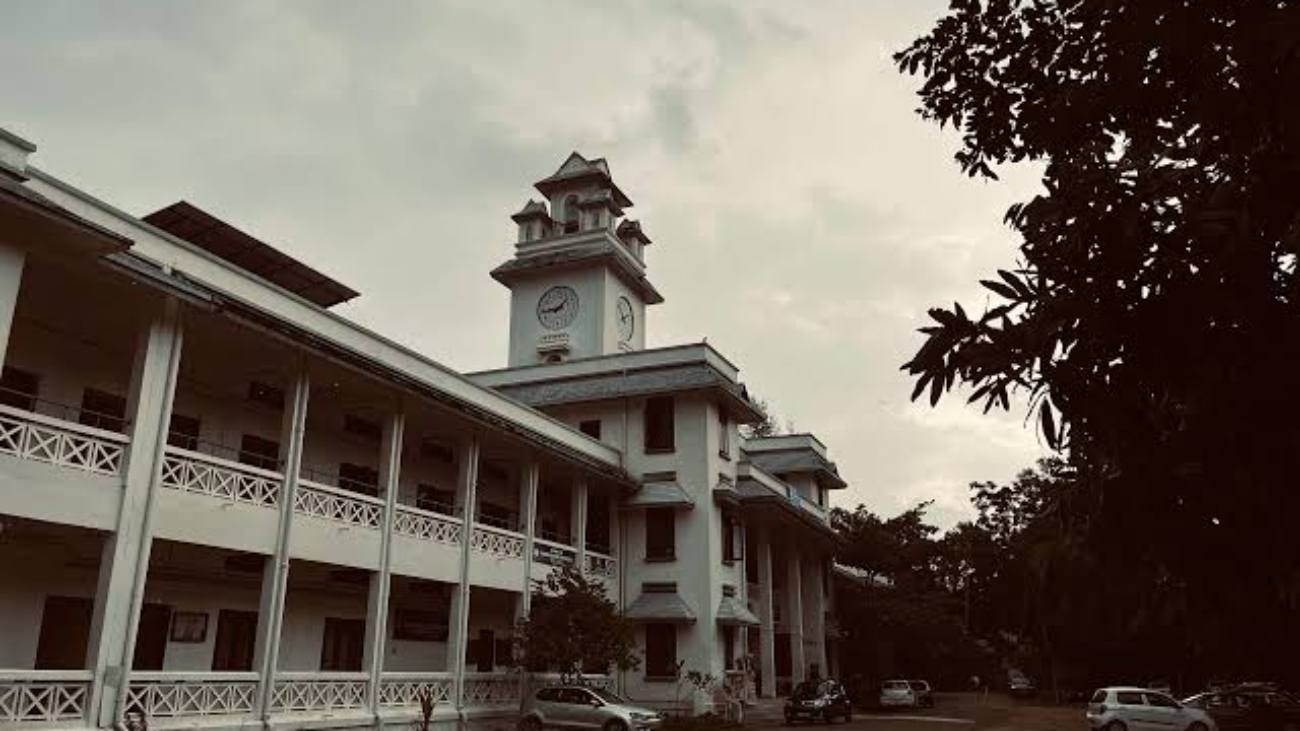
The Kariavattom–Pangappara area of Thiruvananthapuram district represents a quiet but structurally important belt where higher education, healthcare, mid-density housing, and transport corridors intersect. With the University of Kerala campus, medical institutions, hostels, research facilities, and growing residential layouts, the area functions as a knowledge-and-care corridor rather than a commercial hub. Its fiscal challenge is subtle: service demand is high and continuous, but revenue growth is slow and largely invisible. Vision Kerala 2047 requires this area to shift from a low-noise, high-cost model to a knowledge-anchored, service-aligned revenue system that funds reliability without forcing disruptive urbanisation.
Property taxation in Kariavattom–Pangappara does not reflect institutional intensity. Large campuses, hostels, rental housing, and staff residences consume roads, drainage, water, sanitation, and public safety services at levels far above typical residential norms, yet assessments remain conservative due to educational or semi-residential classification. By 2047, property valuation must incorporate functional use and occupancy intensity. Institutional accommodation, hostels, and high-occupancy rental buildings should be assessed based on service load and rental yield, while owner-occupied family housing is protected through phased reassessment. This aligns revenue with real demand without undermining social stability.
Education and healthcare institutions are the area’s defining assets and largest cost drivers. Daily inflow of students, patients, staff, and service workers creates continuous pressure on footpaths, lighting, sanitation, drainage, and traffic management. Vision Kerala 2047 should formalise institution-area service contributions linked to pedestrian infrastructure, emergency access, waste management, and public transport connectivity. Predictable, modest contributions earmarked for local services strengthen institutional–community relations while stabilising public finances.
Rental housing growth is a major structural factor. Paying guest accommodation, hostels, and informal rentals increase population turnover, waste generation, and water use. A property-tax-only model under-recovers these costs. Vision Kerala 2047 should introduce differentiated service pricing for bulk rental properties, combined with incentives for on-site waste segregation, water reuse, and energy efficiency. Reduced load on public systems translates directly into lower operating expenditure and improved service reliability.
Mobility management is a growing fiscal concern. Narrow roads connecting institutions and residential pockets experience peak-hour congestion, safety risks, and accelerated wear. Yet mobility activity contributes little to local revenue. By 2047, managed parking, time-windowed service access for institutions, and pedestrian-priority zones near campuses should be normalised. Revenue from these measures should be reinvested into footpaths, crossings, lighting, and drainage, improving safety while funding maintenance.
Expenditure efficiency must focus on predictability rather than expansion. The area does not require large new projects but consistent upkeep of roads, drains, and public spaces. Vision Kerala 2047 should mandate predictive maintenance and condition-based contracts. International experience shows such approaches reduce lifecycle costs by 15–20 percent compared to reactive repairs. These savings effectively expand fiscal space without increasing charges.
Water and sanitation finance require careful calibration. Institutional clusters generate wastewater and solid waste volumes that fluctuate with academic and hospital cycles. Vision Kerala 2047 should adopt bulk-generator service agreements with clear performance standards, encouraging on-site treatment and segregation. Reduced central handling costs improve both fiscal and environmental outcomes.
Energy efficiency offers a stable supplementary revenue path. Large institutional roofs and hostels are ideal for aggregated solar installations. By 2047, shared energy systems can significantly reduce public energy expenditure. A portion of these savings should be pooled into a local infrastructure fund supporting lighting, surveillance, and emergency systems, improving safety without recurring budget pressure.
Borrowing should remain conservative and service-linked. Kariavattom–Pangappara does not need landmark infrastructure but steady investment in walkability, drainage, safety, and public amenities. Small, ring-fenced loans backed by institutional contributions and service fees can finance these needs. Debt servicing should remain below 6–7 percent of locally generated revenue to preserve flexibility.
Transparency is especially important in an area dominated by students, faculty, and professionals. By 2047, public dashboards showing collections, maintenance schedules, response times, and service outcomes should be standard. When contributors see quiet reliability rather than visible crises, trust deepens.
By mid-century, the Kariavattom–Pangappara area should aim to finance most of its operating expenditure and a significant share of maintenance costs through locally generated, knowledge- and usage-linked revenues. State support can then focus on strategic education and healthcare expansion rather than routine urban services.
Kariavattom–Pangappara thrives on learning, care, and continuity. Vision Kerala 2047 must ensure that this quiet productivity is fiscally respected. A finance system that values institutional intensity without forcing commercialisation can keep the area stable, accessible, and dignified as the city grows.
