
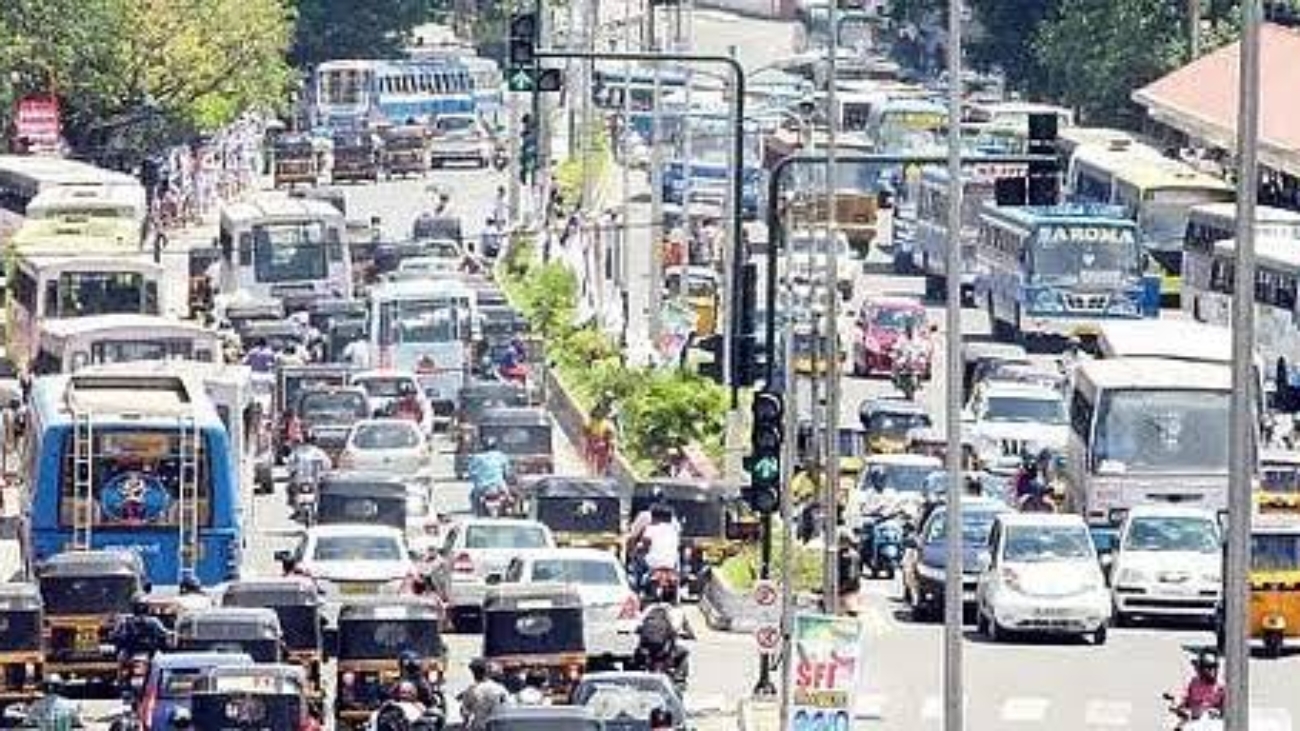
The Kakkanad area of Ernakulam district has emerged as one of Kerala’s most consequential urban economies, even though its public finance architecture has not kept pace with its functional importance. Anchored by Infopark, SmartCity, district administration offices, private hospitals, educational institutions, and a dense lattice of rental housing, Kakkanad operates as a technology–administrative city within a city. Daily population inflow far exceeds its resident base, yet the fiscal system governing it remains residentially biased and structurally underpowered. Vision Kerala 2047 requires Kakkanad to transition from a growth-absorbing suburb into a self-financing economic engine that captures, reinvests, and compounds the value it generates.
Property taxation in Kakkanad significantly under-reflects economic reality. Large office campuses, IT buildings, co-working spaces, hostels, and high-occupancy rental apartments are often assessed using frameworks designed for low-density residential use. This creates a chronic mismatch between service demand and revenue intake. By 2047, property valuation must be decisively usage-weighted. Office campuses and commercial tech spaces should be assessed based on built-up area, employment density, and infrastructure load, while rental housing should reflect occupancy intensity rather than ownership type. A phased reassessment cycle can raise effective collections steadily without sudden shocks, aligning fiscal capacity with service reality.
The defining feature of Kakkanad is its floating workforce. Tens of thousands commute daily for work, education, healthcare, and government services, placing immense pressure on roads, drainage, waste management, water supply, policing, and emergency services. Yet the cost of servicing this population is largely borne by general municipal budgets rather than priced locally. Vision Kerala 2047 must normalise workforce-linked urban service contributions. Managed parking, congestion-aware access pricing near office clusters, and institutional service agreements tied to employee strength can convert daily intensity into predictable revenue while improving mobility outcomes.
Technology campuses represent the single largest untapped fiscal partner. Infopark and SmartCity generate high private income, land value appreciation, and ancillary commercial activity, yet contribute minimally beyond statutory taxes. Vision Kerala 2047 should formalise campus-area service contributions earmarked for last-mile roads, drainage, lighting, public transport integration, and safety infrastructure. Global technology districts demonstrate that such contributions, when predictable and transparently reinvested, do not deter investment and significantly improve urban quality.
Rental housing density is another major cost driver. Paying guest accommodations, serviced apartments, and informal rentals create high turnover, increasing waste generation, water demand, and public health pressure. A property-tax-only model structurally under-recovers these costs. By 2047, differentiated service pricing for bulk rental properties should be introduced, with incentives for on-site waste segregation, water reuse, and energy efficiency. Reduced load on public systems translates directly into lower operating expenditure and improved service reliability.
Mobility infrastructure is both Kakkanad’s biggest bottleneck and its greatest revenue opportunity. Narrow arterial roads carry disproportionate traffic volumes, leading to congestion, road degradation, and safety risks. Vision Kerala 2047 should adopt demand-based parking pricing, time-windowed freight and service access for commercial zones, and pedestrian-priority corridors near campuses. Revenue from these measures must be ring-fenced for road strengthening, drainage integration, footpaths, and traffic enforcement. International experience shows that mobility pricing improves both fiscal health and commute quality.
Expenditure efficiency is critical in a fast-growing, high-load area. Reactive maintenance dominates current spending, leading to recurring failures. Vision Kerala 2047 should mandate load-based infrastructure design and predictive maintenance. Roads, drains, and public assets must be engineered for actual usage rather than nominal classification. Lifecycle cost reductions of 20 percent or more are achievable, effectively expanding fiscal capacity without increasing taxes.
Energy and digital infrastructure offer complementary revenue pathways. Large office roofs and apartment complexes are ideal for aggregated solar installations and shared energy systems. By 2047, energy savings from public buildings and street lighting should be pooled into a local infrastructure fund supporting lighting, surveillance, and emergency response. Additionally, anonymised mobility and land-use data, governed with strict privacy safeguards, can be licensed for urban planning and research, creating small but growing revenue streams aligned with Kakkanad’s knowledge economy.
Borrowing must be disciplined and asset-backed. Kakkanad will require sustained capital investment, but indiscriminate debt risks long-term stress. Vision Kerala 2047 should rely on ring-fenced, project-specific borrowing backed by predictable revenues such as parking fees, campus contributions, and service charges. Debt servicing should remain below 8 percent of locally generated revenue to preserve flexibility during economic cycles.
Transparency is essential in a high-expectation, professional population. Residents, workers, and institutions demand clarity. By 2047, public dashboards showing revenue sources, expenditure priorities, project timelines, service response times, and outcomes should be standard. Evidence from comparable tech districts shows transparency alone improves compliance and reduces resistance to reform.
By mid-century, the Kakkanad area should aim to finance the majority of its operating expenditure and a significant share of its capital investment through locally generated, activity-linked revenues. State and central transfers can then be focused on strategic technology, innovation, and regional infrastructure rather than routine urban stress.
Kakkanad is no longer an emerging node; it is already one of Kerala’s primary economic engines. Vision Kerala 2047 must ensure that this engine strengthens public capacity rather than quietly exhausting it. A finance system that captures intensity, rewards efficiency, and reinvests locally will allow Kakkanad to mature into a globally competitive, fiscally resilient urban economy.
