
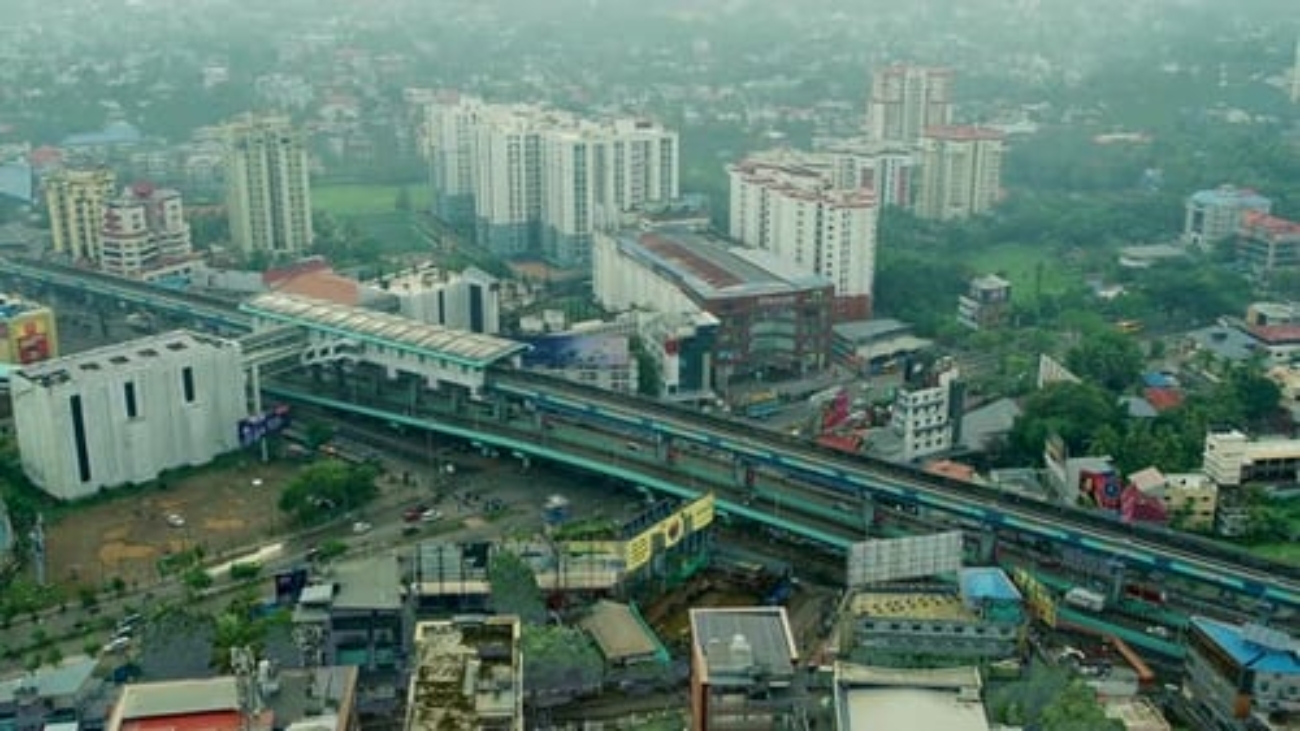
The Edappally area of Ernakulam district is one of Kerala’s most intense transit–commerce–healthcare nodes, shaped by the convergence of national highways, metro rail, regional bus movement, wholesale trade, large retail complexes, and major hospitals. Edappally does not merely serve its residents; it absorbs movement and demand from across the district and beyond. Yet its public finance model remains anchored in static residential taxation and flat licensing, creating a chronic gap between service load and fiscal capacity. Vision Kerala 2047 requires Edappally to evolve from a congestion-absorbing junction into a movement-priced urban system that converts intensity into sustained public value.
Property taxation in Edappally significantly undercaptures locational advantage. Proximity to NH66, NH544, metro stations, and major commercial hubs has driven land and rental values upward for decades, yet assessments often lag behind market reality due to conservative revisions and legacy classifications. By 2047, property valuation must shift toward access-weighted assessment. Buildings benefiting from highway frontage, metro proximity, and commercial spillover should be reassessed based on functional value and rental yield rather than structural age. A phased reassessment cycle can lift effective collections steadily while avoiding sudden displacement pressure.
Transport intensity is Edappally’s defining fiscal externality. Continuous flows of private vehicles, buses, trucks, taxis, and two-wheelers generate road degradation, congestion, air pollution, enforcement costs, and pedestrian risk. Yet this load is effectively unpriced. Vision Kerala 2047 should institutionalise mobility-linked urban service contributions. Demand-based parking pricing, congestion-aware access charges near junctions, and differentiated commercial vehicle permits can generate stable revenue while improving traffic behaviour. When reinvested locally, these funds can finance durable road surfaces, drainage upgrades, footpaths, and traffic management systems.
Retail and wholesale commerce represent another major but under-priced activity. Large malls, wholesale markets, and dense retail streets generate high turnover and footfall, placing disproportionate pressure on sanitation, waste management, policing, and emergency services. Flat licensing fees distort equity and under-recover public costs. By 2047, turnover-band-based trade licensing and area service agreements should be standard. Revenues must be ring-fenced for cleanliness, waste logistics, lighting, and safety, improving both business environment and public health.
Healthcare-driven activity adds a further layer of fiscal stress. Hospitals and diagnostic centres in and around Edappally attract patients and staff from across the region, increasing traffic, waste generation, water use, and emergency response demand. Vision Kerala 2047 should normalise healthcare-area service contributions for large facilities, linked transparently to sanitation, traffic management, and emergency preparedness. Smaller clinics should be protected through thresholds and rebates, ensuring equity while recovering real public costs from high-intensity operations.
Rental housing density is rising rapidly due to transit accessibility. High occupancy turnover increases waste, water consumption, and public health risk. A property-tax-only model structurally under-recovers these costs. Vision Kerala 2047 should introduce differentiated service pricing for bulk rental properties and serviced accommodations, combined with incentives for on-site waste segregation and water efficiency. This aligns payment with service demand while preserving affordability through targeted exemptions.
Expenditure efficiency is critical in a high-load junction area. Reactive repairs dominate spending as roads and drains fail repeatedly under traffic stress. Vision Kerala 2047 should mandate load-based infrastructure design and predictive maintenance. Roads, junctions, and drainage must be engineered for peak movement rather than nominal classification. Lifecycle cost reductions of 20 percent or more are achievable, effectively expanding fiscal capacity without raising rates.
Energy efficiency and utilities offer supportive fiscal gains. Malls, hospitals, and transport facilities are suitable for aggregated solar installations and efficient lighting systems. By 2047, savings from reduced public energy expenditure should be pooled into a local mobility and safety fund, supporting lighting, surveillance, and emergency response infrastructure.
Borrowing must be disciplined and purpose-driven. Edappally does not need symbolic projects but sustained investment in junction redesign, pedestrian safety, drainage integration, and public transport interfaces. Small, ring-fenced loans backed by parking revenue, mobility charges, and commercial service fees can finance these needs. Debt servicing should remain below 7–8 percent of locally generated revenue to preserve flexibility.
Transparency is essential in a highly visible, congestion-prone area. Commuters, traders, residents, and institutions must see clear links between charges and improvements. By 2047, public dashboards showing traffic performance, sanitation cycles, revenue collection, and reinvestment outcomes should be standard. Visibility builds compliance and reduces resistance.
By mid-century, the Edappally area should aim to finance most of its operational costs and a significant share of its capital upgrades through locally generated, movement- and intensity-linked revenues. State and central funds can then focus on strategic regional transport integration rather than routine congestion management.
Edappally will always be a junction. Vision Kerala 2047 must ensure that being a junction does not mean being fiscally exhausted. When movement pays for movement, transit hubs become safer, cleaner, and more reliable rather than perpetually overloaded.
