
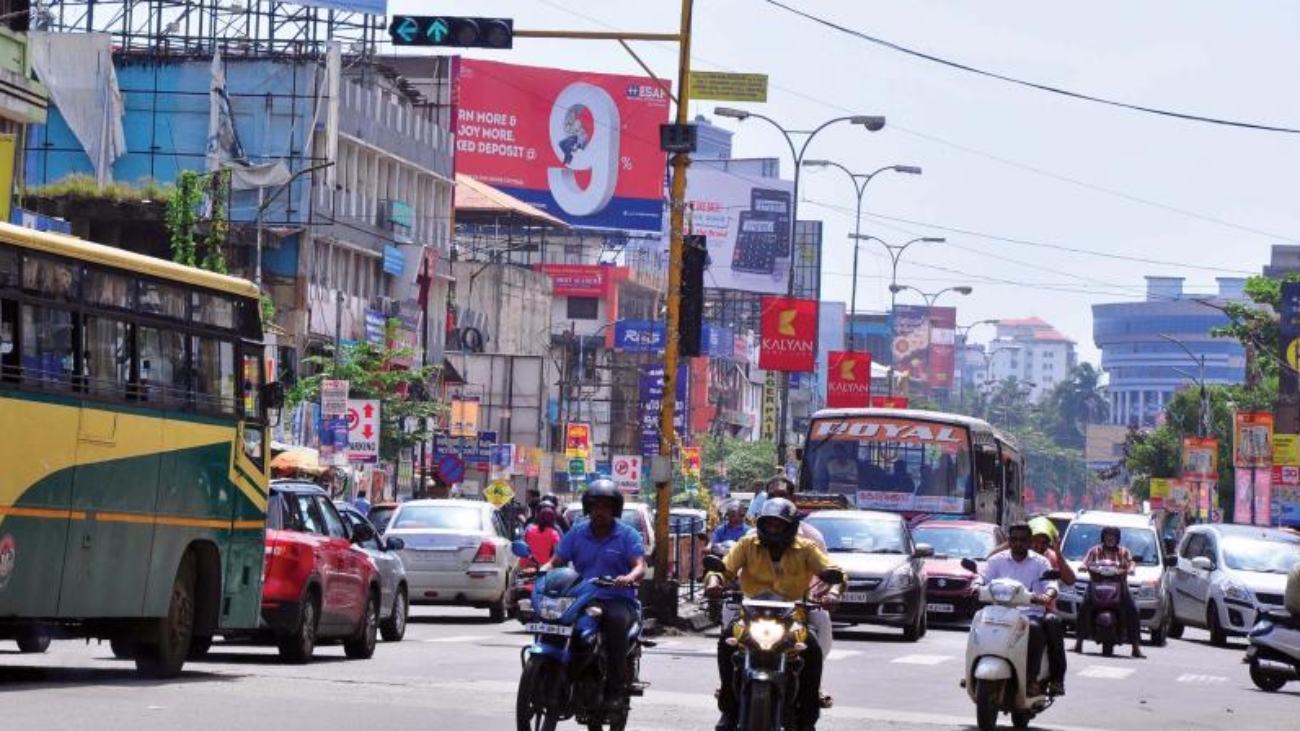
The Mavoor Road–Kallai Road corridor of Kozhikode district is the city’s most economically intense and infrastructurally stressed urban spine. It carries wholesale trade, private hospitals, educational institutions, bus movement, dense rental housing, and continuous commercial activity across nearly every hour of the day. This corridor does not rest; it absorbs the city’s daily life. Yet its public finance model remains flat, fragmented, and historically misaligned with the load it carries. Vision Kerala 2047 requires this corridor to transition from a congestion-absorbing backbone into an intensity-priced urban system that funds its own reliability.
Property taxation along Mavoor Road and Kallai Road significantly undercaptures economic reality. Many buildings are old and assessed conservatively, yet house hospitals, godowns, offices, hostels, and high-turnover retail. Age-based depreciation has effectively subsidised intense commercial use for decades. By 2047, property valuation must move to a functional-intensity model. Buildings should be assessed based on occupancy, commercial activity proxies, and service demand rather than physical age alone. A phased reassessment can substantially raise effective collections without destabilising long-settled households.
Healthcare-driven activity is a dominant fiscal pressure along this corridor. Major hospitals and clinics generate ambulance traffic, biomedical waste, water consumption, and emergency service demand far beyond residential norms. Yet the public cost of supporting this ecosystem is largely socialised. Vision Kerala 2047 should normalise healthcare-area service contributions for large facilities, calibrated to built-up area and patient volume, and ring-fenced for sanitation, traffic management, drainage, and emergency preparedness. Smaller clinics should be protected through thresholds to preserve accessibility.
Wholesale trade and logistics define the Kallai Road segment. Godowns, timber trade, wholesale markets, and supply hubs operate at high volume with thin margins, generating heavy vehicle movement, waste, and road wear. Flat licensing fees distort fairness and under-recover costs. By 2047, turnover-band-based trade licensing and corridor service agreements should be standard. Revenues must be reinvested into durable road surfaces, drainage, lighting, and waste logistics. Predictable pricing improves compliance and reduces conflict in high-volume markets.
Transport intensity is the corridor’s most visible externality. Buses, private vehicles, delivery trucks, and two-wheelers compete for limited road space, accelerating infrastructure degradation and safety risks. Yet mobility remains largely unpriced. Vision Kerala 2047 should institutionalise movement-linked urban service contributions through managed parking pricing, time-windowed freight access, and differentiated commercial vehicle permits. Revenue from these measures should be ring-fenced for road strengthening, footpaths, crossings, and traffic enforcement, improving both safety and throughput.
Rental housing density along the corridor adds a quieter but persistent fiscal load. Hostels, paying guest accommodations, and subdivided residential units increase waste generation, water use, and public health risk. A property-tax-only model structurally under-recovers these costs. Vision Kerala 2047 should introduce differentiated service pricing for bulk rental properties, combined with incentives for on-site waste segregation and water efficiency. Reduced load on public systems translates into lower operating expenditure.
Expenditure efficiency is critical in a corridor where disruption is costly. Reactive repairs dominate spending today, leading to repeated failures. Vision Kerala 2047 should mandate load-based infrastructure design and predictive maintenance. Roads, drains, and utilities must be engineered for peak usage rather than nominal classification. International evidence suggests lifecycle cost reductions of 20 percent or more through preventive approaches, effectively expanding fiscal capacity.
Waste and sanitation finance must be treated as core economic infrastructure. Market and hospital-linked waste generation requires predictable, activity-linked pricing. By 2047, bulk-generator agreements and corridor-level sanitation contracts should be standard, with clear performance benchmarks. Cleanliness directly affects commerce, public health, and corridor reputation.
Energy efficiency offers modest but steady gains. Hospitals, markets, and public buildings can adopt efficient lighting and shared solar where feasible. By 2047, savings from reduced public energy expenditure should be pooled into a local maintenance and safety fund supporting lighting, surveillance, and emergency response.
Borrowing should be cautious and tightly linked to reliability upgrades. The Mavoor–Kallai corridor does not need expansion projects but sustained investment in drainage renewal, road durability, pedestrian safety, and waste logistics. Small, ring-fenced loans backed by healthcare contributions, parking revenue, and trade service fees can finance these needs. Debt servicing should remain below 6–7 percent of locally generated revenue.
Transparency is essential in a commercially dense and politically sensitive corridor. Traders, residents, and institutions must see direct returns on contributions. By 2047, public dashboards showing sanitation cycles, maintenance schedules, traffic performance, revenue collection, and reinvestment should be standard. Visibility builds cooperation and compliance.
By mid-century, the Mavoor Road–Kallai Road corridor should aim to finance most of its maintenance and a significant share of its capital renewal through locally generated, intensity-linked revenues. State support can then focus on strategic urban mobility integration rather than routine corridor survival.
This corridor keeps Kozhikode functional, not glamorous. Vision Kerala 2047 must ensure that functionality is fiscally respected. An urban spine that prices intensity honestly and invests in reliability can remain productive, safe, and resilient despite relentless pressure.
