
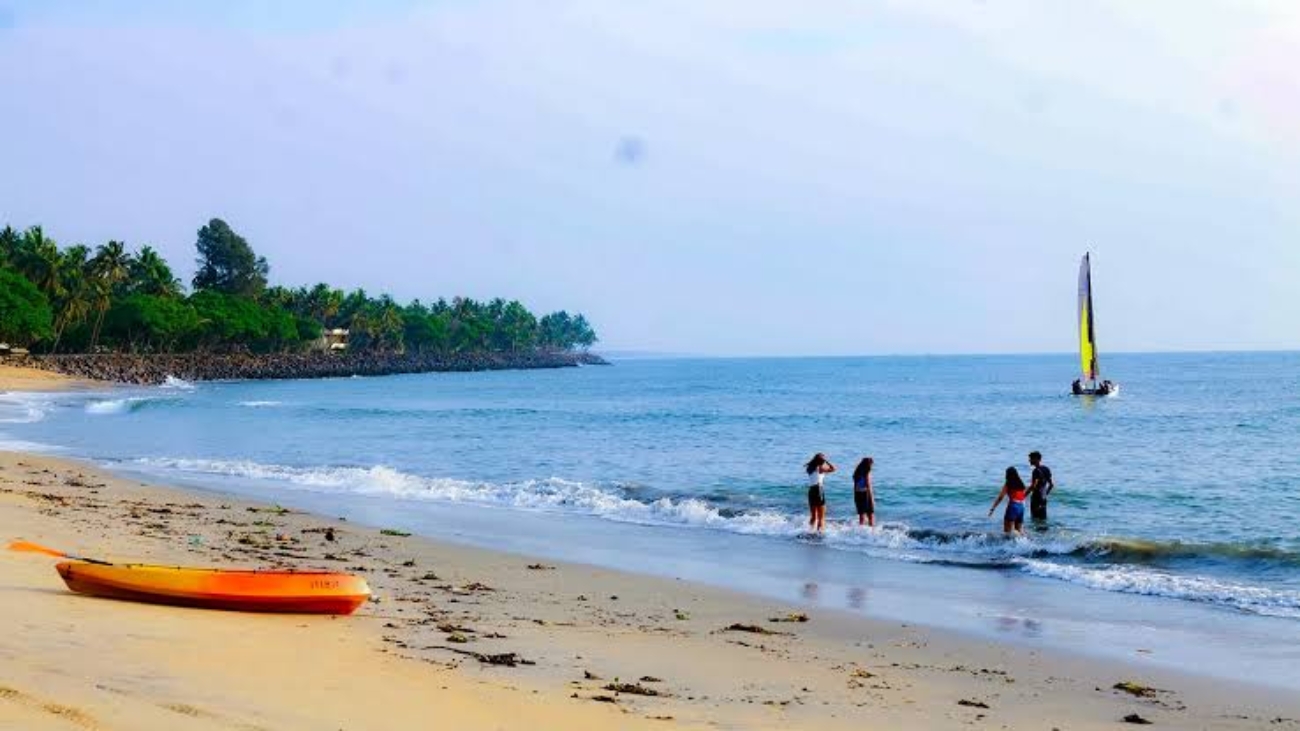
The Munambam–Azhikkode coastal belt of Ernakulam district is a strategically sensitive maritime zone shaped by fisheries, port access, industrial energy infrastructure, dense coastal settlements, and accelerating environmental stress. Anchored by the Munambam fishing harbour, proximity to LNG terminal infrastructure, shipping channels, and erosion-prone coastline, this area bears costs that far exceed its local revenue capacity. Public finance here has historically relied on episodic grants and crisis response. Vision Kerala 2047 requires Munambam–Azhikkode to transition from a vulnerable coastal edge into a port–energy–fisheries interface that finances resilience, sanitation, and safety on a continuous basis.
Property taxation in Munambam–Azhikkode undercaptures functional advantage and public investment in protection. Coastal access, harbour proximity, industrial adjacency, and transport links have raised land utility, yet assessments remain conservative due to legacy fishing settlements and political sensitivity. By 2047, valuation must move toward a differentiated coastal-use model. Traditional fishing households and low-income residences should be protected through slow, income-aware reassessment and exemptions. In contrast, commercial properties, warehouses, energy-linked facilities, lodging units, and port-adjacent rentals should be assessed based on service load and functional value. This dual-track approach allows revenue growth without displacement.
Fisheries activity is the social and economic backbone of the area. Landing sites, ice plants, net repair yards, auction spaces, and informal markets generate continuous demand for sanitation, waste handling, lighting, access maintenance, and safety services. Vision Kerala 2047 must clearly distinguish subsistence fishing from commercial-scale processing and export. Small-scale fishers should face minimal fiscal burden and receive service priority, while larger processing units, ice plants, and traders contribute through fisheries-linked service agreements. Revenues must be transparently reinvested into harbour sanitation, cold-chain waste handling, lighting, and worker safety.
Port and energy infrastructure create a major unpriced externality. Shipping access channels, LNG-related facilities, service traffic, security requirements, and emergency preparedness impose continuous pressure on roads, drainage, policing, and disaster readiness systems. Yet the local public finance system captures little of this load. Vision Kerala 2047 must institutionalise port- and energy-linked urban service contributions calibrated to operational scale and risk profile. These revenues should be ring-fenced for road strengthening, drainage integration, emergency response infrastructure, coastal protection, and community safety systems.
Environmental vulnerability defines long-term costs. Severe coastal erosion, salt corrosion, flooding, and climate volatility repeatedly damage roads, housing edges, and public utilities. Vision Kerala 2047 must treat coastal resilience as a standing operating expense rather than a post-disaster obligation. Resilience-linked service contributions should apply to commercial establishments, energy-linked facilities, and developments that benefit from sea walls, groynes, drainage upgrades, and early-warning systems. Preventive coastal investment consistently costs far less than repeated repair and rehabilitation.
Sanitation is a persistent stress point. Fish waste, market activity, dense housing, and limited space overwhelm existing waste systems. Vision Kerala 2047 must treat sanitation as core economic infrastructure. Area-based sanitation service charges linked to markets, harbour activity, and bulk waste generators should be introduced, with strict reinvestment into daily waste removal, public toilets, drainage maintenance, and coastal cleanliness. Clean harbours directly reduce health risk and improve export credibility.
Mobility management is a critical lever. Narrow coastal roads carry fishing vehicles, industrial service traffic, buses, and pedestrians simultaneously. Unregulated parking and freight movement accelerate damage and congestion. Vision Kerala 2047 should adopt time-windowed freight access, managed parking near harbour and market zones, and pedestrian-priority stretches. Revenue from these measures should be reinvested into road strengthening, footpaths, lighting, and enforcement.
Expenditure efficiency must prioritise durability. Patchwork repairs in saline, erosion-prone environments fail quickly. Vision Kerala 2047 should mandate marine-grade standards, lifecycle budgeting, and predictive maintenance for roads, drains, lighting, sanitation facilities, and public buildings. Though upfront costs are higher, lifecycle savings of 25–30 percent are achievable, effectively expanding fiscal capacity.
Energy and utilities offer stabilising opportunities. Harbour infrastructure, markets, public buildings, and community facilities can adopt shared solar and efficient lighting. By 2047, savings from reduced public energy expenditure should be pooled into a local coastal safety and maintenance fund supporting lighting, surveillance, and emergency response.
Borrowing must be conservative and resilience-linked. Munambam–Azhikkode does not need speculative construction but sustained investment in sanitation, access, coastal protection, and emergency readiness. Small, ring-fenced loans backed by port-linked contributions, fisheries service agreements, sanitation charges, and parking revenue can finance these needs. Debt servicing should remain below 6 percent of locally generated revenue to preserve flexibility in a high-risk environment.
Transparency is essential in a community long accustomed to crisis-driven attention. Residents, fishers, and workers must see steady improvement rather than episodic relief. By 2047, public dashboards showing sanitation schedules, coastal protection works, revenue collection, and service outcomes should be standard. Visibility builds trust and compliance.
By mid-century, the Munambam–Azhikkode coastal belt should aim to finance most of its sanitation, access maintenance, and coastal resilience costs through locally generated, activity-linked revenues, while protecting traditional livelihoods through targeted exemptions. State and central funds can then focus on major maritime security and energy infrastructure beyond local scope.
Munambam–Azhikkode sits at the intersection of livelihood, industry, and national energy security. Vision Kerala 2047 must ensure that bearing national infrastructure does not translate into local fragility. A coastal finance model that prices risk honestly, protects livelihoods, and funds prevention continuously can allow this belt to remain safe, dignified, and resilient.
