
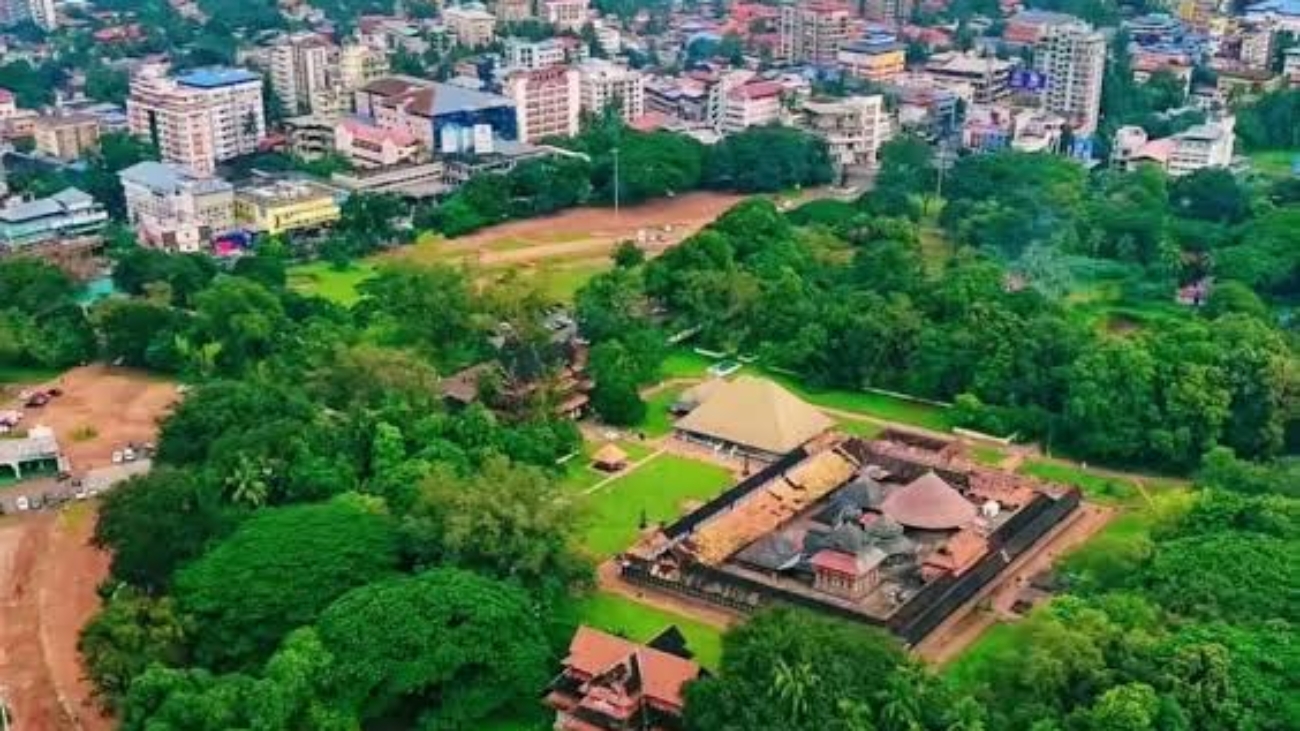
Thrissur is often described as a model of religious coexistence. Temples, churches, mosques, and synagogues exist within close geographic proximity, and large festivals across traditions unfold with remarkable logistical cooperation. On the surface, this pluralism appears stable and mature. Yet beneath this harmony lies a quieter structural gap that rarely enters public discussion. Thrissur has religious coexistence, but it lacks shared civic platforms where people from different faith institutions regularly collaborate on non-religious, future-oriented issues. This absence does not create conflict, but it prevents collective intelligence from forming.
Pluralism without shared civic infrastructure produces parallel worlds. Communities coexist, respect boundaries, and occasionally cooperate during events, but they rarely deliberate together on common challenges such as ageing, employment, urban stress, youth stagnation, environmental pressure, or local economic transitions. Each institution addresses these issues internally, according to its own priorities and resources. The result is duplication, uneven outcomes, and lost opportunities for district-level coherence.
In Thrissur, religious institutions are among the most organised, trusted, and resource-rich entities in society. They manage land, people, money, volunteers, and social legitimacy. Yet their engagement with civic problems remains largely inward-facing. Charity exists, but charity is not the same as civic collaboration. Charity flows downward. Civic platforms work sideways. Without sideways collaboration, pluralism remains socially polite but strategically thin.
This gap matters because many of Thrissur’s emerging challenges cannot be solved within silos. Ageing populations cut across communities. Youth disengagement affects all families. Healthcare spillovers strain everyone. Urban congestion, water stress, and climate adaptation ignore religious boundaries. When responses remain fragmented, solutions remain partial.
The absence of shared civic platforms is not due to hostility or mistrust. It is due to historical design. Kerala’s public sphere evolved around political parties, trade unions, and state institutions. Religious institutions were positioned as moral and cultural anchors, not civic problem-solving nodes. Over time, this division hardened into habit. Religion stayed spiritual. Policy stayed political. Everyday problems fell between.
This separation once made sense. Today, it limits capacity. Political spaces are increasingly polarised and short-term. State institutions are stretched thin. Meanwhile, religious institutions retain deep social reach but lack neutral arenas to engage collectively without fear of politicisation or doctrinal compromise. The result is mutual underutilisation.
A shared civic platform is not a religious council, an interfaith prayer forum, or a symbolic harmony committee. It is a neutral, issue-focused space where representatives from different institutions participate as civic actors, not religious delegates. The purpose is not to debate belief, but to co-design responses to shared material realities. The platform’s legitimacy comes from its neutrality and usefulness, not its ideology.
Thrissur’s pluralism actually makes it ideal for such platforms. Dense institutional presence ensures participation. Long histories of coexistence reduce fear. Strong local identity can override sectarian instincts when the agenda is concrete and practical. What is missing is an explicit invitation to collaborate beyond ritual and charity.
Youth are the first casualties of this gap. Many young people in Thrissur grow up deeply embedded in religious communities yet feel disconnected from civic purpose. They volunteer during festivals or charity drives, but rarely engage in sustained problem-solving across communities. This limits exposure, imagination, and leadership development. Shared civic platforms offer a different apprenticeship: learning to work with difference toward common outcomes.
Economic challenges also suffer. Thrissur has multiple parallel service networks, skill programs, and welfare efforts run by different institutions. Without coordination, scale is lost. A shared platform allows mapping of needs and capacities across communities, enabling smarter allocation without threatening autonomy. Cooperation here increases efficiency without forcing uniformity.
Healthcare is another domain where fragmentation hurts outcomes. Religious institutions often run hospitals, care homes, and charitable clinics. Yet post-care support, elder services, and mental health initiatives remain scattered. A civic platform allows shared standards, referral pathways, and joint responses without merging institutions. Patients benefit from continuity rather than loyalty to a single network.
Environmental stress exposes the limits of siloed action most clearly. Water management, waste reduction, and climate adaptation require coordination across neighbourhoods and landholdings often controlled by different institutions. Without a neutral civic space, action remains patchy. Shared platforms turn moral concern into collective execution.
One reason such platforms are rare is fear of politicisation. Religious institutions worry that civic engagement will drag them into partisan conflict. This fear is not unfounded. The design response is not withdrawal, but insulation. Platforms must be explicitly non-partisan, agenda-limited, and time-bound around specific problems. Participation must not imply endorsement of any political ideology.
Another fear is loss of identity. Institutions worry that collaboration will dilute distinctiveness. In practice, the opposite often happens. When collaboration is issue-based rather than belief-based, identities remain intact. Institutions contribute from their strengths without competing for moral dominance. Respect deepens through competence, not symbolism.
Governance can play a catalytic role without controlling outcomes. Local governments can convene, host, and recognise such platforms without directing them. Their role is to legitimise the space, not dictate content. When civic platforms are seen as useful rather than performative, participation becomes self-sustaining.
Technology can assist but should not dominate. Digital tools help coordination, documentation, and transparency, but the core value lies in human deliberation. Trust is built through repeated interaction, not dashboards. The platform must privilege continuity over visibility.
The absence of shared civic platforms also affects crisis response. During emergencies, coordination often relies on personal relationships rather than institutional channels. This works until it doesn’t. A standing civic platform allows rapid, coordinated action without improvisation. Preparedness replaces heroics.
Critically, such platforms must be designed to include voices beyond formal leadership. Women, caregivers, youth, and service workers often experience problems first but are represented last. A meaningful civic platform creates mechanisms for these perspectives to inform decisions rather than be consulted symbolically.
Thrissur’s pluralism has long been a moral achievement. Vision Kerala 2047 requires it to become a strategic one. Coexistence alone is no longer enough. The district must learn to think together without praying together, decide together without campaigning together, and act together without surrendering identity.
This shift does not weaken religion. It grounds it. When institutions contribute to shared civic outcomes, their relevance increases rather than diminishes. They are seen not only as guardians of tradition, but as stewards of the future.
The greatest risk is inertia. Because the absence of shared platforms does not produce visible conflict, it is easy to ignore. Yet its cost accumulates quietly through inefficiency, missed opportunity, and slow erosion of collective capacity. By the time fragmentation becomes visible, rebuilding trust becomes harder.
By 2047, Thrissur will face challenges that cannot be addressed by any single institution, ideology, or community. The choice is not between unity and diversity. It is between parallel action and coordinated intelligence. Shared civic platforms provide coordination without conformity.
Thrissur does not need to invent harmony. It already has it. What it needs is a place where harmony can work on problems together, patiently and repeatedly, without spectacle.
