
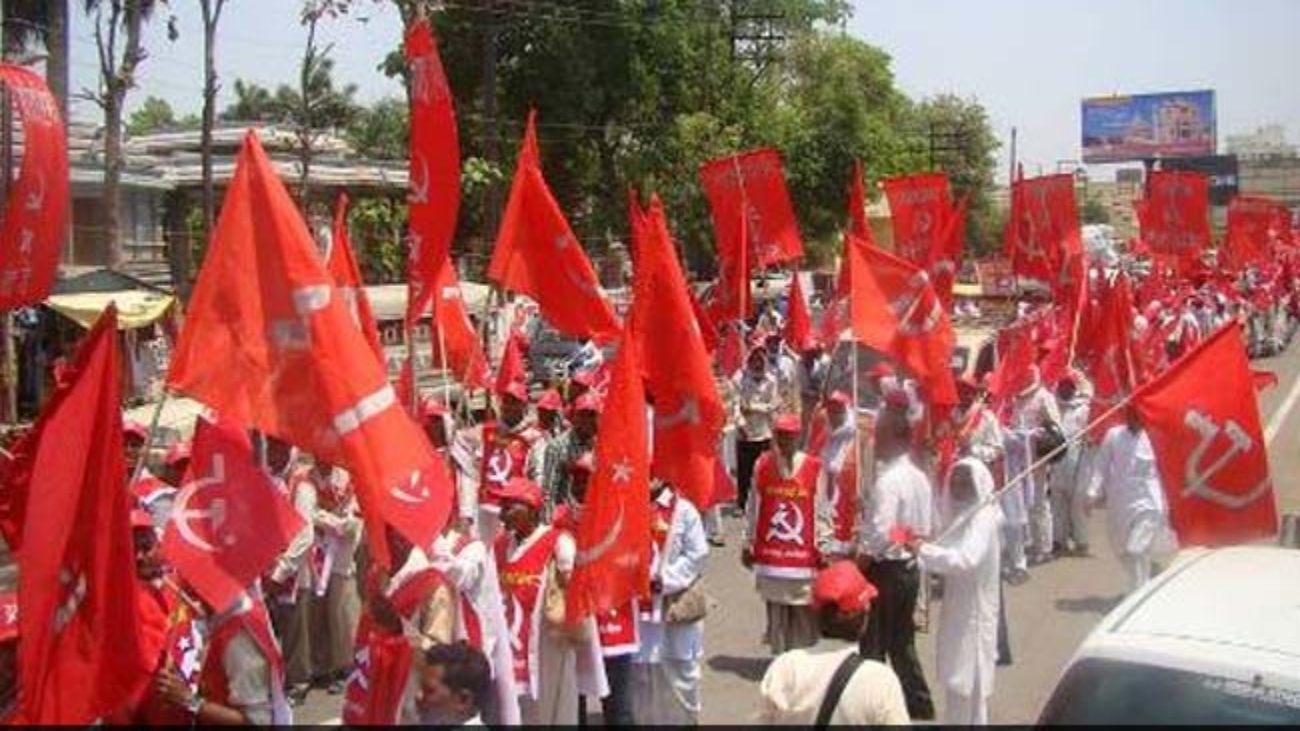
The political imagination of the Communist Party of India (Marxist) in Kerala remains deeply shaped by land as the primary site of inequality and justice. This made historical sense. In mid-twentieth-century Kerala, land ownership determined power, dignity, and survival. The struggle against landlordism unified large sections of society and gave the Left a moral authority unmatched by any other political force. Yet in contemporary Kerala, land has ceased to be the main economic lever, while the ideology built around it continues to dominate political thinking. This gap between historical success and present relevance has become one of the most understated reasons for ideological stagnation.
In the 1950s, land relations in Kerala were among the most unequal in India. Tenants had little security, agricultural labourers lived in extreme precarity, and caste hierarchy reinforced economic domination. The first communist government elected in 1957 emerged precisely because land reform was not an abstract idea but a daily necessity. Subsequent legislation in the late 1960s and early 1970s dismantled landlordism, abolished tenancy, and transferred ownership to cultivators. By the early 1980s, Kerala had achieved one of the most comprehensive land redistribution programmes in the developing world. This was not incremental reform; it was structural transformation.
The numbers reflect this shift clearly. By the 1981 Census, tenancy had almost disappeared as a dominant category. Land ownership became widespread, even if holdings were small. This redistributed not only assets but also political confidence. Former tenants became voters with stakes, voices, and expectations. The Left’s legitimacy was built on this success, and for good reason. However, land reform also marked the completion of a historical phase. Once ownership was broadly distributed, land could no longer function as the primary axis of political mobilisation.
From the 1990s onwards, land steadily lost its centrality in Kerala’s economic life. Agriculture’s share in state income fell below 15 percent by the early 2000s and continues to decline. Employment followed the same trajectory. Younger generations no longer see farming as a viable livelihood, regardless of ownership. Small landholdings, rising input costs, climate volatility, and market uncertainty have made agriculture economically fragile. Ownership without profitability does not translate into power or security.
At the same time, land in Kerala transformed from a productive asset into a speculative one. Urbanisation, remittances, and real estate investment pushed land prices to some of the highest levels in India relative to income. According to state planning data, residential land prices in many districts increased severalfold between 2000 and 2015, even as agricultural returns stagnated. Land became valuable not for what it produced, but for what could be built or sold. This shift fundamentally altered its political meaning.
The ideological problem arises here. Classical Left frameworks treat land primarily as a means of production. But in Kerala today, land functions as collateral, inheritance, security, and speculative wealth. A family with one acre of land may still rely entirely on overseas income or salaried employment. Conversely, landless professionals may earn more than traditional landowners. Economic hierarchy has detached itself from land ownership, but political language has not fully caught up.
Another layer of complexity comes from demographic change. Kerala is ageing rapidly. Fertility rates have been below replacement for decades, and younger populations are shrinking. Large tracts of agricultural land are lying fallow not because of exploitation, but because there are no willing or economically motivated cultivators. Labour shortages, especially after the decline of traditional farm workers, have become structural. Migrant labour fills some gaps, but agriculture struggles to compete with construction and services in wages and stability.
Despite these realities, much of Left political rhetoric still frames land as a site of resistance rather than reinvention. Protests around land acquisition often lack a clear economic alternative. Opposition to industrial or infrastructure projects is frequently articulated in moral terms without addressing the question of livelihood generation. This creates a paradox where land is protected ideologically, but the people associated with it continue to exit agriculture in practice.
Kerala’s real economic constraints today lie elsewhere. Productivity growth is low. Private investment is limited. Skilled employment creation lags behind educational output. Capital formation depends heavily on remittances rather than domestic enterprise. None of these problems can be solved through land-centric frameworks alone. Yet the ideological comfort zone remains tied to land struggles because they are historically validated and morally resonant.
This becomes particularly visible in debates around development. Infrastructure projects, industrial corridors, and large investments are assessed primarily through the lens of land displacement, even when displacement is minimal or compensable. The deeper question of how Kerala generates sustainable, high-quality employment rarely receives equal ideological clarity. Land becomes the battlefield because it is familiar, not because it is decisive.
There is also a symbolic dimension. Land reform represents the moral high point of Left politics in Kerala. Letting go of land as the central ideological axis risks confronting the absence of an equally powerful replacement narrative. Skills, capital, innovation, and productivity do not lend themselves easily to mass mobilisation or emotional symbolism. They require policy depth, institutional reform, and long time horizons. This shift demands an ideological evolution that is intellectually harder than defending legacy victories.
Globally, Left movements that succeeded in agrarian reform but failed to adapt to post-agrarian economies faced similar stagnation. Where land ceased to define inequality, new fault lines emerged around access to capital, technology, and global markets. In Kerala, these fault lines exist clearly, but political language continues to circle older conflicts, leaving newer ones under-theorised.
This does not mean land is irrelevant. It remains socially sensitive, environmentally critical, and culturally significant. But it is no longer the engine of economic transformation. Treating it as such creates diminishing returns, both politically and materially. A society where most income comes from services, migration, and private enterprise cannot be governed by an ideology anchored primarily in agrarian justice.
The challenge ahead is conceptual, not historical. The success of land reform should have freed political imagination to move on to the next structural battle. Instead, it has become a resting point. Without reframing inequality around skills, capital access, productivity, and global integration, ideological relevance risks being confined to remembrance rather than renewal.
