
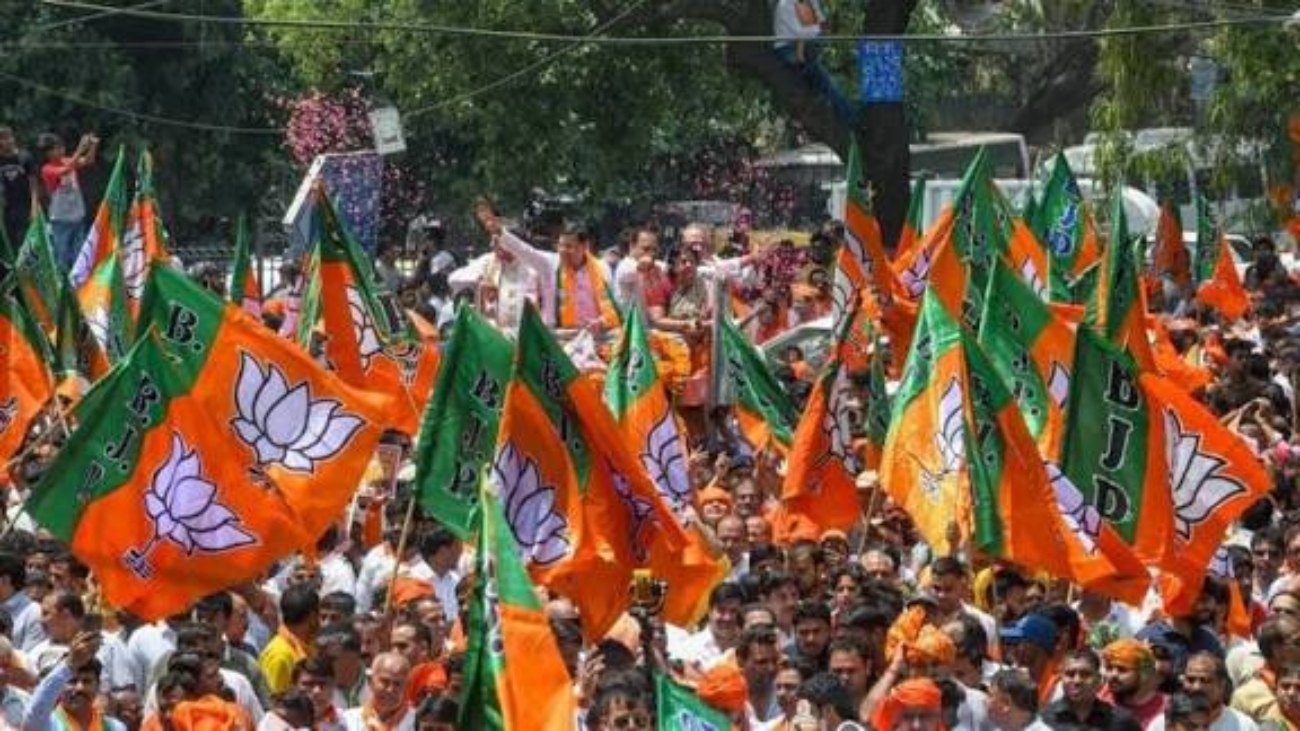
The political difficulty faced by the Bharatiya Janata Party in Kerala begins with a fundamental ideological mismatch between the party’s core worldview and the social grammar through which Kerala understands politics. This is not merely an issue of vote share or campaign execution, but a deeper misalignment between how power, identity, and legitimacy are historically constructed in the state and how BJP frames them at the national level.
Kerala’s political culture did not evolve through religious consolidation or nationalist mobilisation. It evolved through social reform, anti-caste struggles, literacy movements, labour organisation, and welfare-oriented governance. From the late nineteenth century onward, reformers challenged ritual hierarchy, questioned inherited authority, and promoted education as the primary instrument of emancipation. Political legitimacy emerged not from religious identity but from moral reform, redistribution, and social inclusion. This legacy continues to shape how politics is evaluated, even among voters who are personally religious.
Unlike many regions where religion and political identity fused naturally over time, Kerala developed a strong separation between personal belief and political authority. Temples, churches, and mosques remained socially influential, but political power flowed through unions, cooperatives, educational institutions, and local governance structures. Even when religious organisations intervened in politics, they did so cautiously and often indirectly. This produced a public culture where overt religious mobilisation is viewed with suspicion, not reverence.
BJP’s ideological core, however, is rooted in civilisational nationalism and cultural consolidation. Its political language emphasises shared religious identity, historical grievance, and cultural revival. While this framework resonates in regions where national identity is perceived as threatened or fragmented, it struggles in Kerala, where social stability was achieved through pluralism, compromise, and institutional reform rather than cultural assertion. The idea that identity must be politically consolidated feels unnecessary in a society that already experienced social levelling through other means.
Kerala’s demographic composition further complicates this alignment. Religious minorities form a significant portion of the population, and their integration into social, economic, and political life has been relatively deep compared to many other states. Christians and Muslims are not peripheral groups; they are central actors in education, healthcare, commerce, and migration networks. Any political ideology perceived as majoritarian automatically encounters resistance not only from minorities but also from secular voters who see pluralism as a functional necessity rather than an abstract value.
Even among Hindu communities, the response to identity-based politics is muted. Hindu reform movements in Kerala historically focused on dismantling internal hierarchies rather than asserting dominance over others. The political memory of caste oppression remains stronger than any imagined religious unity. As a result, appeals that prioritise religious identity over social justice often feel regressive rather than empowering.
This ideological dissonance is reflected in electoral behaviour. BJP has gradually increased its vote share in Kerala, particularly in urban pockets and among specific caste groups, but this growth has not translated into broad-based acceptance. The party’s support remains socially segmented rather than expansive. Its narratives mobilise existing sympathisers but rarely convert sceptics. This indicates that the issue is not visibility, but resonance.
Another critical factor is Kerala’s long exposure to Left and Congress narratives that frame politics as problem-solving rather than identity assertion. Voters are accustomed to evaluating governments based on welfare delivery, administrative competence, and crisis management. Flood response, healthcare access, education quality, and employment opportunities dominate political discussion. Ideological positions that do not directly connect to these lived concerns are perceived as abstract or imported.
The perception of BJP as an external force reinforces this gap. Much of the party’s ideological vocabulary is shaped in North Indian political contexts, drawing from historical experiences, social conflicts, and cultural symbols that do not translate seamlessly into Kerala’s context. When central leadership and national narratives dominate local campaigns, they unintentionally reinforce the sense that the party speaks about Kerala rather than from within it.
This is not merely a linguistic issue but a cultural one. Kerala’s political discourse values nuance, irony, and negotiation. Absolutist language, moral binaries, and civilisational framing feel out of place. Even voters who admire national leadership may compartmentalise that admiration, supporting BJP at the centre while rejecting it locally. This split voting pattern reflects acceptance of governance competence without ideological alignment.
Education plays a crucial role in shaping this response. Kerala’s high literacy and exposure to global media encourage comparative thinking. Voters routinely compare policy outcomes, governance styles, and institutional performance across countries and states. Ideological claims are filtered through empirical expectations. Assertions about national pride or cultural revival carry less weight unless accompanied by tangible improvements in everyday life.
The result is a peculiar political ceiling. BJP is visible, vocal, and increasingly organised, yet it struggles to break into Kerala’s dominant political imagination. Its ideology generates attention but not trust. It provokes debate but not identification. In a state where politics is deeply internalised and historically layered, surface-level mobilisation cannot substitute for long-term ideological embedding.
This does not imply that BJP cannot grow in Kerala. It implies that growth requires ideological translation rather than replication. Civilisational nationalism must be reinterpreted through Kerala’s social history, not imposed upon it. Without engaging sincerely with the state’s reformist legacy, plural social fabric, and problem-solving political culture, ideological outreach will remain limited.
Kerala’s electorate is not hostile to nationalism, tradition, or cultural pride. It is hostile to disruption of social equilibrium without clear purpose. Any political force that seeks relevance must demonstrate that its ideology strengthens coexistence rather than destabilising it. BJP’s challenge lies in convincing voters that its worldview can coexist with Kerala’s hard-won social compromises.
Until that reconciliation occurs, ideological mismatch will continue to be the party’s central obstacle. Campaigns may fluctuate, vote shares may rise marginally, and isolated victories may occur, but structural expansion will remain constrained by the deeper logic through which Kerala understands politics itself.
