
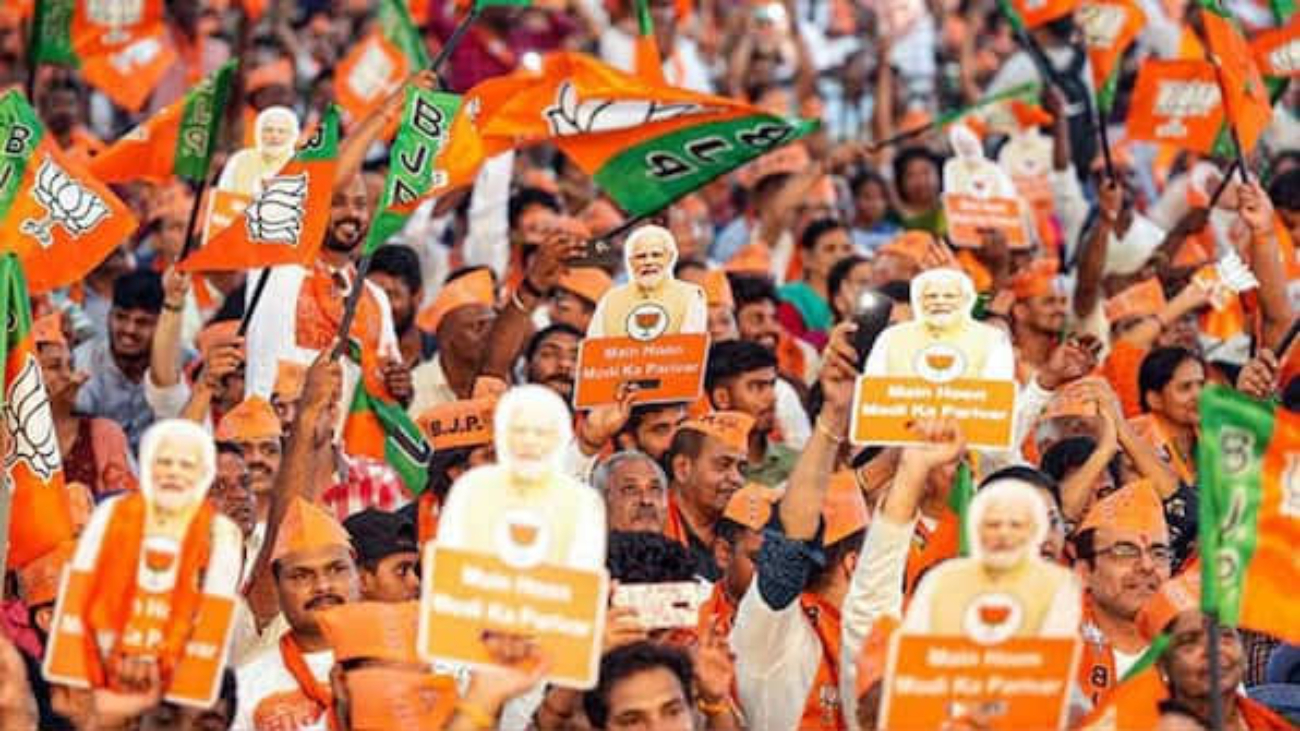
The political challenge faced by the Bharatiya Janata Party in Kerala is intensified by the persistent perception that it operates as an externally driven force rather than an organically rooted local political formation. This perception is not merely rhetorical; it is shaped by history, political memory, leadership patterns, and narrative framing. In a state where political legitimacy is closely tied to local continuity and cultural familiarity, being seen as an “imported” party becomes a structural disadvantage.
Kerala’s political identity has been shaped through long internal negotiations rather than external interventions. Social reform movements, labour struggles, church and community institutions, and regional leadership networks evolved within the state’s linguistic, cultural, and social context. Political authority emerged gradually through accommodation, debate, and adaptation. Even national parties that succeeded in Kerala did so by allowing strong regional leadership and ideological flexibility. Congress thrived not as a Delhi extension but as a Kerala-specific political ecosystem. The Left succeeded by deeply indigenising Marxist ideas into local social realities.
BJP’s expansion in Kerala has followed a different trajectory. Its rise is closely associated with national-level narratives, central leadership visibility, and ideological themes framed largely outside the state. While these narratives carry electoral weight in many parts of India, in Kerala they often feel detached from everyday concerns. Voters frequently interpret BJP messaging as addressing national identity questions rather than Kerala-specific problems such as employment migration, ageing demographics, healthcare financing, or local governance.
This external perception is reinforced by leadership patterns. BJP’s most visible figures in Kerala politics are often national leaders or centrally promoted faces rather than locally grown mass leaders with long grassroots histories. While capable and articulate, such leadership struggles to command the kind of emotional trust built through decades of local engagement. In Kerala, leadership credibility is cumulative. It is earned through familiarity, mediation, and long-term presence rather than ideological clarity alone.
Language and symbolism further deepen this gap. Political messaging that relies heavily on North Indian cultural references, civilisational imagery, or historical narratives unfamiliar to Kerala’s collective memory often fails to translate emotionally. Kerala’s political discourse is shaped by its own literary traditions, reform histories, and social conflicts. When narratives feel transplanted rather than interpreted, they trigger resistance rather than curiosity.
The centre–state dynamic also plays a role. BJP’s strong centralised command structure contrasts sharply with Kerala’s preference for decentralised negotiation and consensus-building. Decisions perceived as being dictated from Delhi generate discomfort even among voters who support strong national leadership. Kerala’s electorate has consistently demonstrated a desire to maintain autonomy in local political choices, often voting differently at state and national levels.
This perception affects coalition-building as well. Kerala politics rewards broad, cross-community alliances built patiently over time. Parties seen as external struggle to attract allies who fear erosion of their own social bases. Minority communities, in particular, interpret external ideological dominance as a threat to negotiated coexistence, further consolidating opposition.
Electoral behaviour reflects this psychology. BJP’s support often spikes during high-nationalism moments but recedes when local governance issues dominate. This volatility indicates that identification remains conditional rather than rooted. Voters may endorse BJP’s national role while resisting its state-level expansion, creating a ceiling on growth.
Importantly, this is not a rejection of nationalism or cultural pride. Kerala’s electorate has consistently supported national causes, armed forces, and constitutional institutions. The resistance is directed toward political frameworks that appear to override local complexity in favour of uniform narratives. In a state proud of its plural social fabric and negotiated history, uniformity is interpreted as insensitivity.
Overcoming this perception requires more than messaging changes. It demands a reorientation of political posture. BJP would need to allow deeper regional autonomy, cultivate leadership that emerges organically from Kerala’s social structures, and articulate its ideology through local problem-solving rather than national symbolism. Without this shift, the external label persists, regardless of electoral effort.
Kerala’s political culture does not reject new entrants, but it demands indigenisation. Parties that succeed are those that learn the local grammar before attempting to rewrite it. Until BJP is seen as a party that speaks from within Kerala rather than to Kerala, its expansion will remain constrained by perception as much as by numbers.
