
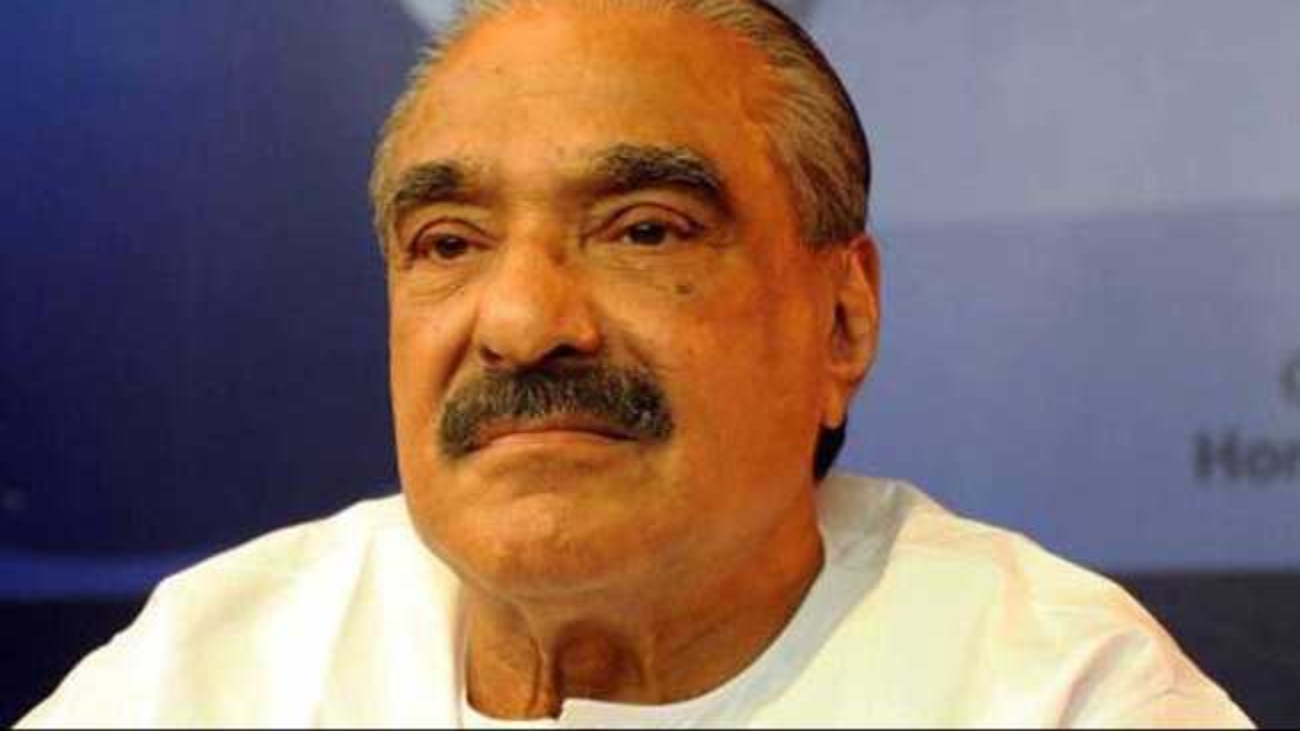
The political trajectory of the Kerala Congress (Mani) remains deeply shaped by a leadership legacy that once provided strength and clarity but now functions as a structural constraint. The party’s identity is so closely intertwined with the Mani legacy that renewal has become cautious, incremental, and emotionally fraught. What was once a unifying anchor has gradually turned into a ceiling on imagination and growth.
The Mani era gave the party coherence, authority, and negotiating power. Leadership was centralised, decisive, and widely accepted within the core constituency. This clarity allowed the party to punch above its numerical weight in coalition politics. The leader embodied the party’s purpose, articulated its demands, and commanded respect across political fronts. For a regional party, such leadership is often the difference between relevance and marginality.
However, legacy-based leadership creates a unique post-transition challenge. When authority is personalised for too long, institutions beneath it remain underdeveloped. Decision-making habits, conflict resolution mechanisms, and leadership pipelines do not mature independently. After the central figure exits, the organisation struggles not because successors lack ability, but because the system was never designed for distributed authority.
In the case of Kerala Congress (Mani), leadership transition has been careful to the point of rigidity. The need to preserve legacy has discouraged bold redefinition. Successors operate within inherited boundaries rather than redrawing them. This produces continuity without renewal. The party remains recognisable, but static.
This legacy trap affects internal culture. Younger leaders are often evaluated by their proximity to the legacy rather than by their capacity to reinterpret it. Political legitimacy flows from lineage, endorsement, or symbolic association rather than from policy innovation or mass engagement. Over time, this discourages creative leadership and reinforces caution as a political virtue.
Public perception mirrors this internal dynamic. Voters continue to associate the party with its historical figure rather than with a contemporary vision. Respect for the past does not automatically translate into confidence about the future. For younger voters in particular, the party can appear frozen in time, honouring history without articulating a forward-looking role.
The legacy trap also limits ideological evolution. Parties rooted in strong personalities often struggle to update their policy language because change risks being interpreted as departure or dilution. As Kerala’s socio-economic landscape shifts toward migration, services, and ageing demographics, the party’s historic agrarian-centric framing feels increasingly incomplete. Yet redefining priorities appears risky within a legacy-preserving culture.
Leadership concentration further affects crisis response and adaptation. When authority is tightly held, decision-making slows. New situations require interpretation, but legacy-driven structures default to precedent rather than experimentation. This can be effective in stable environments but becomes a liability during rapid social change.
Electoral behaviour reflects this tension subtly. Loyal voters remain attached, but expansion stalls. The party retains respect but loses curiosity. In politics, respect sustains survival; curiosity enables growth. Legacy-heavy parties often secure the former while sacrificing the latter.
This is not an argument against honouring leadership heritage. Political memory matters, especially for regional parties whose credibility was built through hard negotiation and representation. The challenge lies in converting legacy from identity into foundation. When legacy defines limits rather than starting points, it constrains adaptation.
Many regional parties face this moment. Those that survive longest are those that institutionalise legacy rather than preserve it symbolically. They transform personal authority into organisational culture, clear succession norms, and policy evolution. Those that do not remain dependent on memory rather than momentum.
Kerala Congress (Mani) still possesses assets: loyal pockets of support, negotiation experience, and moral credibility within its traditional base. What it lacks is visible rearticulation of purpose beyond the legacy frame. Without that shift, leadership transition remains procedural rather than transformational.
The future relevance of the party depends on whether it can reinterpret its founding legacy as permission to evolve rather than obligation to preserve form. Respecting history should enable risk, not prevent it. In a political environment that rewards clarity and adaptability, legacy must become a resource, not a restraint.
