
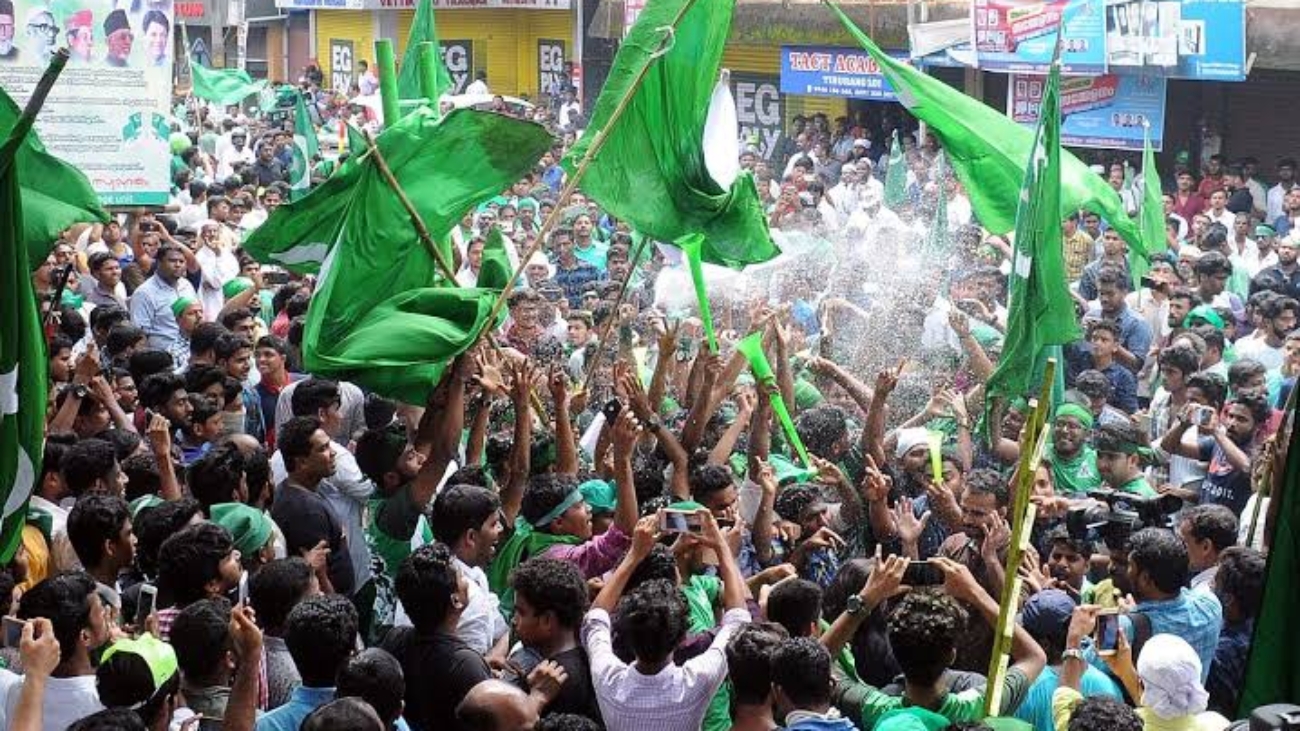
The policy reach of the Indian Union Muslim League in Kerala remains disproportionately narrow compared to the complexity and diversity of the community it represents. While the party has historically articulated minority protection and representation with clarity, it has been slower to expand its policy imagination to match the transformed socio-economic realities of Kerala’s Muslim population and the state at large. This limitation increasingly constrains its relevance beyond a defensive political role.
When the Muslim League consolidated its position in Kerala, minority protection was not a symbolic agenda but an urgent political necessity. Access to power, security of institutions, educational opportunities, and fair representation required constant vigilance. The party built legitimacy by ensuring visibility and voice within government. This focus was both rational and effective, especially in a political environment where minorities needed organised representation to avoid marginalisation.
Over time, however, the socio-economic profile of Kerala’s Muslim community changed dramatically. Large-scale migration to the Gulf and beyond reshaped household economies. Education levels rose, professional employment expanded, and entrepreneurship flourished in trade, services, healthcare, and small industry. Today, the community spans a wide spectrum: global professionals, small business owners, migrant workers, students, and ageing return migrants. Their political needs are no longer singular or defensive.
Yet the party’s public policy language remains largely anchored in protection rather than projection. Issues such as minority welfare, representation, and rights continue to dominate discourse, while newer concerns receive fragmented or secondary attention. Migration governance, overseas labour protection, reintegration of return migrants, skill upgrading, women’s workforce participation, urbanisation pressures, housing finance, and climate vulnerability are all areas where Muslim households are deeply affected, but where the party’s policy articulation remains limited.
This narrowing of focus produces a paradox. The party represents one of the most globally connected communities in Kerala, yet its political vocabulary remains locally defensive. Young voters who grow up navigating international labour markets, digital economies, and transnational identities struggle to see their full reality reflected in party discourse. Respect remains, but inspiration weakens.
Policy confinement also affects external perception. When a party is seen as speaking primarily about minority issues, its interventions on broader economic or governance questions are often interpreted as sectional, regardless of intent. This reduces credibility as a statewide policy actor. Even well-reasoned positions on education reform, employment, or development struggle to gain traction outside the core base because the messenger is pre-classified.
Internally, this narrow policy bandwidth shapes leadership behaviour. Political success is measured by effectiveness in negotiation and protection rather than by policy innovation. Leaders are rewarded for maintaining space rather than expanding vision. Over time, this creates a culture where caution is prized and experimentation is deferred.
The generational impact is particularly significant. Younger Muslims in Kerala are not disengaged from identity, but they experience identity alongside ambition. They want political representation that speaks about opportunity, mobility, and future readiness, not only about safety and access. When parties fail to integrate these aspirations, young voters either disengage emotionally or participate instrumentally.
Kerala’s broader political environment amplifies this limitation. The state’s public discourse is dense, analytical, and policy-oriented. Parties are expected to contribute ideas, not just positions. When a party’s policy contributions appear repetitive or narrow, it risks being sidelined in intellectual debate, even if it remains electorally relevant.
This is not a call to abandon minority protection. That role remains essential, especially in a polarised national climate. The challenge lies in complementing protection with projection. Minority experience offers unique insight into migration, education, welfare delivery, and global labour integration. These insights can be articulated as universal policy proposals rather than sectional demands.
Parties that evolve successfully do so by translating the lived experience of their base into solutions for society at large. The Muslim League possesses a rich experiential reservoir shaped by global mobility, entrepreneurship, and adaptation. Failing to convert this into policy leadership is a missed opportunity, both for the party and for Kerala’s political discourse.
Coalition politics has softened the urgency for such expansion. As long as representation is secured through alliances, the incentive to broaden policy imagination remains low. But coalition safety cannot substitute for long-term relevance. As political competition intensifies and voter expectations rise, parties are evaluated increasingly on ideas rather than identity alone.
The risk ahead is not sudden decline but gradual confinement. A party that speaks primarily in one register, even when that register is legitimate, finds itself unable to lead conversations beyond it. Over time, leadership shifts to those who offer integrative narratives that connect identity with future readiness.
Kerala’s next phase of development will revolve around managing ageing, migration, climate adaptation, and economic transition. These challenges cut across communities but affect minorities early and deeply. A party rooted in minority experience should be at the forefront of articulating solutions. Remaining silent or cautious in these domains weakens its claim to leadership.
The Muslim League’s historical contribution to Kerala politics is substantial. Its future relevance depends on whether it can move from being a guardian of space to a generator of ideas. Protection secured the past. Policy imagination will determine the future.
