
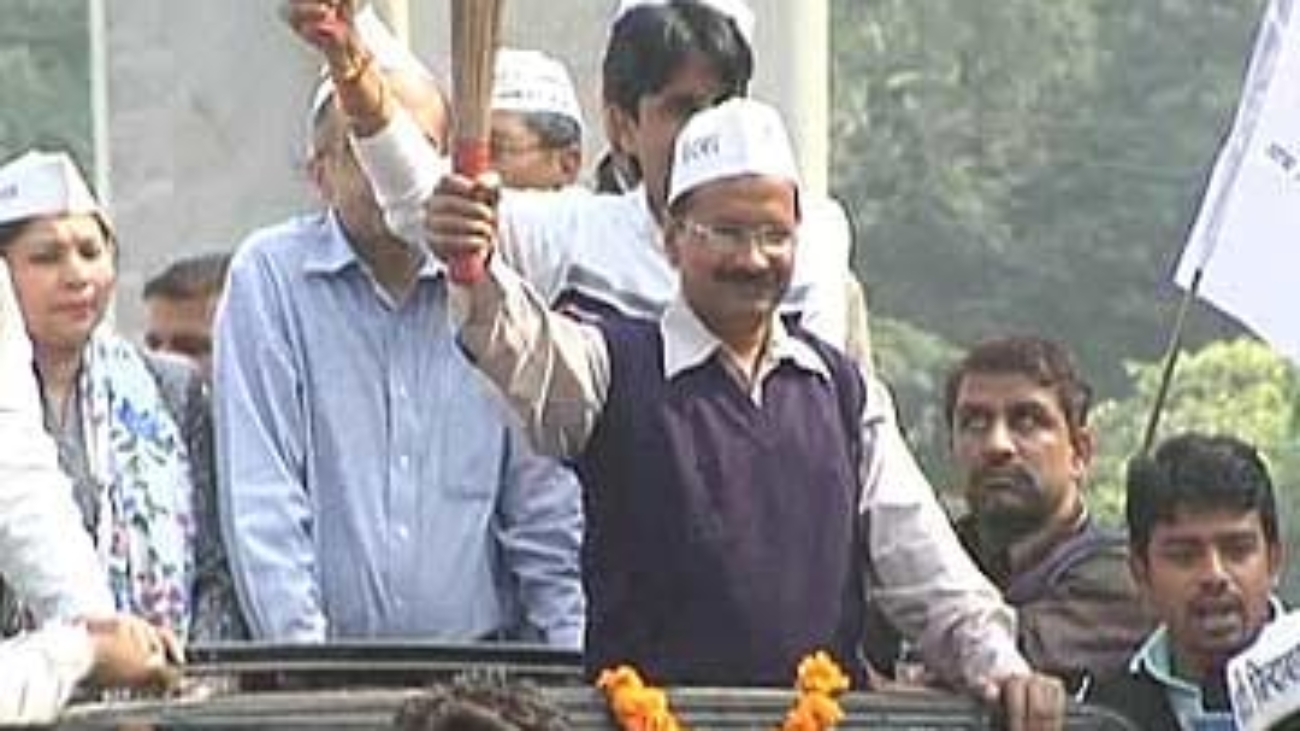
A deeper structural limitation shaping the long-term prospects of the Aam Aadmi Party is its ideological thinness beyond anti-corruption and service delivery. What began as a deliberate strength has gradually become a constraint as the party attempts to position itself as a durable political alternative rather than a governance corrective.
AAP’s founding moment was defined by moral clarity. Anti-corruption was not one issue among many; it was the organising principle that unified diverse social groups. Combined with a sharp focus on everyday service delivery—schools, clinics, utilities, local administration—the party offered a politics that felt practical, honest, and refreshingly non-ideological. In an environment fatigued by grand narratives, this pragmatism resonated powerfully.
However, governing success changes voter expectations. Once basic competence is established, citizens begin to ask second-order questions. What does the party believe about economic growth, labour rights, private capital, federalism, national security, religion, social justice, and long-term redistribution? On these issues, AAP’s positions often appear cautious, situational, or under-articulated. Silence replaces clarity not because the party lacks views, but because it has not fully committed to an ideological frame that extends beyond governance efficiency.
This creates ambiguity in public discourse. Supporters admire outcomes but struggle to explain the party’s worldview. Cadres can defend policies but find it harder to articulate philosophy. Over time, this weakens emotional attachment. Voters may reward performance, but performance alone does not build identity. Political loyalty requires a sense of shared direction, not just transactional satisfaction.
The problem becomes sharper outside Delhi and Punjab. In regions where AAP does not govern, service delivery remains hypothetical. Voters encounter the party primarily through speeches and campaigns. Without a broader ideological narrative, these encounters feel incomplete. Promises of good governance compete with established parties that offer clearer ideological anchors, whether Left, nationalist, or regional.
Ideological thinness also complicates crisis politics. Moments of national tension, social conflict, or economic disruption demand positioning. Parties that hesitate or appear evasive risk being defined by others. AAP’s attempt to remain above ideological conflict can be interpreted as prudence, but it can also read as lack of conviction. In a polarised environment, neutrality is rarely perceived as strength.
Internally, this ambiguity affects cohesion. Diverse entrants joined AAP for different reasons: reformism, civic activism, policy innovation, or protest politics. Without a deeper ideological synthesis, these motivations coexist uneasily. Disagreements are managed pragmatically rather than resolved philosophically. This works in the short term but leaves fault lines unaddressed.
Globally, successful reformist parties that began with governance focus eventually developed broader narratives. They articulated how efficient administration connects to social justice, economic opportunity, and democratic values. Without this articulation, reform remains episodic. AAP stands at this crossroads.
The risk is not that voters will reject AAP, but that they will limit it. The party may continue to win where governance proof exists, yet struggle to inspire where it does not. Admiration becomes conditional, and support remains shallow.
Developing ideological depth does not require rigid doctrine. It requires coherence. Clear positions on federalism, labour precarity, social inclusion, and economic transition would allow AAP to connect its governance success to a wider vision of India’s future. Without this bridge, performance floats without anchor.
AAP’s achievement has been to show that politics can work. Its next challenge is to explain why it works, and for whom, beyond immediate delivery. Only then can it transform from a corrective force into a defining one.
