
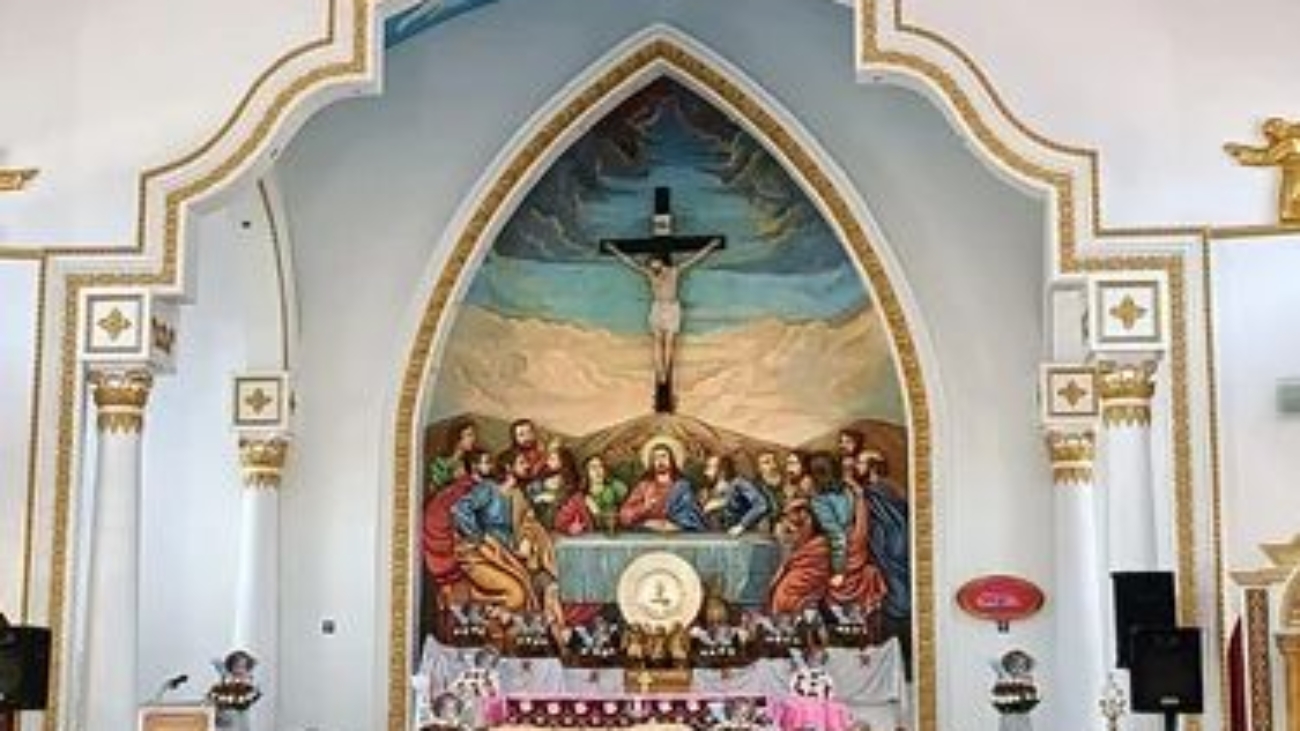
Kerala’s claim to educational leadership in India rests on foundations laid over more than a century, yet by 2047 the state will face a paradox. While literacy will remain near-universal, the economic value of education will be uneven, contested, and fragile. Degrees alone will not guarantee employability, social mobility, or civic competence. The question for Vision Kerala 2047 is not whether education exists, but whether education continues to empower. One Christian group whose historical engagement with mass education, coastal communities, and social mobility makes it uniquely relevant to this challenge is the Latin Catholic Church in Kerala.
The Latin Catholic presence in Kerala expanded significantly from the sixteenth century onward, particularly along the coastal belt stretching from Thiruvananthapuram to Kasaragod. Unlike the Syrian Christian churches, which were historically concentrated in agrarian interiors, the Latin Church worked among fishing communities, port workers, and later, urban migrants. This social positioning shaped its educational mission. Schools were not merely elite institutions; they were instruments of social stabilization in communities exposed to economic volatility, colonial trade disruptions, and later, industrial decline.
By the late nineteenth and early twentieth centuries, Latin Catholic parishes had established primary schools in regions where state presence was minimal. Archival records from Travancore indicate that by the 1930s, church-run schools accounted for a substantial share of coastal education infrastructure. These schools focused on basic literacy, numeracy, and discipline, enabling first-generation learners to access clerical jobs, port employment, and later, overseas opportunities. Education here functioned as empowerment in its most literal sense: the capacity to negotiate contracts, understand wages, and engage institutions.
Post-independence, as Kerala expanded its public education system, Latin Catholic institutions scaled upward. High schools, teacher training colleges, and arts and science colleges emerged across districts. By the 1970s, these institutions played a key role in educating children from fishing and working-class families who were otherwise underrepresented in higher education. This coincided with major economic shifts, including the mechanization of fishing and the early waves of Gulf migration. Education acted as a buffer against occupational shocks.
Yet by the 2020s, cracks in the educational model became visible. Kerala’s gross enrolment ratio in higher education crossed 40 percent, but graduate unemployment remained high. Surveys indicated that a significant proportion of degree holders were either underemployed or preparing for competitive exams unrelated to their training. For coastal and working-class communities, the promise of education as upward mobility began to weaken. Vision Kerala 2047 must confront this reality directly.
Education empowerment in the coming decades must be understood as capability alignment rather than credential accumulation. The Latin Catholic Church’s educational ecosystem, with its proximity to vocational realities, is well placed to lead this shift. Historically, Latin institutions were pragmatic. Curriculum choices were influenced by local economic needs, whether maritime skills, teaching, nursing, or technical trades. Reviving this pragmatism is essential.
Kerala’s coastal economy offers a concrete example. Despite having one of India’s longest coastlines, Kerala captures limited value from marine resources beyond primary extraction. Processing, cold-chain logistics, marine engineering, and export marketing remain underdeveloped. Latin Catholic institutions located in coastal districts can anchor specialized education tracks that integrate science, technology, and enterprise around the marine economy. This would echo historical patterns, where schools responded directly to local livelihoods rather than abstract labor markets.
History supports this approach. In the 1950s and 1960s, vocational schools attached to Latin parishes trained students in carpentry, electrical work, and mechanics, feeding Kerala’s emerging construction and industrial sectors. Many of these programs declined as degree-oriented education expanded. Vision 2047 requires reversing this imbalance, not by abandoning degrees, but by embedding applied learning within them.
Teacher education is another critical lever. The Latin Catholic Church has long been a major player in teacher training, particularly for primary and secondary education. By 2047, the role of teachers will shift from content delivery to skill facilitation, ethical reasoning, and adaptability training. Continuous reskilling of teachers is therefore as important as student education. Church-run teacher training colleges can evolve into lifelong learning hubs, updating pedagogy in response to technological and social change.
Digital transformation will redefine education delivery, but it risks deepening inequality if not mediated carefully. Coastal and working-class communities often face uneven access to digital infrastructure and guidance. Latin parishes, historically central to community life, can function as access points for digital learning, offering supervised spaces where students and adults alike engage online resources with support. During the COVID-19 pandemic, many parishes informally played this role, organizing device sharing and study spaces. Institutionalizing such practices would strengthen resilience.
Another dimension of empowerment is language. Latin Catholic education historically emphasized multilingual competence, reflecting the needs of port cities and migrant pathways. Malayalam, English, and functional proficiency in other languages enabled mobility. By 2047, language skills will remain crucial, particularly as Kerala integrates with global service and care economies. Education systems that treat language as a living skill rather than an exam subject will produce more adaptable citizens.
Importantly, education empowerment must include ethical grounding. Kerala’s public discourse increasingly reflects anxiety about misinformation, polarization, and declining civic trust. Educational institutions cannot remain neutral on these issues. The Latin Catholic tradition, shaped by centuries of engagement with diverse cultures and authority structures, has experience balancing discipline with openness. Embedding ethics, civic reasoning, and community responsibility within curricula is not an ideological project; it is a social necessity.
Critics may argue that faith-linked institutions risk exclusion or bias. Kerala’s historical experience suggests otherwise. Many Latin Catholic schools educated students across religious and caste lines, particularly in coastal regions where social mixing was unavoidable. Maintaining this openness is essential for credibility in a plural society. Vision Kerala 2047 requires institutions that convene rather than segregate.
By mid-century, Kerala will be judged not by how many degrees it awards, but by how well its people adapt to change, create value, and sustain social cohesion. Education will remain the primary lever of empowerment, but only if it evolves. Institutions with long memories of social mobility, economic disruption, and community service have an advantage in navigating this evolution.
The Latin Catholic Church in Kerala, forged in the intersection of faith, labor, and learning, represents one such institution. Its historical role in democratizing education among the marginalized offers lessons that are urgently relevant today. If these lessons are consciously applied, education can once again function as Kerala’s most reliable empowerment engine.
