
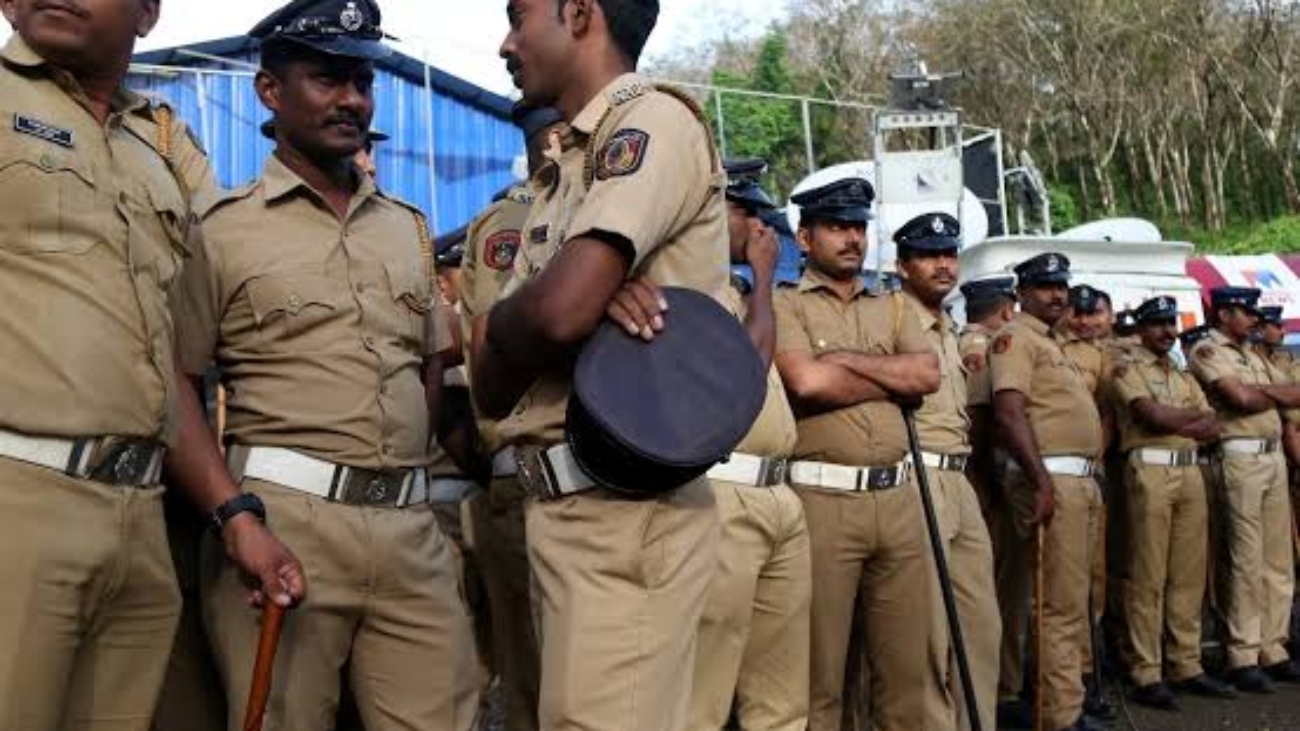
The idea of district-level micro-policing labs emerges from a hard numerical reality. Kerala has 14 districts, over 1,000 police stations, and a population that crossed roughly 3.5 crore by the mid-2020s. Yet policing methods across these districts remain largely uniform despite radically different crime profiles. Thiruvananthapuram and Kochi deal with cyber fraud, narcotics, political demonstrations, and migrant populations at scale, while districts like Wayanad or Idukki face issues tied to forest boundaries, tribal rights, tourism-related accidents, and seasonal migration. Treating these environments with a single operational template has led to inefficiency rather than equality.
Between 2015 and 2023, Kerala saw a steady rise in registered cybercrime cases, with reported incidents multiplying several times over within a decade. At the same time, traditional crimes such as theft and burglary declined in many districts, while traffic-related deaths remained stubbornly high, averaging more than 4,000 fatalities per year. These shifts show that crime is not static; it evolves with technology, demographics, and infrastructure. Yet policing reforms are usually statewide, slow, and reactive—often triggered by public outrage after a crisis rather than tested quietly before scale.
Micro-policing labs would change this logic. Each district would host a small, permanent unit tasked with experimentation and measurement. Instead of issuing a circular across the state, a district could test a new night-patrol pattern in five high-risk junctions, measure accident reduction over six months, and publish results. Another district might trial a digital-first grievance redressal system for minor disputes and evaluate whether it reduces station footfall and officer workload. These are not abstract ideas; similar pilot-driven governance has already proven effective in areas like traffic enforcement cameras, which reduced violations significantly in corridors where they were first tested before wider adoption.
Historical events underline why this matters. After major floods in 2018 and 2019, disaster response protocols improved largely because local officers improvised, learned fast, and shared practices informally. But those learnings were never institutionalized as a system of continuous experimentation. Micro-policing labs would formalize this learning loop, ensuring that what works in one district becomes evidence rather than anecdote.
Data collection would be central. Kerala already generates vast policing data—from FIR registrations to emergency response times—but much of it is used only for reporting upward, not for learning sideways. A lab structure would mandate before-and-after comparisons, control areas, and outcome-based metrics. Did response times drop? Did repeat complaints reduce? Did public satisfaction scores improve? By 2047, policing must look closer to a public policy research unit than a command-and-control silo.
There is also a human resource angle. Kerala produces engineers, statisticians, psychologists, and social scientists in large numbers, yet policing rarely absorbs this talent except through traditional recruitment. Micro-policing labs allow short-term fellowships, district-level attachments, and civilian collaboration without diluting command authority. This keeps innovation grounded while avoiding the paralysis that often comes with top-heavy reforms.
Most importantly, this approach reduces political friction. A failed statewide reform becomes a political controversy; a failed district pilot becomes a learning exercise. That distinction matters in a politically conscious state like Kerala, where policing decisions are scrutinized intensely. By normalizing failure at small scale, the institution becomes braver at large scale.
By 2047, a Kerala with aging citizens, dense urban clusters, and digital-native crime cannot be policed by intuition alone. District-level micro-policing labs offer a way to evolve continuously, grounded in data and local reality, without waiting for crises to force change.
