
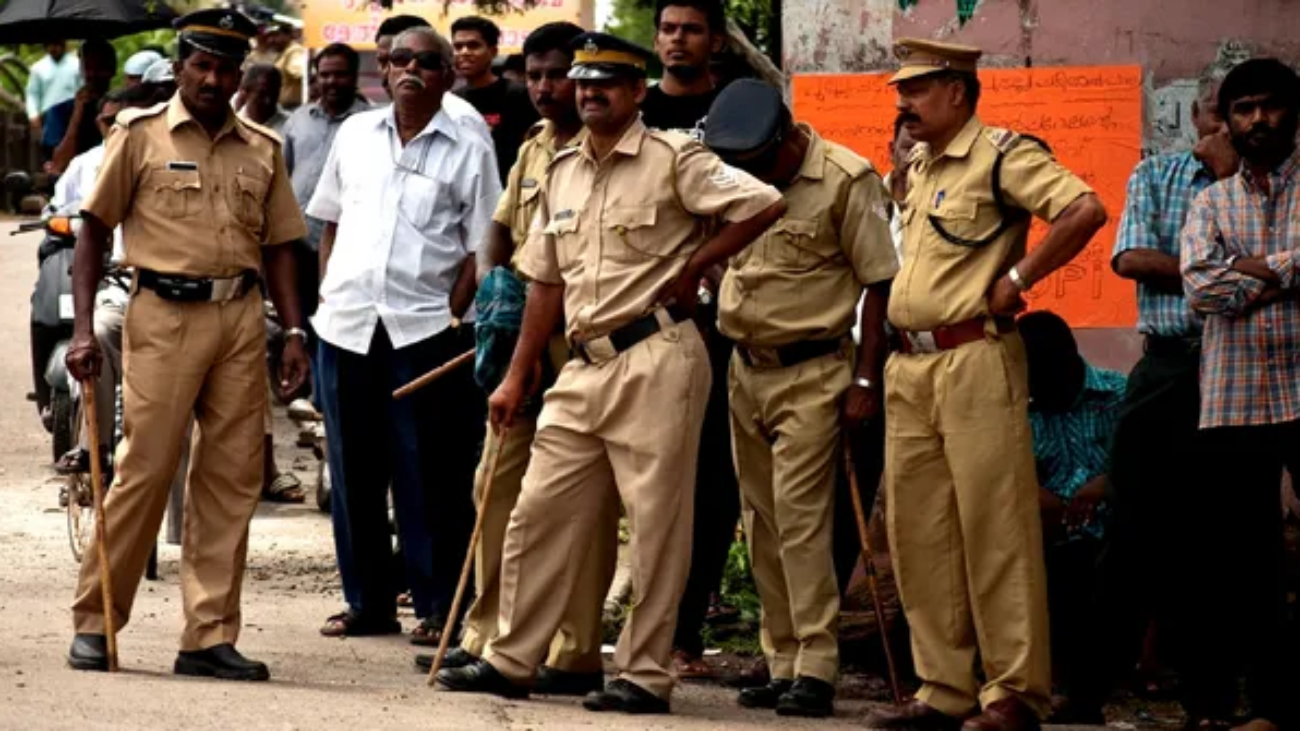
For decades, Kerala’s policing structure has carried an internal contradiction that has quietly weakened outcomes without attracting sustained public debate. The same officer who manages festivals, hartals, VIP movements, political protests, traffic bottlenecks, and sudden law-and-order flare-ups is also expected to investigate complex crimes with patience, continuity, and forensic depth. This dual burden is not accidental; it is inherited from a colonial-era policing model designed for control rather than truth-finding. By the 2020s, the cost of this arrangement has become visible in data, court observations, and public trust deficits.
In the mid-2010s, Kerala’s conviction rates for serious crimes such as murder and rape hovered in ranges comparable to national averages but far below what a high-literacy, high-reporting state should ideally achieve. One recurring issue flagged by courts has been delayed investigations, frequent change of investigating officers, and poor continuity in evidence handling. These are not failures of intelligence or intent. They are structural failures caused by constant redeployment of investigators to manage law-and-order duties at short notice. When an officer is pulled out of an investigation to manage a political march or a festival crowd, momentum breaks, witnesses disengage, and case quality deteriorates.
Law and order is inherently reactive. It responds to crowds, emotions, and immediacy. Investigation, by contrast, is slow, analytical, and documentation-heavy. Expecting the same human system to excel at both simultaneously is inefficient. Data from internal policing reviews across India repeatedly shows that investigators lose between 30 to 50 percent of their effective investigation time to non-investigative duties. In Kerala, where public mobilization is frequent and political activity intense, this diversion is even higher.
Events over the last two decades illustrate this strain. Large-scale protests, hartals, religious festivals, and election-related deployments consume massive police bandwidth every year. At the same time, crimes have become more sophisticated. Financial fraud cases now involve digital trails across states and countries. Narcotics networks operate through layered intermediaries. Cybercrime complaints require technical triage within hours, not weeks. An investigator who is repeatedly reassigned to bandobast duty cannot keep pace with this complexity, regardless of personal competence.
Separating law-and-order and investigation cadres is not about hierarchy or privilege. It is about role clarity. A dedicated investigation cadre would have protected tenure on cases, insulation from routine crowd-control duties, and specialized training in forensics, financial analysis, cyber tools, and legal procedure. Their performance metrics would be based on case quality, charge-sheet timelines, and judicial outcomes rather than visibility on the street. Law-and-order cadres, on the other hand, would focus on crowd psychology, negotiation, rapid response, and de-escalation, developing excellence in public safety management rather than evidence building.
Kerala already has partial precedents. Specialized units dealing with cybercrime, narcotics, and economic offences have shown better outcomes when officers are allowed to remain focused. However, these units remain limited in scale and are often disrupted by transfers and temporary reassignments. A full cadre separation would normalize specialization rather than treating it as an exception.
International experience supports this direction. Jurisdictions that improved conviction rates over long periods did so by professionalizing investigations and reducing arbitrary interference. Continuity matters. A single investigator handling a case from FIR to trial builds contextual memory that no file can replace. Witness confidence improves when they deal with a consistent officer. Prosecutors work better when investigators understand evidentiary thresholds deeply rather than learning them mid-case.
There is also a political dimension. Investigation is the most vulnerable arm of policing when political pressure exists. Frequent transfers are an easy way to weaken cases without overt interference. A protected investigation cadre with transparent posting norms and fixed minimum tenures reduces this vulnerability. This does not eliminate pressure, but it raises the cost of interference by making disruptions visible and explainable.
By 2047, Kerala will deal with an older population, higher asset density, and deeper digital integration into daily life. Crimes will increasingly be about contracts, data, consent, and financial manipulation rather than brute force. Such crimes cannot be investigated effectively by officers constantly diverted to manage street-level volatility. Structural clarity is not a luxury; it is a prerequisite.
A modern police system does not ask its officers to be everything at once. It builds teams where different skills are respected, measured, and protected. Separating law-and-order and investigation cadres is not about reforming people. It is about reforming expectations.
