
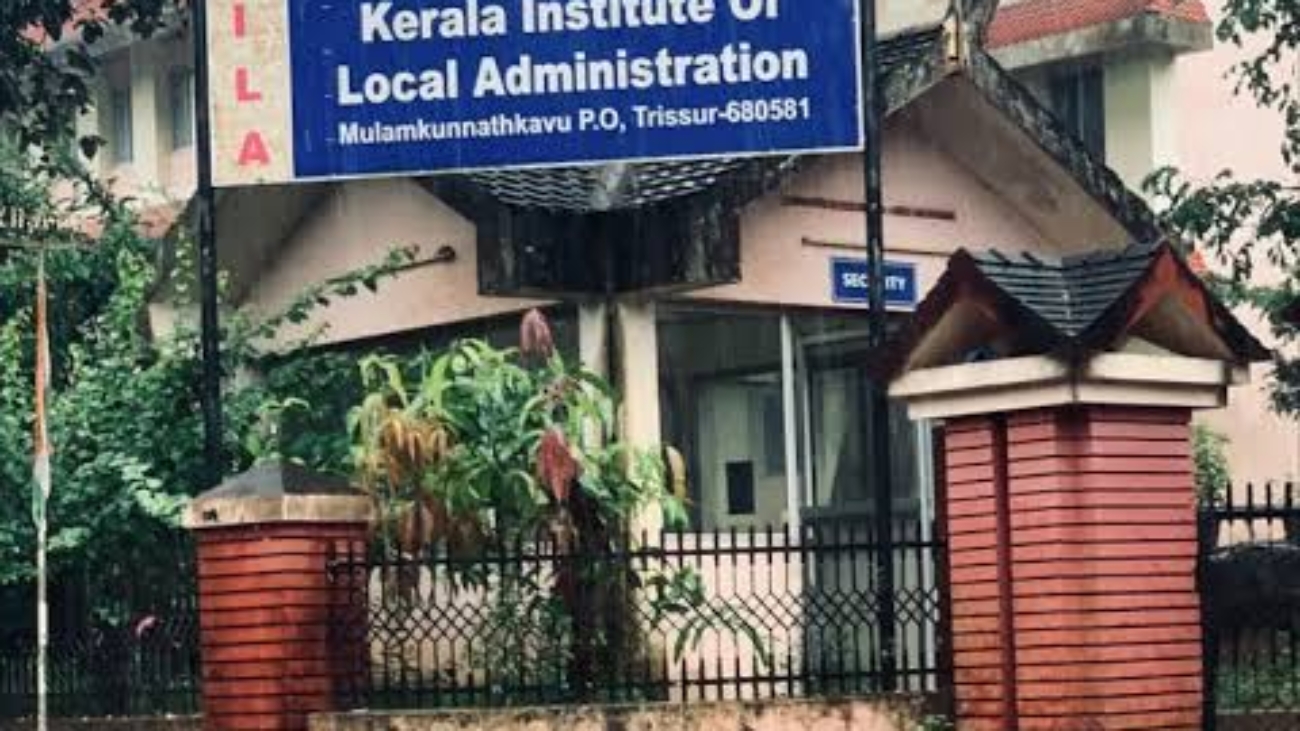
Kerala’s local governments are expected to handle increasingly complex responsibilities, but they still operate with fragmented processes, personality-driven decisions, and manual improvisation. The gap is not intent or decentralisation philosophy; it is the absence of a coherent operating logic. The strategic opportunity for Kerala Institute of Local Administration lies in redesigning local government itself as an operating system rather than a collection of ad-hoc functions.
Today, two neighbouring panchayats with similar demographics can perform very differently, not because of political ideology or budget size, but because of process maturity. One has clarity on agenda setting, budgeting, procurement, grievance handling, and follow-up. The other depends entirely on individual initiative and memory. This variability is inefficient and fragile. When leadership changes, systems reset. An operating system approach solves this by standardising the invisible logic of governance while preserving democratic choice.
A local government operating system does not dictate policy outcomes. It defines how decisions are taken, recorded, executed, and reviewed. This includes structured workflows for council meetings, budget prioritisation frameworks, project lifecycle management, procurement checklists, audit preparedness, and citizen grievance resolution. When these are standardised and taught as a system, governance becomes less dependent on heroics and more on reliability.
KILA is uniquely positioned to do this because it already trains elected representatives and officials across Kerala. Instead of focusing primarily on orientation and compliance, it can evolve into a system architect. Training shifts from “what rules say” to “how a local government actually runs well.” New representatives inherit a functioning governance machine rather than starting from zero every term.
This approach also reduces politicisation of administration. When processes are clear and predictable, political energy is spent on priorities and outcomes rather than procedural fights. Transparency improves because decisions leave digital and procedural trails. Accountability becomes routine rather than confrontational. Importantly, this strengthens democracy without weakening politics.
An operating system model also enables technology adoption without chaos. Digital tools fail when layered on broken processes. When workflows are standardised first, technology can be meaningfully integrated for budgeting, asset management, service delivery, and reporting. The system evolves incrementally rather than through disruptive overhauls every few years.
There is a capacity dividend as well. Officials and elected members rotate, but the system remains. Learning curves shorten. Errors reduce. Institutional memory accumulates. This is critical in Kerala, where local governments handle significant public funds and complex welfare delivery with limited administrative depth.
By 2047, Kerala’s advantage will not be louder decentralisation rhetoric but quieter execution excellence at the local level. If KILA succeeds in framing local government as an operating system, it will create a form of governance continuity that survives elections, personalities, and political cycles.
