
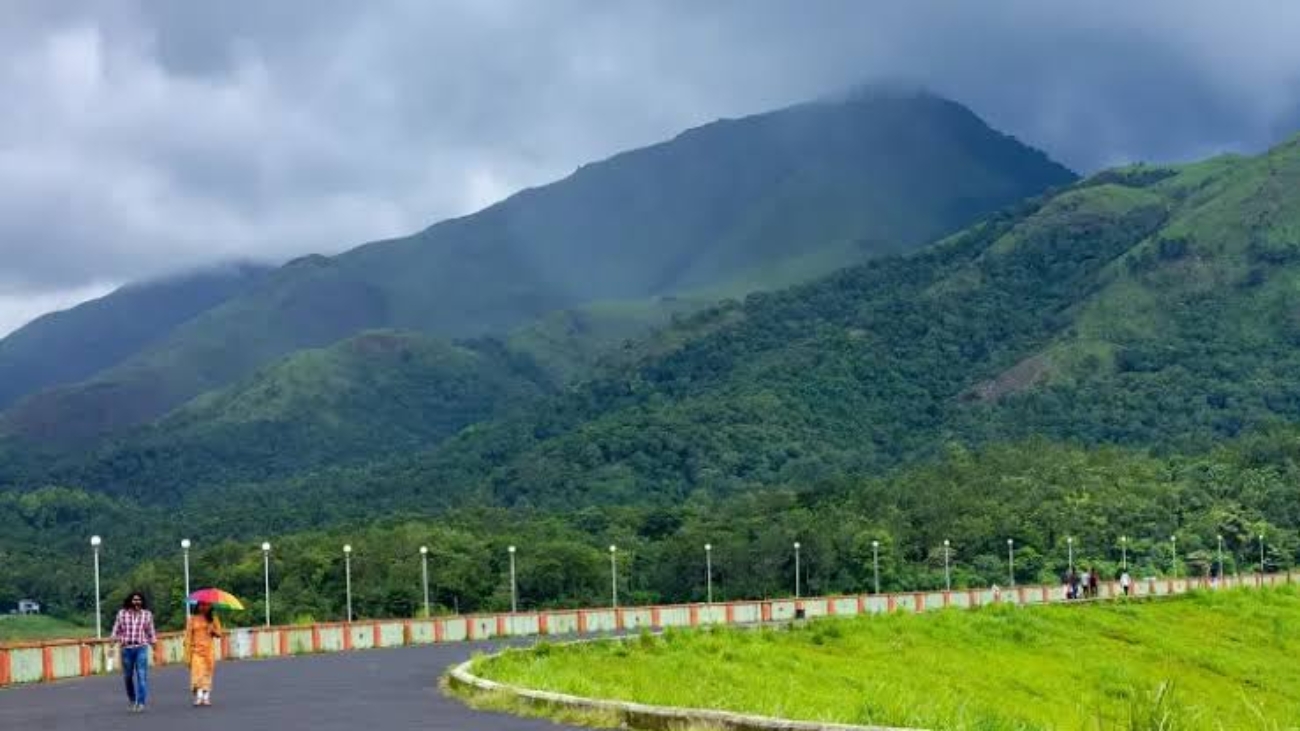
Wayanad is often discussed as a tourism destination or a backward district in need of development. Both views are incomplete and dangerous. Wayanad is not weak, and it is not waiting to be “opened up.” It is fragile, strategic, and already overburdened. Its true role in Kerala’s future is not growth, but protection — of land, water, climate stability, and social balance.
For years, Wayanad has been pushed between two extremes. On one side, strict protection that limits livelihoods and breeds resentment. On the other, unregulated tourism and construction that strain hills, forests, and tribal lands. Both approaches fail because they treat land as either frozen or free-for-all. What Wayanad needs is a third path: land stewardship as an economy.
Wayanad’s forests, watersheds, and hill systems quietly support much of northern Kerala’s water security and climate resilience. Landslides, floods, and human–animal conflict are not accidents. They are signals of overload. Yet every year, these signals are treated as isolated disasters rather than warnings from a stressed system. True development here means paying people to protect land, not compensating them after it breaks.
A structured land stewardship economy can change this. Forest monitoring, watershed management, slope stabilisation, human–wildlife mitigation, and eco-restoration are all forms of real work. When communities earn steady income from keeping ecosystems intact, protection stops being a punishment and becomes a profession. Globally, this model is replacing both extraction and exclusion. Wayanad is where Kerala should start.
The second pillar of Wayanad’s future is its tribal economy. Tribal communities here hold deep ecological knowledge, but remain trapped in welfare systems that do not create autonomy. Rights-based production — non-timber forest produce, medicinal plants, agro-forestry, cultural services, and knowledge documentation — can turn survival into ownership. This is not charity. It is overdue economic justice.
Tourism must also be redefined. Wayanad cannot survive mass tourism. Footfall-based models destroy exactly what attracts people here. The alternative is controlled eco-residency — longer stays, lower numbers, higher accountability. Research residencies, education retreats, climate studies, and slow living experiences create income without continuous pressure. Less noise. More value.
Agriculture in Wayanad must adapt as well. Climate volatility has made old cropping patterns unstable. Climate-resilient farming, soil management, water conservation, and small-scale processing can stabilise incomes without expanding land use. Wayanad should become a living laboratory for hill agriculture under climate stress, not a casualty of it.
What Wayanad does not need is speed. Speed breaks fragile systems. What it needs is governance that understands limits. Success here should not be measured by tourist numbers, construction permits, or short-term revenue. It should be measured by forest health, slope stability, tribal income security, and reduced disaster risk.
Every system needs a firewall. Something that absorbs pressure so the rest can function. In Kerala’s geography, Wayanad plays that role. If it collapses under uncontrolled growth, the damage will not stay within district borders.
Wayanad’s future is not expansion.
It is stewardship.
And in a warming, crowded, and unstable world, that may be the most valuable role of all.
