
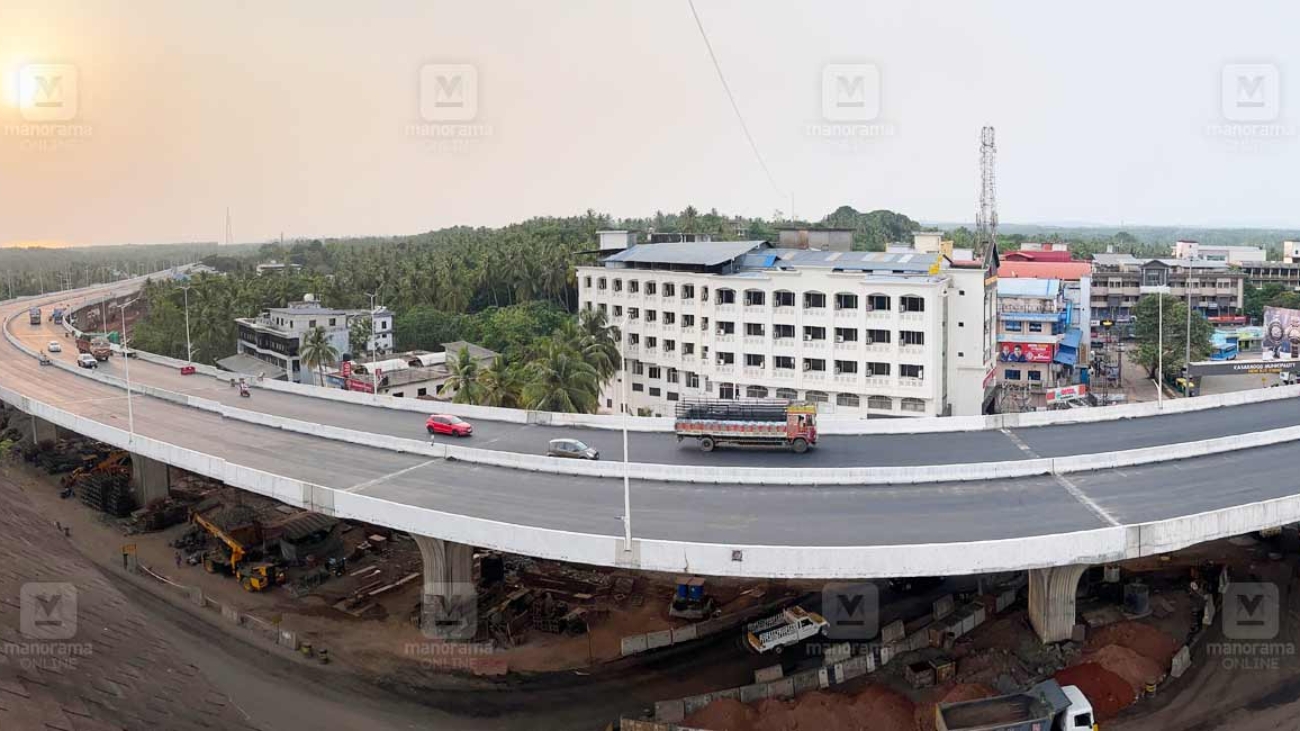
Traffic congestion in Kerala is no longer a problem of peak hours or festival seasons. It has become a permanent condition of urban life, cutting across mornings, afternoons, and weekends. What makes this congestion uniquely damaging is not just the volume of vehicles, but the mismatch between how Kerala towns have grown and how movement is managed within them. Roads have become the default solution for every economic, social, and political demand, even though roads were never designed to carry this density of activity.
Most Kerala towns evolved as linear settlements along old trade routes, waterways, and later highways. When motorisation accelerated, these same corridors were asked to perform multiple roles at once: inter-district transit, local commuting, commercial access, pedestrian movement, street vending, parking, and political processions. No road can perform all these functions simultaneously without collapse. Congestion is therefore not accidental; it is structural.
One of the deepest causes of congestion is the absence of hierarchy in the road network. National highways, state highways, collector roads, and local streets often carry similar traffic loads because land use has been allowed to develop uniformly along all of them. A highway passing through a town becomes a shopping street, bus stop, parking lot, and crossing zone at the same time. Through-traffic slows down, local traffic spills over, and congestion propagates outward like a ripple.
Another driver is the unchecked growth of private vehicles. Two-wheelers and cars have filled the gap left by unreliable public transport and fragmented last-mile connectivity. This is not a cultural preference problem; it is a systems failure. When buses are overcrowded, delayed, or poorly connected, households rationally choose personal mobility. Over time, this creates a feedback loop where roads are widened to accommodate cars, making walking and cycling unsafe, further pushing people toward private vehicles.
Parking is the silent killer of road capacity. Large portions of effective road width are lost to on-street parking, illegal stops, and informal loading zones. A road that appears wide on paper functions as a narrow lane in practice. Since parking is treated as a free public right rather than priced infrastructure, demand remains unlimited while supply remains unplanned.
Congestion is also intensified by poor junction design. Many urban intersections still rely on outdated signal logic or manual policing. Turning radii are inadequate, pedestrian crossings are random, and signal phases are not synchronised. A single badly designed junction can paralyse an entire corridor for kilometres.
Construction activity compounds the issue. Road digging by multiple agencies without coordination reduces capacity unpredictably. Temporary diversions become semi-permanent obstacles. Each project optimises for its own timeline, not for overall traffic flow. The cumulative effect is systemic inefficiency.
The economic cost of this congestion is immense. Lost working hours, fuel wastage, increased logistics costs, and stress-related health impacts silently drain urban productivity. Small businesses suffer when customers avoid congested areas. Emergency response times increase, turning congestion into a public safety issue rather than just an inconvenience.
Solving traffic congestion in Kerala requires abandoning the illusion that more roads are the answer. The first solution lies in restoring hierarchy to the road network. Through-traffic must be separated from local traffic. Bypasses should actually bypass towns, not become new commercial spines. Access control on highways must be enforced so that local crossings and direct shop access do not interrupt long-distance movement.
Public transport must become the default, not the fallback. This means reliability first, not just fleet expansion. Dedicated bus lanes on key corridors, even if limited to peak hours, can dramatically improve speed and predictability. When buses move faster than cars, behaviour changes naturally without moral preaching.
Last-mile connectivity needs micro-solutions rather than grand projects. Feeder services using electric autos, shared vans, and demand-responsive shuttles can connect residential clusters to main transit routes. These systems must be integrated in fares and scheduling, so that one journey feels continuous rather than fragmented.
Parking policy must be reimagined as a demand management tool. On-street parking in dense commercial areas should be reduced and priced dynamically. Revenue from parking should be ring-fenced for improving pedestrian infrastructure and public transport. Structured parking should be encouraged at the periphery, not at the heart of congested zones.
Junction redesign offers high returns at low cost. Modern roundabouts where appropriate, channelised turns, pedestrian scrambles, and adaptive signals can unlock hidden capacity without laying a single new road. Traffic engineering should be data-driven and continuously adjusted, not fixed once and forgotten.
Walking and cycling must be restored as legitimate modes of transport. Safe footpaths, continuous crossings, shaded streets, and protected cycle lanes reduce short vehicle trips, which are disproportionately responsible for congestion. Every trip shifted from a car to walking frees road space for those who genuinely need to drive.
Land-use planning must finally align with mobility planning. High-traffic generators such as malls, institutions, and offices should not be allowed to cluster on already saturated corridors without mandatory mobility impact assessments. Mixed-use development should be encouraged so that daily needs are closer to homes, reducing travel demand altogether.
Technology should support governance, not substitute it. Real-time traffic monitoring, integrated command centres, and public dashboards can improve responsiveness, but only if agencies are empowered to act on the data. Coordination between police, municipalities, transport departments, and utility agencies is essential, with a single corridor-level authority rather than fragmented control.
Finally, urban congestion requires political honesty. Every election promises road widening because it is visible and photographable. Fewer promise bus lanes, parking pricing, or access restrictions because these demand public trust and long-term thinking. Kerala’s urban future depends on shifting this political imagination from expansion to optimisation.
Congestion is not a sign of growth; it is a sign of unmanaged success. Kerala has the density, literacy, and civic capacity to solve this problem, but only if it treats traffic not as a transport issue, but as an urban systems challenge that touches land, economy, governance, and daily life.
