
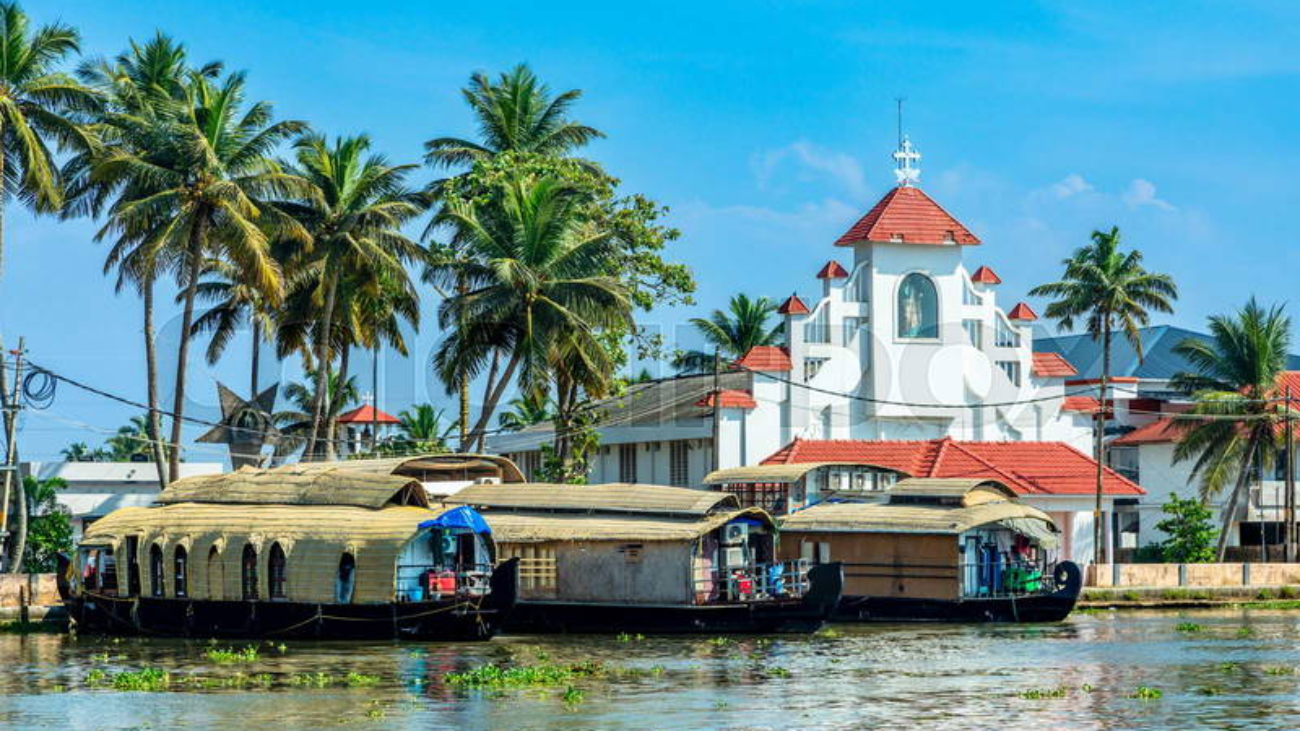
Kollam sits on one of Kerala’s most underused advantages: flow geography. Water, land, labour, and history intersect here naturally, yet the district functions as if movement were incidental rather than central to its economic identity. Boats move, buses move, goods move, people move, but none of these flows are designed to accumulate power locally. Kollam has become a transit district rather than a commanding one. Vision Kerala 2047 requires reversing this logic and treating flow itself as the district’s primary economic asset.
For centuries, Kollam thrived because it understood circulation. Spices, coir, timber, ideas, and people passed through its waterways and ports, leaving behind wealth, institutions, and merchant intelligence. That muscle memory still exists in fragments, but modern Kollam behaves as though trade is an accident of geography, not a system to be engineered. Economic power today does not come from mere connectivity; it comes from controlling nodes, timing, standards, and aggregation points. Kollam must reclaim its role as a coordinator of flows rather than a corridor others pass through.
The most obvious flow is water-based logistics. Backwaters, canals, rivers, and coastal access are not aesthetic features; they are economic infrastructure waiting to be reactivated. Road congestion and fuel dependency are structural weaknesses for Kerala. Kollam can offer an alternative by becoming the inland water logistics laboratory of the state. This is not about nostalgia or tourism alone. It is about bulk movement of goods, waste, construction material, agricultural output, and even passengers in a way that reduces cost and carbon simultaneously. Whoever masters low-cost movement masters competitiveness.
But infrastructure alone does not create power. The district must design institutions that govern movement. Scheduling systems, digital freight exchanges, cooperative ownership of vessels, standardised docking hubs, and maintenance ecosystems must emerge locally. If these are controlled externally, Kollam remains a service provider. If they are controlled locally, the district becomes a price setter rather than a price taker. Flow governance is where economic leverage hides.
Capital flow in Kollam has historically been small, dispersed, and risk-averse. Family savings sit idle or leak into real estate speculation and external markets. Public money arrives fragmented through schemes without compounding. Vision 2047 requires building aggregation mechanisms that pool small capital into large, disciplined instruments. Cooperative finance must evolve beyond sentiment and legacy into professional, transparent vehicles that can fund logistics, processing, and trade infrastructure. When capital learns to move together, districts learn to negotiate.
Labour flow is another silent strength. Kollam produces skilled and semi-skilled workers who travel daily or migrate permanently. The problem is not migration; it is one-way migration. Skills leave and rarely return as institutional capacity. The district must design circular labour systems where experience gained outside feeds back into local enterprises. This requires platforms that allow returning workers to invest, mentor, and co-own ventures without navigating suffocating bureaucracy. Economic dignity emerges when movement does not imply severance.
Trade flow must also be reimagined. Kollam’s small producers suffer not because they cannot produce, but because they cannot aggregate, brand, and negotiate. Middle layers capture value while origin points remain weak. By 2047, the district should host shared trade infrastructure where producers plug into export, domestic wholesale, and digital markets collectively. Standards, quality assurance, storage, and logistics should be district-level utilities, not individual burdens. When market access becomes systemic, entrepreneurship multiplies quietly.
Information flow is the least visible yet most decisive frontier. Kollam lacks a unified economic intelligence system. No one sees the district’s production, movement, prices, or capacities in real time. This blindness benefits intermediaries and punishes producers. Vision 2047 must include building district-level economic observatories that track flows across water, land, labour, and capital. Data transparency is not a threat; it is protection. Districts that see clearly are harder to exploit.
Urban form must align with this logic. Kollam town and its surrounding settlements must function as exchange points, not congested chokeholds. Markets, docks, warehouses, transport hubs, and digital service centres must be stitched together deliberately. If urban planning ignores economic flow, cities become friction machines. Every unnecessary stop, delay, or opacity is a tax on productivity. By redesigning urban systems around movement efficiency, Kollam can gain an advantage without grandiose projects.
There is also a political dimension. Flow-based power challenges entrenched rent-seeking structures. Those who profit from inefficiency will resist transparency and coordination. Vision Kerala 2047 cannot be realised without acknowledging this resistance. Kollam must cultivate a new political culture that values system-building over gatekeeping. Leadership here is not about announcing projects but about removing invisible tolls imposed on everyday economic life.
Climate change adds urgency. Rising waters, erratic rainfall, and coastal stress will force Kerala to rethink movement and settlement patterns. Kollam’s water-first geography makes it uniquely suited to adapt early. If the district leads in resilient transport, flood-compatible infrastructure, and adaptive trade systems, it will not just survive volatility; it will attract investment seeking stability in uncertain times.
Ultimately, Kollam’s future economic power lies in orchestration. Districts that orchestrate flows become indispensable to others. They may not shout, but they are consulted. They may not dominate headlines, but they shape outcomes. If Kollam continues to treat movement as background activity, it will remain peripheral despite its advantages. If it designs, governs, and monetises flow, it reclaims its historical role in a modern form.
