
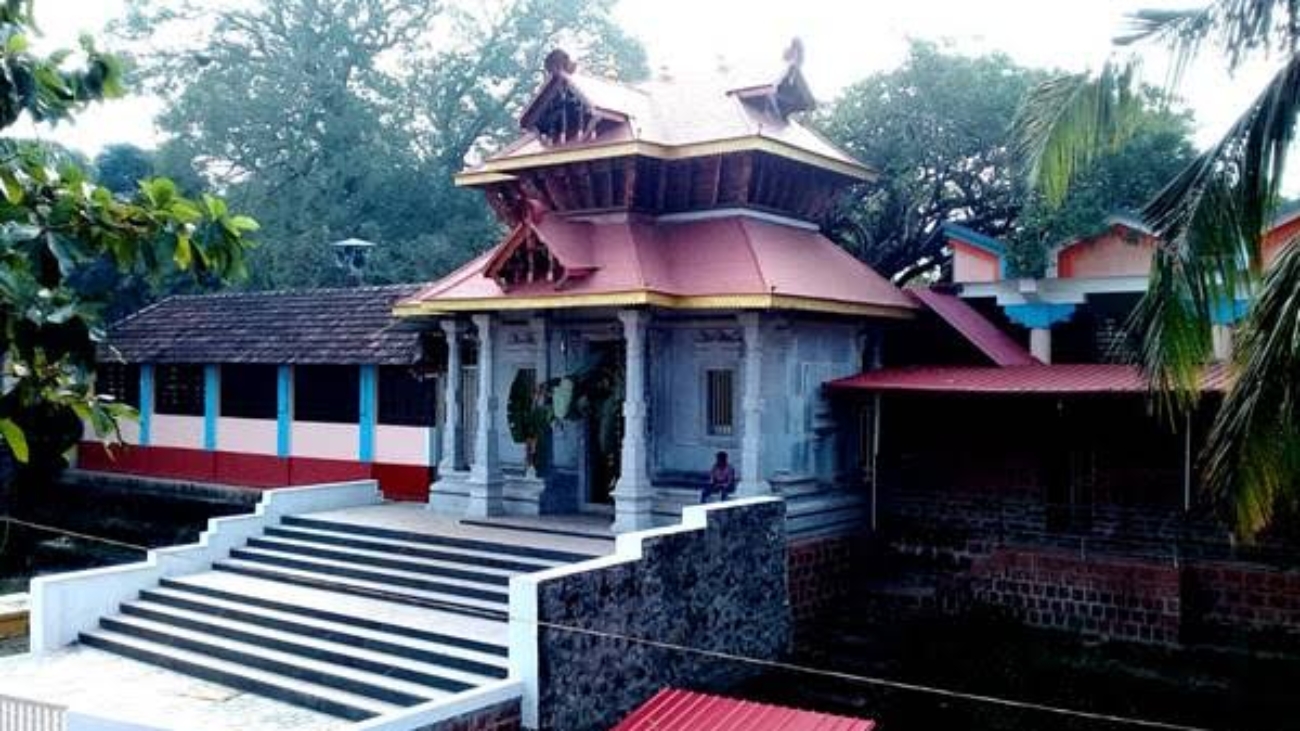
The Kanipayyur–Kunnamkulam–Kizhoor belt in central Kerala forms a distinctive cultural and economic triangle rooted in craftsmanship, trade, temple architecture, migration-driven enterprise, and a long tradition of community knowledge. Unlike Kerala’s major urban centres or highland tourism zones, this region’s strength lies in its heritage industries, small workshops, religious institutions, and tightly knit settlements that have sustained local economies for generations. Kerala Vision 2047 sees this belt not as a peripheral cluster, but as a micro-region capable of leading a renaissance in heritage-based development, creative industries, and small-town innovation that honours local identity while embracing new opportunities.
Kanipayyur, renowned across Kerala for its lineage of traditional temple architects and vastu experts, represents an irreplaceable cultural asset. The skills preserved here—rooted in centuries of knowledge about proportion, geometry, wood craftsmanship, and sacred aesthetics—are rare in the modern world. Vision 2047 imagines Kanipayyur evolving into a National Institute of Traditional Architecture and Sacred Design, where students from India and abroad can learn vastu shastra, temple carpentry, mural traditions, digitised heritage documentation, and conservation science. Workshops that once functioned quietly can be modernised with digital fabrication tools, design studios, and research labs, enabling artisans to blend ancient knowledge with contemporary needs. By 2047, Kanipayyur should stand as the global reference point for temple restoration, heritage consultancy, and Kerala’s architectural identity—generating significant cultural capital and employment.
Kunnamkulam has always been a town of commerce, printing, workshops, and migrant entrepreneurship. Historically known for its book production, mosaic tile factories, goldsmiths, and small-scale fabrication, the town embodies Kerala’s informal yet dynamic economic spirit. Vision 2047 calls for converting Kunnamkulam into Kerala’s first Small Enterprise Innovation City, where clusters of micro-industries are systematically upgraded with technology, credit access, digital marketplaces, skill centres, and design mentorship. The old printing legacy can be reimagined as a creative digital media hub; mosaic artisans can adopt new materials such as recycled composites; fabrication shops can supply components to nearby industrial parks. Infrastructure upgrades—better roads, organised logistics, fibre optic connectivity, and clean energy microgrids—will support this transition. By 2047, Kunnamkulam must become a thriving ecosystem where traditional trades and modern enterprises co-exist, attracting young entrepreneurs who prefer small-town affordability combined with global opportunities.
Kizhoor, while quieter than the other two, carries agricultural heritage, ritual traditions, and strong community bonds that can be leveraged for cultural tourism and sustainable local enterprise. Vision 2047 proposes Kizhoor as a Model Village for Ecological and Cultural Well-being. This includes rejuvenation of paddy fields, promotion of integrated farming systems with banana, yam, coconut, and herbal crops, and support for farmer cooperatives that embrace climate-resilient agriculture. Ritual arts, folk performances, and traditional temple festivals can be documented and curated into cultural circuits that attract visitors seeking authentic Kerala experiences. Local women’s groups can run homestays, food centres, craft collectives, and wellness retreats, turning Kizhoor into a space where heritage generates economic stability while preserving identity.
Across this tri-region, connectivity and infrastructure improvements are essential. A seamless mobility network linking Kanipayyur’s heritage workshops, Kunnamkulam’s production clusters, and Kizhoor’s agricultural zones will create a unified economic circuit. By 2047, the region must adopt smart transport solutions such as electric mini-buses, shared mobility hubs, and pedestrian-friendly town centres. Waste management must be decentralised with strict recycling norms, given the volume of industrial and commercial activity. Digital infrastructure should ensure every home and workshop has access to high-speed internet, enabling participation in e-commerce, online learning, and remote collaboration.
A major opportunity lies in turning this region into a creative skills powerhouse. Kanipayyur’s architectural knowledge, Kunnamkulam’s artisanal workshops, and Kizhoor’s cultural wisdom together form a unique skills ecosystem. Vision 2047 promotes a Central Kerala Heritage & Skills University—a distributed campus that offers courses in carpentry, metalwork, digital design, vastu studies, publishing, craft innovation, and agro-heritage practices. Local youth who currently migrate for basic work can instead build careers rooted in local strengths while reaching global markets through digital platforms. Skill development must also focus on climate resilience, green construction, renewable energy installation, and tourism management to prepare the region for future challenges.
Heritage conservation must receive urgent attention. Many traditional homes, temple structures, and craft workshops across the region are deteriorating due to neglect or unplanned development. Vision 2047 encourages the creation of Heritage Streets in Kanipayyur and Kunnamkulam, where conservation-led urban renewal preserves the character of old settlements while upgrading amenities. These heritage zones can become vibrant cultural districts with cafés, bookshops, artisan markets, and design studios—revitalising the local economy through creative placemaking.
Social inclusion forms another key pillar of the vision. Migrant workers in Kunnamkulam’s industries require better housing, healthcare, legal support, language training, and social integration. Women must be enabled to lead enterprises through microfinance access, incubation spaces, and market-linkage programmes. Senior artisans who hold decades of knowledge should be honoured as living repositories, receiving stipends and platforms to teach younger generations. Community welfare—education, health, nutrition, mental well-being—must be systematically strengthened to ensure that economic growth translates into human development.
Environmental stewardship cannot be ignored. As temperatures rise and rainfall patterns shift, the region will face climate risks including water scarcity, flooding, and crop instability. Vision 2047 outlines a water resilience plan: tank restoration, rain harvesting, revival of traditional wells, modern irrigation support for farmers, and green belts along water channels. Urban greening in Kunnamkulam and agricultural protection in Kizhoor will help stabilise microclimates. Energy efficiency and rooftop solar adoption must become widespread, reducing the region’s carbon footprint.
By 2047, the Kanipayyur–Kunnamkulam–Kizhoor belt can emerge as a cultural–economic renaissance zone—an area where heritage drives innovation, where small towns become centres of creativity and skill, where agriculture adapts gracefully to modern needs, and where community pride forms the basis of sustained development. This tri-region does not need skyscrapers or industrial estates to thrive; its strength lies in elevating the assets it already holds. Vision 2047 imagines a future where Kanipayyur’s temple architecture becomes globally celebrated, Kunnamkulam’s enterprise culture becomes a model for small-town economic revival, and Kizhoor’s cultural landscapes become symbols of Kerala’s living heritage. Together, they can demonstrate how deeply rooted traditions, when revitalised with modern tools, can propel Kerala into a future that is prosperous, vibrant, and culturally grounded.
