
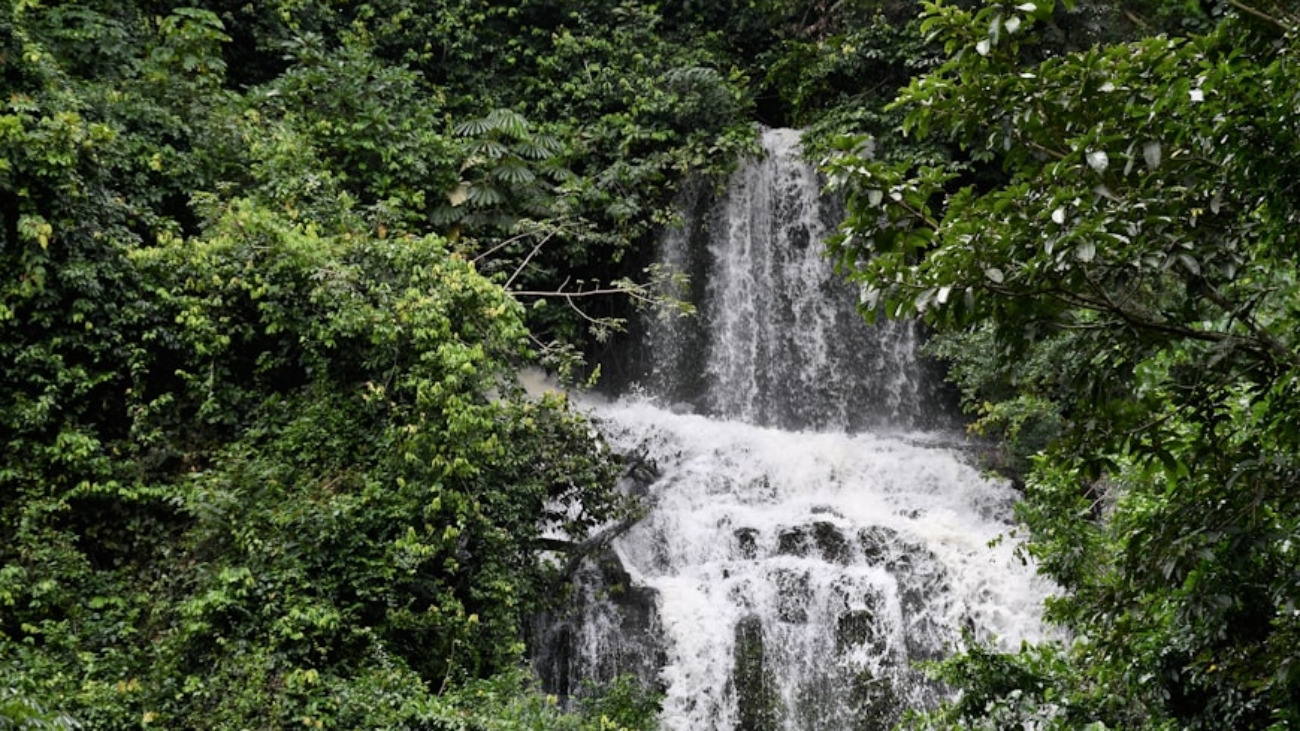
The Palaruvi–Aryankavu–Thenmala belt, straddling the biologically rich southern Western Ghats along the Kerala–Tamil Nadu border, represents one of the most scenic and historically significant mountain corridors in the state. Waterfalls, ancient temples, dense forests, wildlife, railway tunnels, and cultural linkages make this region a natural gateway between Kerala and the rest of South India. Yet the region’s development potential remains only partially tapped. Vision 2047 for this belt aims to create a model of balanced transformation—where tourism, conservation, mobility, and community welfare come together to shape a sustainable, high-value economic zone rooted in ecological responsibility.
The first priority for this region is ecological preservation. Palaruvi Waterfalls, with its spectacular medicinal waters cascading through forested slopes, is more than a tourist attraction; it is a living system that reflects the health of the surrounding mountains. Aryankavu hosts sacred groves, wildlife corridors, and a unique low-altitude pass that has shaped centuries of cultural exchange. Thenmala, India’s first planned eco-tourism destination, offers rich lessons on how sustainability and economic activity can coexist. Vision 2047 deepens this ethos by making the entire belt an integrated eco-sensitive zone with scientific visitor management, forest restoration programmes, corridor protection for elephants and gaurs, and continuous monitoring of river health. By 2047, the region should embody a model where nature remains the foundation upon which every development action rests.
Tourism stands as the principal economic engine, but it requires a complete redesign. Palaruvi currently attracts seasonal crowds, causing congestion and waste accumulation. Aryankavu’s potential remains underutilised despite its railway charm and temple heritage. Thenmala, despite its pioneering status, needs modernisation to compete with emerging eco-destinations. Vision 2047 proposes a unified tourism circuit that distributes visitors across the region through curated experiences. At Palaruvi, tourism can be restructured around timed-entry passes, guided waterfall trails, forest bathing experiences, and heritage storytelling. Aryankavu can build on its spiritual and historical identity, offering temple heritage walks, railway tunnel tours, and forest–temple ecology learning centres. Thenmala can evolve into a next-generation eco-adventure hub with elevated canopy walks, night-time nature interpretation, responsible low-impact camping, digital trail guides, and augmented reality historical experiences. Together, these destinations must create a slow, immersive tourism culture that generates higher revenues with lower ecological footprint.
Connectivity plays a transformative role in the region’s future. Aryankavu’s railway corridor is one of India’s most dramatic mountain rail routes, and the planned doubling and electrification projects will significantly enhance mobility. Vision 2047 reimagines Aryankavu as a green transit hub connecting Kollam, Shencottah, Madurai, and Tenkasi—allowing easier access for tourists, traders, and local residents. Road networks must be upgraded with landslide-resistant engineering, proper drainage, and dedicated wildlife crossing zones. Digital connectivity should reach every settlement, enabling digital ticketing, remote education, conservation monitoring, and e-commerce for local products. With improved mobility, the region can transform from a peripheral zone into a central economic corridor linking Kerala’s coast with Tamil Nadu’s hinterland.
Local communities lie at the heart of this transformation. The region hosts a mix of tribal groups, plantation workers, small farmers, and temple-linked families. Their livelihoods often rely on forest produce, seasonal tourism, or small-scale agriculture. Vision 2047 promotes a community-driven development framework where local residents lead eco-guiding, forest restoration, artisanal crafts, Ayurvedic wellness services, and homestay enterprises. Training centres in Thenmala and Aryankavu can equip youth with skills in hospitality, sustainable agriculture, digital tourism, biodiversity monitoring, and outdoor adventure safety. Local women’s groups can manage eco-markets, spice processing units, forest honey branding, and herbal product lines. Prosperity must flow directly to those who live in and protect the region.
Water resources are central to the region’s ecological stability. The Palaruvi stream, riverine systems near Aryankavu, and the Kallada reservoir around Thenmala form interconnected hydrological networks supporting agriculture, tourism, and household needs. Vision 2047 introduces watershed rejuvenation through check dams, stream restoration, soil conservation, natural aquifer recharge, and wetland revival. Forest fringes must be protected from encroachment, and invasive species must be controlled to allow native vegetation to thrive. A region-wide water observatory can track rainfall, humidity, and stream flow patterns, allowing predictive management during extreme events such as droughts or landslides.
Sustainability must extend into infrastructure development. Thenmala’s eco-tourism park can be upgraded to a zero-waste campus powered by solar microgrids. Aryankavu town can adopt green mobility through electric shuttle buses, bicycle lanes, and pedestrian-friendly pathways for pilgrims and tourists. Palaruvi can be made universally accessible with carefully designed trails that minimise ecological disturbance. Waste must be managed through decentralised composting, strict plastic regulations, and partnerships with recycling enterprises. Vision 2047 envisions the entire belt as a carbon-smart region where every new building follows green standards and every economic activity contributes to ecological restoration.
Cultural heritage forms an invisible but powerful thread in this landscape. Aryankavu’s temple traditions, local folklore, Kani tribal customs, and cross-border cultural exchanges have shaped the region’s identity for centuries. Vision 2047 emphasises the documentation, revival, and celebration of these traditions through cultural interpretation centres, digital archives, local festivals, and storytelling trails linking forests with heritage sites. Cultural tourism—if handled respectfully—can deepen visitor understanding and strengthen community pride.
Safety is an essential part of the future of this corridor. Landslides, human–wildlife encounters, flash floods, and tourist mishaps highlight the need for better risk management. By 2047, the region should have integrated early-warning systems, smart surveillance for visitor safety, trained rescue teams, and digital emergency protocols. Tourism zones, forest paths, and trekking routes must follow stringent safety standards.
Economically, the Palaruvi–Aryankavu–Thenmala belt can evolve into a diversified green economy. Eco-tourism will remain central, but complementary sectors like spice cultivation, forest-based products, eco-friendly handicrafts, sustainable bamboo industries, fishery enhancement in Kallada, and Ayurvedic wellness can provide stable incomes. Small entrepreneurs should receive support through microfinance, incubation centres, branding assistance, and export linkages. The aim is to build a region where ecological wealth directly translates into financial well-being for all residents.
By 2047, the Palaruvi–Aryankavu–Thenmala corridor can stand as one of Kerala’s strongest examples of regenerative development. A place where waterfalls remain pristine, forests remain alive with biodiversity, communities earn dignified incomes, and visitors leave with a deeper appreciation for nature’s complexity. Kerala’s southern gateway can become a global showcase of how mountain regions can grow without losing their soul. The future of this belt is not merely a tourism plan or an environmental plan; it is a vision of harmony—where nature leads, people participate, and prosperity follows in a sustainable, equitable path.
