
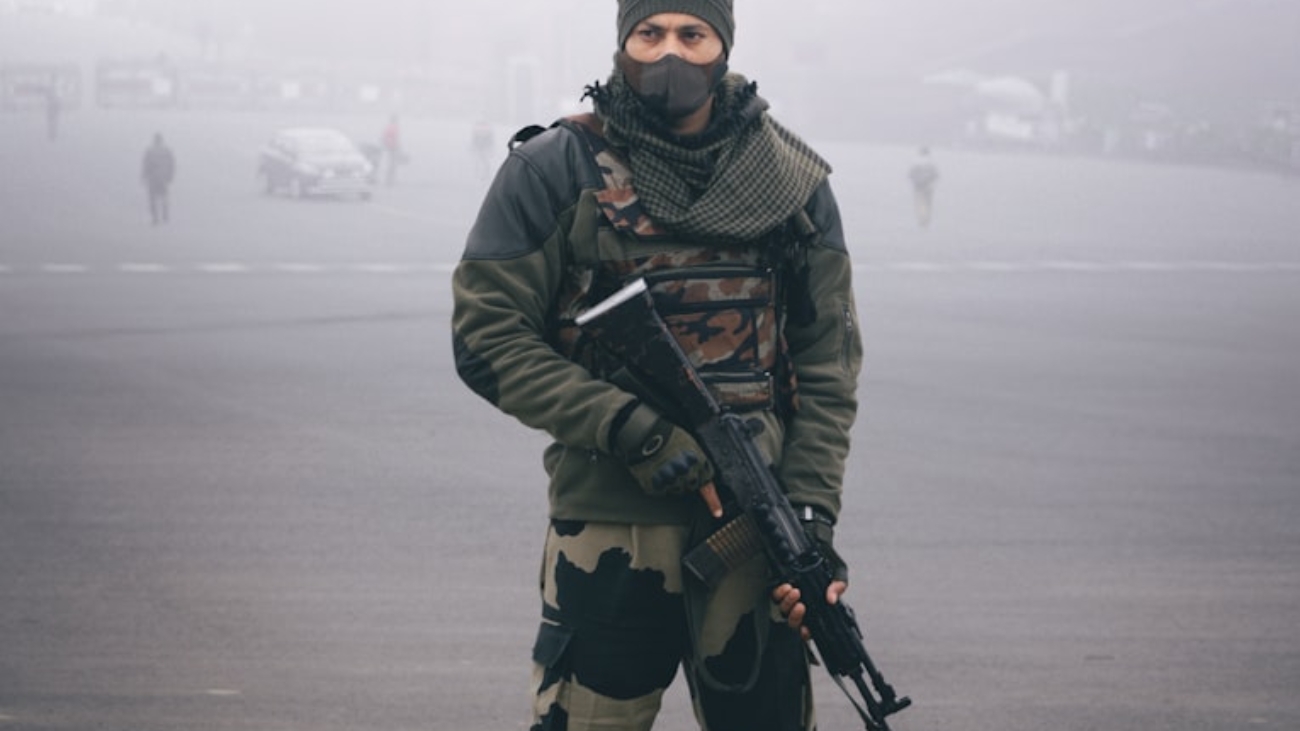
Kerala has always had a proud yet understated relationship with India’s defence forces. Though not traditionally seen as a major recruiting ground like Haryana, Punjab, Rajasthan, Uttarakhand, or the Northeast, Kerala has consistently produced disciplined officers, skilled technical personnel, naval specialists, and medical professionals for the Army, Navy, Air Force, and paramilitary units. As India’s security landscape evolves—with new threats emerging in cyberspace, maritime zones, border infrastructures, and geopolitical theatres—Kerala’s potential contribution to national defence must expand in scale, depth, and strategic direction. Kerala Vision 2047 must treat defence contribution not only as patriotic service, but also as an avenue for scientific advancement, employment generation, cultural strengthening, and technological innovation.
The starting point is reshaping Kerala’s mindset toward the armed forces. For decades, many families in Kerala emphasised academic careers over uniformed service. This must shift. By 2047, Kerala must cultivate a culture that respects military service as a prestigious, noble, intellectually demanding, and future-oriented profession. Schools and colleges can host defence awareness programmes, National Cadet Corps wings can be strengthened, and youth festivals can include sessions with decorated veterans. Highlighting defence careers in career guidance sessions will normalise military aspirations among students.
The next major step is strengthening NCC as a talent pipeline. Kerala has one of the strongest NCC networks in India, yet its potential remains underutilised. By 2047, the state can develop elite NCC academies in Thiruvananthapuram, Ernakulam, and Kozhikode, offering intensive training in leadership, physical fitness, map reading, survival skills, cybersecurity, disaster response, and public service. These academies can collaborate with retired officers to prepare cadets for NDA, CDS, technical entry schemes, and air force selection boards. A robust NCC foundation ensures Kerala produces disciplined, confident, and mission-driven youth.
Kerala must also create specialised defence-preparation training centres. Many northern states have large-scale SSB (Services Selection Board) coaching ecosystems that consistently produce officer-rank candidates. Kerala must replicate this model. Dedicated SSB academies offering psychological training, leadership assessment preparation, physical conditioning, communication development, and mock interview support will help hundreds of Kerala youth enter the armed forces as officers. These centres can be modelled on elite training institutions run by ex-officers in other states.
One of Kerala’s strongest assets is its high literacy rate and technical competence. This aligns perfectly with the needs of modern defence forces, which increasingly require technologically skilled personnel. Kerala Vision 2047 should establish Defence Technology Learning Tracks in engineering colleges. These programmes can teach aerospace fundamentals, drone technology, cybersecurity, AI applications in defence, robotics, underwater systems, satellite communication, and advanced materials. Students trained in these areas can join DRDO, ISRO, HAL, BEL, and new defence-tech startups. Kerala’s engineering talent, if channelled strategically, can become a national asset for defence innovation.
Cybersecurity is an area where Kerala can emerge as a national leader. With a thriving IT sector in Technopark and Infopark, Kerala has the talent base to contribute to India’s cyber defence architecture. A Cyber Defence Academy can be established to train professionals in cyber warfare, cryptography, ethical hacking, cyber forensics, and AI-driven threat detection. These professionals can serve in military cyber divisions, intelligence agencies, and cyber command centres. As warfare shifts from land and sea to digital domains, Kerala’s intellectual strengths become crucial.
Kerala’s long coastline and maritime tradition make it directly relevant to India’s naval ambitions. The Indian Navy, Coast Guard, and coastal security forces require sailors, technical staff, maritime engineers, and communication specialists. Kerala Vision 2047 can establish Maritime Defence Training Centres in Kochi and Kannur, offering programmes in navigation, marine engineering, underwater systems, radar operations, and coastal surveillance. Collaboration with the Southern Naval Command in Kochi can create an ecosystem where aspiring youth gain exposure to naval service early. Kerala can also contribute through shipbuilding support industries, marine research, and port security systems.
Another major domain is defence manufacturing. With India focusing on self-reliance in defence technology, Kerala can develop specialised manufacturing clusters. The Palakkad KINFRA Defence Park is a promising start, but it needs expansion and global partnerships. By 2047, Kerala can specialise in producing precision components, electronics for communication systems, drone parts, composites for aircraft, and naval equipment. Engineering colleges can partner with defence firms for research, internships, and faculty development. Local industries that traditionally manufacture electrical, mechanical, or optical equipment can align with defence supply chains.
Encouraging youth participation in paramilitary forces is equally important. Kerala has a natural advantage: disciplined labour, high education levels, and physical fitness. CRPF, BSF, ITBP, CISF, and SSB offer thousands of jobs annually. Kerala can host state-supported training centres offering physical conditioning, exam coaching, and personality development to prepare youth for these roles. A major expansion in paramilitary representation can reduce unemployment and strengthen national security.
Another powerful idea is developing Kerala’s retired defence community into a strategic asset. Thousands of officers and soldiers retire every year, many choosing Kerala as their home. They possess leadership skills, crisis management experience, instructional capability, and integrity—qualities essential for nation-building. Kerala Vision 2047 can integrate veterans into NCC training, school discipline committees, disaster management forces, civil defence programmes, and youth mentoring initiatives. Their presence strengthens civic culture and builds disciplined communities.
Disaster response training is another strategic contribution. Kerala, vulnerable to floods, landslides, cyclones, and climate change impacts, can integrate civilian disaster forces with military training standards. Youth can be trained in emergency rescue, first aid, communication systems, drone-based search operations, and relief logistics. These civilian forces become a support system for national disaster management and showcase Kerala’s resilience.
Academic institutions must also embrace defence studies. Universities can create centres for strategic affairs, geopolitics, ocean studies, and military history. Kerala students should learn about India’s maritime strategy, Indo-Pacific tensions, border dynamics, cyber warfare, and space security. Such knowledge prepares them for careers in intelligence, diplomacy, armed forces, and think tanks.
By 2047, Kerala can redefine its contribution to national defence in multiple ways: by sending more officers to the armed forces, building defence technology capabilities, strengthening coastal protection, developing cyber warriors, mobilising youth through NCC, and transforming defence manufacturing. This is not just service to the nation—it also elevates Kerala’s professional ecosystem, instils discipline in society, expands economic opportunities, and strengthens civic values.
A prosperous, secure India requires every state to contribute meaningfully to national defence. Kerala has the talent, coastline, education, and discipline to do so. Vision 2047 must unlock this potential—building a state that does not merely admire the armed forces, but actively strengthens them through knowledge, manpower, technology, and character.
