
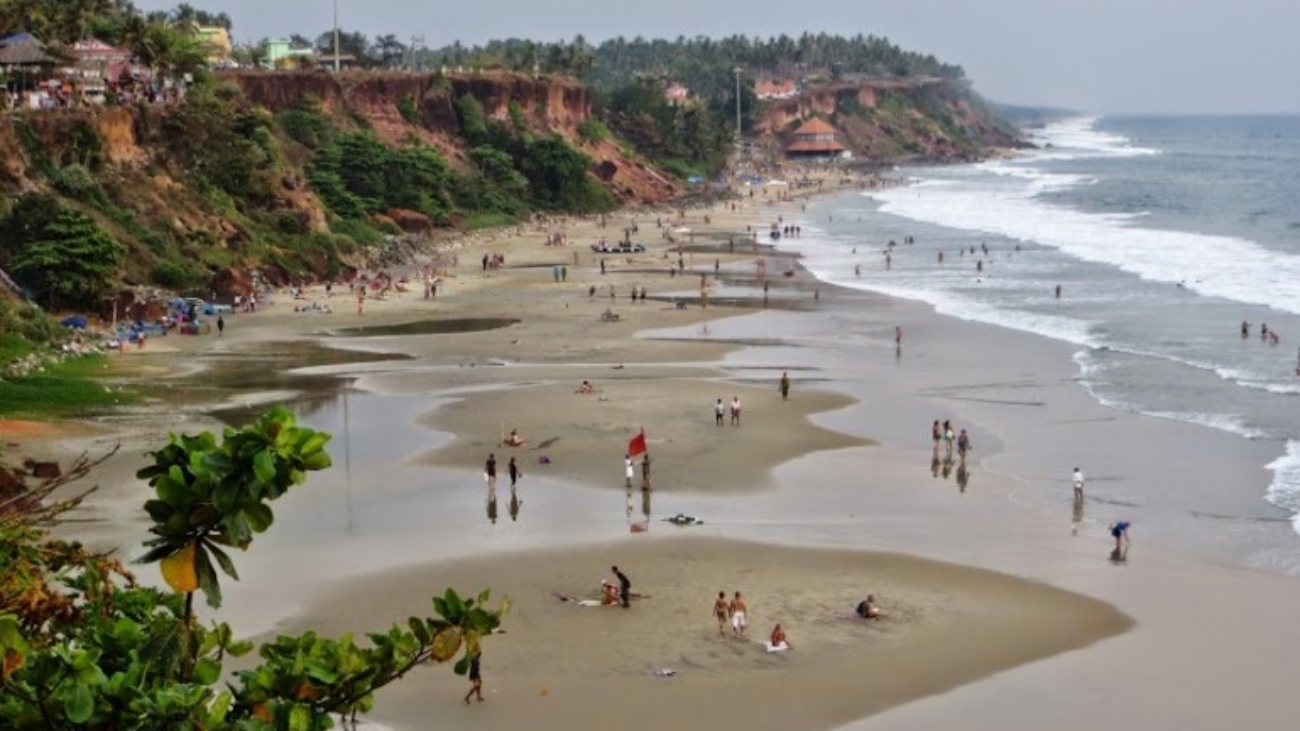
Varkala taluk, known globally for its tourism and coastal charm, has long been viewed primarily as a service-driven region. Yet, under Kerala Vision 2047, the taluk can evolve into a balanced economy where manufacturing complements tourism, creating stable jobs, diversifying revenue, and reducing economic vulnerability. With an estimated population of 6.8–7.2 lakh by 2047 and a working-age population of nearly 4 lakh, Varkala has the human capital, coastal connectivity, and land patterns needed for distributed, technology-enabled manufacturing. The objective for 2047 is to transform Varkala into a ₹10,000–₹11,000 crore annual manufacturing economy, compared to the current fragmented base of roughly ₹1,200–1,500 crore across micro-industries.
By 2047, Varkala must position itself around four pillars: coastal industries, renewable manufacturing, health-tech and wellness products, and creative manufacturing aligned with tourism. Each pillar will anchor jobs, drive exports, and encourage entrepreneurship across the taluk’s panchayats. The first major intervention is the creation of a 20-acre Coastal Processing and Marine Products Cluster between Varkala, Edava, and Anchuthengu. This region can produce 30,000–35,000 tonnes of marine goods annually, generating ₹2,200 crore in exports, especially frozen value-added fish, shellfish, dried seafood, and nutraceutical extracts. Modern units with AI-driven quality control, solar-powered cold storage, and automated grading lines can generate 10,000 direct jobs. Waste from fish processing can feed biogas and fertilizer sub-units, ensuring circular efficiency.
The second pillar is a Herbal, Ayurvedic, Beauty, and Wellness Products Manufacturing Zone that leverages Varkala’s global reputation as a healing destination. By 2047, demand for natural cosmetics, plant extracts, yoga-based wellness products, balms, herbal supplements, and spa materials will only expand. Positioning Varkala as Kerala’s wellness manufacturing capital can create an annual output of ₹1,500–₹1,800 crore. Even a cluster of 200 MSMEs, supported by common R&D labs, raw material processing centres, packaging units, and global certification support, can create 12,000 jobs. Varkala can attract private investments into GMP-certified facilities, enabling exports to Europe, the Middle East, and East Asia. The synergy with tourism will increase brand visibility and trust, directly benefiting manufacturers.
A third pillar for 2047 is the Creative Manufacturing and Handcraft Innovation Cluster. Varkala’s tourism-driven markets already sustain pottery, garments, leather crafts, wood products, bamboo craft, metalwork, and artistic accessories. The aim is to transform this informal craft sector into a ₹1,000 crore creative manufacturing industry by 2047. Through design training, digital storefronts, 3D modelling for craft prototyping, and micro-factory setups, artisans can produce premium products for both tourists and global buyers. Establishing a Craft-Tech Hub with laser cutting, CNC carving, digital printing, and product photography studios can scale up production without losing the artistic identity. With proper market linkages, 15,000–18,000 livelihoods can emerge from this sector alone.
The fourth pillar is a Renewable Energy and Components Manufacturing Hub located near the Varkala–Paripally belt, leveraging proximity to NH66. Kerala’s push toward green transition will require components such as solar modules, mounting structures, charge controllers, micro-inverters, and storage casings. By 2047, even a moderate target of 1.5–2 GW worth of solar components per year, along with 50,000–60,000 battery enclosures, can generate ₹2,000–₹2,400 crore in output. These industries require clean rooms, assembly lines, and precision metalworking—making them ideal for the engineering workforce returning from Gulf countries. Automation will reduce the need for large labour pools while raising productivity levels.
Varkala should also host a Medical Devices Mini-Zone, taking advantage of the expansion of healthcare and rehabilitation centres in the district. By 2047, the taluk can produce orthopaedic support systems, physiotherapy devices, wellness sensors, wearable health trackers, and home-care diagnostic kits. A turnover of ₹800–₹1,000 crore is achievable with 40–50 specialised units. Partnerships with Kerala’s medical colleges and startups can support prototyping, certification, and market validation. Given the rising global health-tech market, this sector offers high-value export opportunities.
Logistics is central to enabling this transformation. Currently, Varkala’s manufacturing suffers from a 10–15% logistics penalty due to limited warehousing and inconsistent freight connectivity. A 15-acre Multi-Modal Logistics and Export Support Zone near Varkala railway station can resolve this. It can host consolidated warehouses, cold-chain hubs, last-mile delivery aggregation, packaging services, and digital freight management platforms. Improved connectivity to NH66 and Vizhinjam will reduce export turnaround times significantly, opening global markets for small manufacturers. By 2047, this logistics backbone can support ₹5,000 crore worth of goods movement annually.
Human capital must evolve in parallel. The goal is for Varkala by 2047 to produce 5,000 technical graduates, 12,000 trained technicians, and 20,000 skilled workers annually through ITIs, polytechnics, skill academies, and cluster-based training centres. The curriculum must include robotics, supply chain analytics, electronics assembly, marine technology, herbal product formulation, and industrial design. Gulf-returnees, a significant demographic, can be re-integrated as supervisors, trainers, and manufacturing system designers, strengthening the managerial capacity of local industries.
Digitisation is another critical layer. A unified Varkala Manufacturing Digital Network should link more than a thousand small and medium producers. Through shared machine-booking systems, bulk procurement, digital quality audits, production planning software, and on-demand design services, manufacturers can reduce costs by 8–12% and improve turnaround time. This network can also function as a marketplace for connecting with exporters, wholesalers, retail brands, and e-commerce aggregators.
Sustainability is non-negotiable. By 2047, Varkala must ensure that at least 60% of its manufacturing energy needs come from renewable sources, primarily through rooftop solar, community solar farms, and grid-interactive storage systems. All industrial clusters must adopt zero-liquid discharge systems, coastal sensitivity norms, and air-quality monitoring stations. Waste integration—where textile scraps feed insulation material units, metal scrap feeds tool rooms, and biowaste feeds biogas plants—will position the taluk as an example of circular industry.
If executed with discipline, Varkala can evolve into a diversified, modern manufacturing region that complements its tourism identity rather than competes with it. With ₹10,000–₹11,000 crore annual output, 70,000+ direct jobs, export-ready clusters, renewable-led factories, and a creative manufacturing ecosystem, Varkala taluk can become one of Kerala’s most balanced and resilient economic zones by 2047. This transformation demonstrates that even a coastal tourist destination can become a centre of advanced, high-value, and sustainable production when guided by a long-term strategic vision.
