
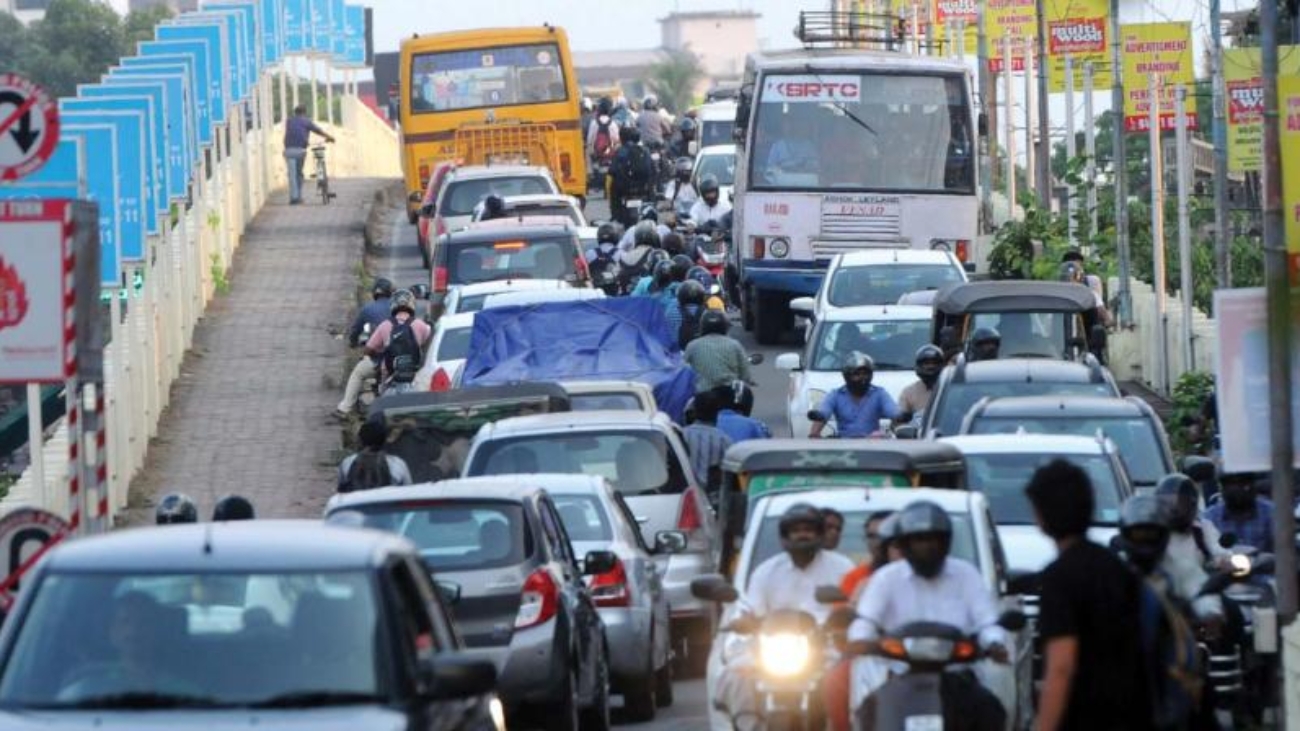
Encroachment of public land in the urban areas of Kerala is rarely the result of sudden land grabs. It unfolds slowly, invisibly, and often with social acceptance. A compound wall moves a few feet outward. A shop extends a step onto the footpath. A parking space becomes permanent. A canal edge narrows. Each act appears minor, negotiable, even harmless. Together, they quietly erase the commons that cities depend on.
Kerala’s urban land scarcity intensifies this tendency. High density, fragmented plots, and rising land values create constant pressure on public space. Roads, footpaths, drains, riverbanks, playgrounds, and government land become tempting buffers for private use. Encroachment is not always driven by greed; it is often driven by survival, convenience, or competitive disadvantage. When one encroaches, others feel forced to follow.
Weak enforcement enables normalisation. Agencies hesitate to act against small violations, fearing backlash or accusations of selective targeting. Over time, tolerance becomes policy by default. When enforcement does occur, it is sporadic, politically charged, or complaint-driven, reinforcing the perception that rules are flexible and negotiable.
Public land records are often outdated or unclear. Boundaries are poorly marked. Survey data is fragmented. This ambiguity creates space for dispute and gradual takeover. What is not clearly demarcated is easily claimed. Years later, restoration becomes legally and socially complex.
Encroachments compound infrastructure failure. Footpaths disappear, forcing pedestrians onto roads. Drains narrow, worsening flooding. Access roads shrink, slowing emergency response. Riverbanks lose buffer capacity. Public land meant for future infrastructure is consumed, raising long-term costs dramatically.
Social equity is affected. Encroachment benefits those with proximity, influence, or speed. Those who comply lose out. Informal users such as vendors are often targeted first, while permanent structures by powerful actors persist. This selective enforcement deepens mistrust and resentment.
Economic activity adapts around encroachments. Markets expand onto streets. Parking spills into public land. Once livelihoods depend on illegal occupation, eviction becomes politically sensitive. Cities get trapped between legality and livelihood without structured alternatives.
Environmental consequences follow. Canal encroachment disrupts flow. Wetland filling increases flood risk. Tree cover is reduced. Heat and pollution intensify. Public land often serves ecological functions that are lost when space is privatised.
The cultural dimension matters. In many areas, encroachments are seen as rewards for effort or enterprise. Regularisation schemes reinforce this belief, signalling that violations will eventually be forgiven. This undermines rule-based planning and encourages speculative occupation.
Solving encroachment requires shifting from episodic eviction to systematic protection. The first solution is clear demarcation. All public land must be surveyed, mapped, and physically marked with durable boundaries and signage. Visibility deters gradual takeover.
Digital land records and GIS mapping should be integrated across agencies. Public access to maps increases vigilance. When citizens know what is public, defence becomes collective rather than bureaucratic.
Prevention must precede removal. Rapid response to new encroachments is far easier than addressing decades-old ones. Dedicated urban land protection units can monitor, flag, and act early before structures solidify.
Design can reduce temptation. Clear footpath edges, bollards, landscaping, and grade separation define space. Ambiguous margins invite occupation; well-designed edges resist it. Streets that look owned feel defended.
Livelihood-sensitive solutions are necessary. Vendors and small businesses need designated spaces integrated into street design. Removing encroachment without providing alternatives simply relocates the problem. Formalising informal use where appropriate can protect public interest while supporting livelihoods.
Legal processes must be time-bound. Prolonged litigation freezes action and rewards delay. Special tribunals or fast-track mechanisms for public land cases can restore credibility. Delays benefit encroachers, not the city.
Political consistency is crucial. Encroachment control fails when enforcement fluctuates with electoral cycles. Clear, publicly stated policies applied uniformly reduce accusations of bias. Fairness builds legitimacy.
Regularisation must be rare, transparent, and conditional. Blanket amnesties encourage future violations. Where regularisation is unavoidable, it should require compensation, compliance upgrades, and public benefit contributions.
Community stewardship can help. Resident associations, market committees, and ward groups can monitor public land and report early violations. Shared ownership reduces reliance on enforcement alone.
Education and communication matter. Public campaigns should explain why encroachment harms everyone, not just traffic or aesthetics. When people see links to flooding, safety, and access, resistance softens.
Institutional coordination is necessary. Roads, irrigation, revenue, and municipal bodies must align. Fragmented ownership creates enforcement gaps. Unified responsibility closes loopholes.
Finally, cities must value the commons. Public land is not leftover space waiting for use. It is the physical foundation of mobility, safety, ecology, and future growth. Losing it is easy; reclaiming it is costly and traumatic.
Encroachment is not a law-and-order issue alone. It is a design, governance, and equity challenge. Kerala’s cities can still protect their commons, but only if they act early, consistently, and fairly.
