
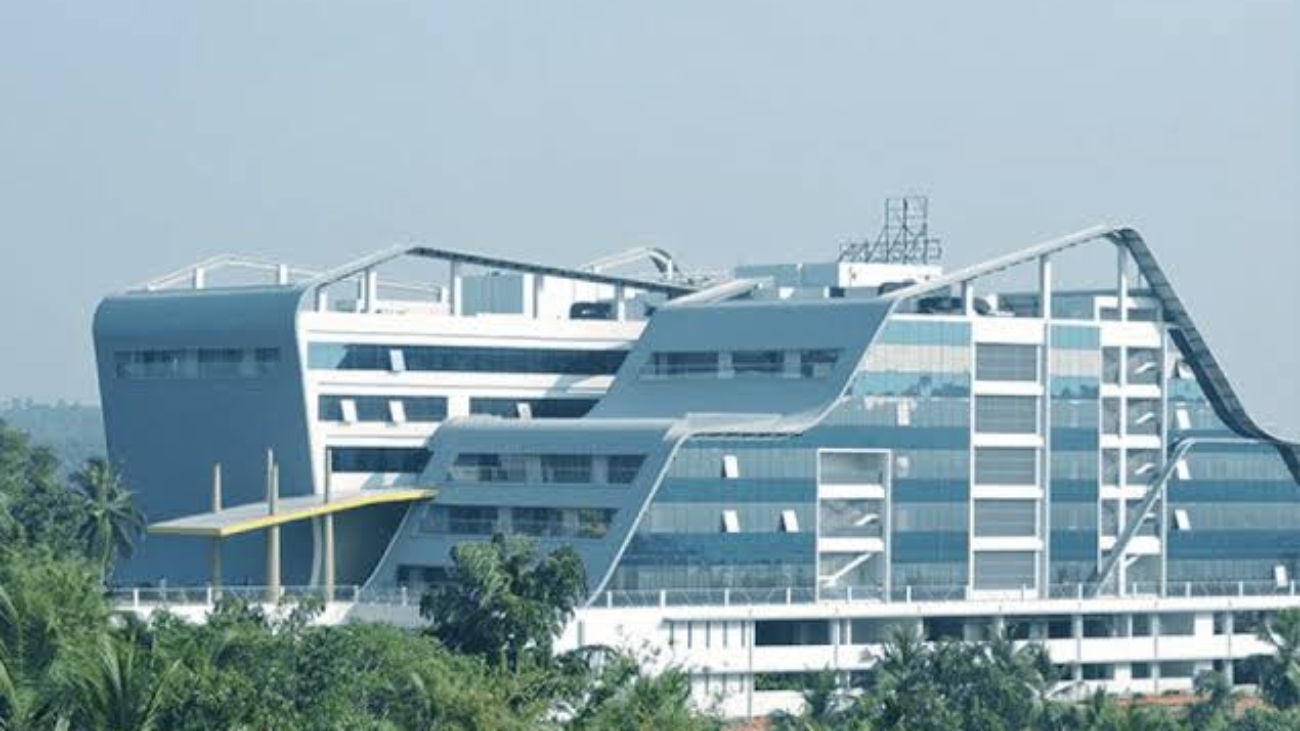
Kerala’s digital infrastructure vision moves beyond its two largest metropolitan centres when it reaches Kozhikode, and Cyberpark Kozhikode represents this strategic decentralisation in action. Conceived as a state-led IT and digital services hub for the Malabar region, Cyberpark was established to ensure that northern Kerala participates fully in the digital economy rather than remaining a talent supplier to cities further south or outside the state. As Kerala looks toward 2047, institutions like Cyberpark are essential for balanced regional growth and inclusive digital development.
Cyberpark Kozhikode was planned with a clear numerical and geographic logic. Malabar accounts for a large share of Kerala’s population, with districts such as Kozhikode, Kannur, Malappuram and Wayanad together hosting several million people. Yet for decades, large-scale IT employment was concentrated primarily in Thiruvananthapuram and Kochi. Cyberpark addresses this imbalance by creating a dedicated digital infrastructure node capable of supporting thousands of technology jobs within the northern region itself. Even if 10,000 to 15,000 direct IT jobs are created over time, the local economic impact multiplies significantly.
The physical infrastructure of Cyberpark is designed to scale in phases. Spread across a large land parcel near Kozhikode city, the campus includes multiple buildings with modern office spaces, structured cabling, high-capacity power supply and redundant network connectivity. These features are not cosmetic; they are essential for companies that serve global clients and operate on strict service-level agreements. As data usage per employee continues to rise, often doubling every 5 to 7 years, such built-in scalability ensures that the campus remains relevant through 2047.
Employment generation is one of Cyberpark’s most tangible contributions. Even in its early stages, the park has attracted dozens of IT and IT-enabled services firms employing thousands of professionals. These jobs are typically higher-paying than average regional employment, creating disposable income that stimulates local economies. For every direct digital job created, two to three indirect jobs emerge in transport, housing, food services, maintenance and retail. This means that a workforce of 5,000 IT professionals can support 15,000 to 20,000 livelihoods in the surrounding region.
Digital infrastructure plays a decisive role in talent retention. Northern Kerala produces a large number of engineering and science graduates every year from colleges spread across Kozhikode, Kannur and Malappuram districts. Historically, a significant percentage of these graduates migrated to Bengaluru, Chennai or overseas due to lack of local opportunities. Cyberpark reduces this outflow by providing viable career paths closer to home. If even 20 to 30 percent of graduates who would otherwise migrate choose to work locally, the long-term social and economic benefits are substantial.
Connectivity is the invisible backbone that makes Cyberpark viable. High-speed fibre links connect the campus to state and national digital backbones, ensuring low latency and high uptime. For companies handling cloud services, remote operations and international clients, milliseconds matter. Cyberpark’s integration with Kerala’s broader digital infrastructure ensures that firms in Kozhikode can compete on equal footing with those in larger metropolitan centres. This parity is critical for decentralisation to succeed in practice, not just policy.
From a startup ecosystem perspective, Cyberpark provides a crucial mid-scale growth environment. Startups emerging from local incubators or academic institutions can move into Cyberpark as they scale beyond small teams. This prevents the common pattern where promising startups are forced to relocate due to lack of suitable office infrastructure. Over time, this creates a local cluster effect, where experienced professionals, mentors and service providers accumulate within the region, reinforcing growth.
Cyberpark’s regional impact also extends to women’s participation in the digital workforce. Proximity to home reduces travel time and safety concerns, which are significant barriers for many women professionals. If even 30 to 40 percent of Cyberpark’s workforce consists of women, the social implications are meaningful. Stable digital jobs within reachable distances support higher workforce participation rates and long-term career continuity.
The presence of Cyberpark influences urban development patterns in Kozhikode. Residential projects, transport services and commercial establishments emerge around the campus. Digital infrastructure enables flexible work models, reducing peak-hour congestion and allowing for staggered schedules. Over time, this contributes to more sustainable urban growth compared to unplanned concentration in a few hotspots.
From a fiscal perspective, Cyberpark contributes to Kerala’s IT export revenues and tax base. While its absolute numbers may initially be smaller than older campuses, growth rates can be higher due to greenfield development. If export revenues from Cyberpark-linked companies grow at even 10 percent annually over two decades, the compounding effect becomes significant by 2047. This diversification of export sources also reduces risk from over-dependence on a few locations.
Cyberpark’s strategic importance becomes clearer when viewed in the context of future technologies. As remote work, distributed teams and digital collaboration become standard, the advantage of mega-cities diminishes. What matters instead is quality connectivity, skilled talent and liveable environments. Kozhikode offers all three. Cyberpark positions the region to benefit from global shifts toward decentralised digital work over the next 20 to 25 years.
Education and skill development linkages further strengthen Cyberpark’s role. Proximity to universities, engineering colleges and training institutions allows companies to collaborate on internships, projects and curriculum alignment. This shortens the gap between education and employment. If even 1,000 students annually gain exposure to industry projects through Cyberpark firms, the cumulative skill development impact over two decades is transformative.
Resilience is another often overlooked benefit. Concentrating digital infrastructure in only one or two cities creates systemic risk from natural disasters, infrastructure failures or urban saturation. By distributing digital capacity across regions like Kozhikode, Kerala builds redundancy into its digital economy. In the event of disruptions in one hub, others can continue operating, ensuring continuity of services and employment.
Looking toward 2047, Cyberpark Kozhikode represents a shift in mindset from centralised growth to networked regional development. It demonstrates that digital infrastructure can and should be geographically inclusive. Rather than forcing talent to move to infrastructure, infrastructure is brought closer to talent. This alignment between people, place and technology is essential for sustainable growth.
Cyberpark Kozhikode may not yet match the scale of Kerala’s older IT campuses, but its strategic value lies in what it enables rather than what it replaces. It anchors the Malabar region firmly within Kerala’s digital future, ensuring that growth, opportunity and innovation are distributed more evenly across the state. By 2047, the success of Kerala’s digital vision will be measured not only by total output, but by how widely that output is shared, and Cyberpark plays a critical role in achieving that balance.
